
Reviewed · HOFBURG & IMPERIAL PALACES
Vienna: Skip-the-Line Hofburg and Empress Sisi Museum Tour
Royal stories come alive inside Vienna’s Hofburg. This two-hour guided visit combines the Sisi Museum and Imperial Apartments with the courtyards, Heroes’ Square, and a walk past the Spanish Riding School. I like the reserved entry, which helps you avoid the ticket queue, and I like the guides’ storytelling. Names such as Michael, Claudia, Petra, Kristina, and Celine come up often for good reason: they add humor, context, and human detail to a palace that could otherwise feel like a long parade of names and dates.
The main catch is crowding. The Sisi Museum and palace rooms can feel tight, especially before New Year and during busy periods, and the reserved entry time means you must arrive at least 10 minutes early. You also need to leave large bags, backpacks, and luggage behind, and this tour is not suitable for wheelchair users or people with mobility impairments.
In This Review
- Key points at a glance
- What the Hofburg tour actually covers
- Meeting Emperor Franz I inside the Hofburg
- Sisi Museum: beyond the famous hairstyle
- Imperial Apartments and the Habsburg household
- Hofburg Courtyards and Heroes’ Square
- Passing the Spanish Riding School
- Josefplatz and the Augustinian Church
- Why the guide matters more than the ticket
- Crowds, pace, and practical limits
- Is $55 per person fair value?
- Who should book this Hofburg experience?
- Final verdict: book it for the stories
- FAQ
- How long does the Hofburg and Sisi Museum tour last?
- Where does the tour meet?
- Does the tour include skip-the-line entry?
- Which languages are available?
- Is transportation included?
- Can I visit the Augustinian Church with the guide?
- Can wheelchair users join this tour?
Key points at a glance
- Sisi’s private world: See the museum devoted to Empress Elisabeth, known as Sisi, then continue into the Imperial Apartments.
- A guide makes the difference: Expect stories about Sisi, Franz Joseph, the Habsburg family, and Vienna that an audio guide may not provide.
- Skip the ticket queue: Entry to the Sisi Museum and Imperial Apartments is reserved, though security and interior crowding can still slow the visit.
- An efficient central route: The tour links the Hofburg Courtyards, Heroes’ Square, Spanish Riding School, and Josefplatz in two hours.
- Useful meeting point: Meet at the Emperor Franz I statue inside the Hofburg complex, near the Innerer Burghof courtyard.
- Good value for first-time visitors: At $55 per person, the tour is most worthwhile if you want historical explanation along with palace access.
What the Hofburg tour actually covers
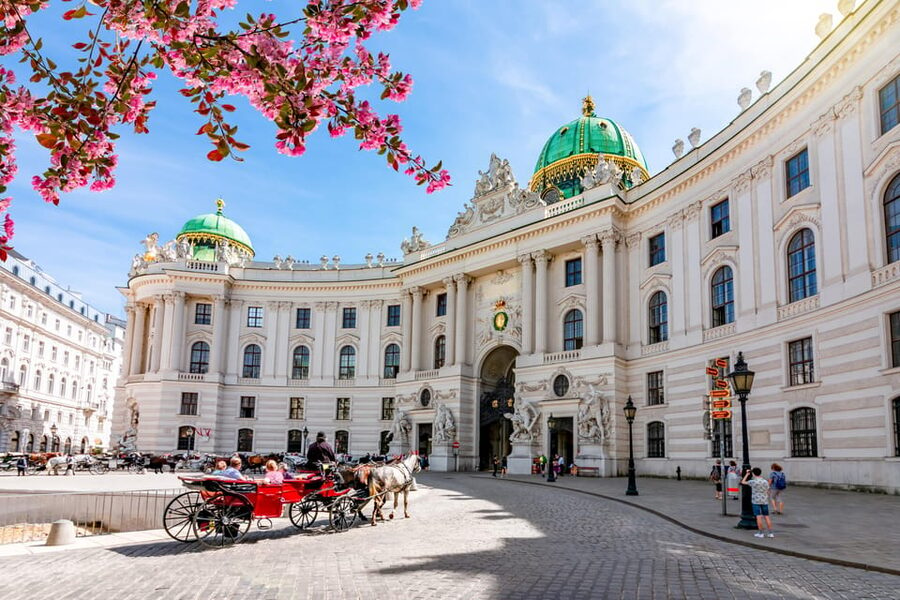
The Hofburg is not one simple palace with one grand entrance. It is a large imperial complex built and expanded over centuries, with courtyards, ceremonial spaces, museums, churches, and institutions still woven into central Vienna.
That makes a guided route useful. Without help, you can admire the stonework and rooms but miss how the different parts fit together. In two hours, your guide gives you a working map of the complex, then connects the buildings to the people who used them.
The focus is the Habsburg dynasty, with special attention to Empress Elisabeth, Franz Joseph, and the public image created around Sisi. The best guides add side stories and explain the gap between the romantic Sisi legend and the more complicated woman behind it.
I would choose this tour early in a Vienna visit. It gives you names, places, and political background that make later stops around the city easier to understand. It is also a sensible choice if you prefer conversation and questions to a handset packed with dates.
More Hofburg and imperial palace visits:
- Vienna: Skip-the-Line Sisi Museum, Hofburg and Gardens Tour
★ 4.8 · 5,918 reviews - Tickets for the Albertina Exhibitions
★ 4.7 · 2,126 reviews - Vienna: Imperial Treasury in the Hofburg Palace
★ 4.4 · 1,791 reviews
Meeting Emperor Franz I inside the Hofburg
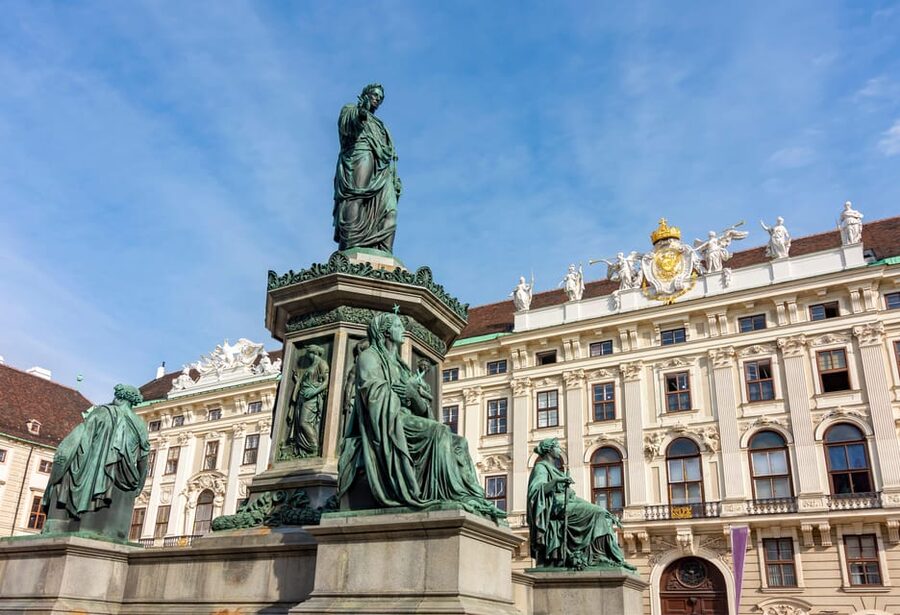
Your meeting point is the statue of Emperor Franz I at Hofburg Palace. The guide waits with a sign, but the palace complex can still be confusing on a first visit, so allow extra time to get oriented.
The clearest public transport route is the U3 subway to Herrengasse station. From there, walk about five minutes toward the Innerer Burghof courtyard inside the palace complex. Arrive at least 10 minutes before the scheduled start. The museum uses reserved entry times, and late arrivals cannot be accommodated or refunded.
This is one place where a little planning protects the whole experience. Do not cut it close after arriving at Herrengasse. The Hofburg has several courtyards and grand façades, and the statue is not simply outside a single museum door.
Sisi Museum: beyond the famous hairstyle
The Sisi Museum is the emotional center of the visit. It explores Empress Elisabeth, the Bavarian-born woman who became the wife of Emperor Franz Joseph and one of Austria’s most recognizable historical figures.
You will learn about her life through the objects and rooms presented in the museum, while the guide supplies the personal setting around them. This matters because Sisi is easy to reduce to a beautiful portrait, a famous hairstyle, and a romantic royal image. The tour aims to show more than that polished public picture.
Several people who took the tour especially valued the guide’s side stories about Sisi. Janka, for example, was praised for adding details that would be missing from an audio phone. Kristina was singled out for bringing the Habsburg world to life with clear explanations and personal storytelling. Petra and Claudia received similar praise for making the subject lively rather than dusty.
Expect the museum to be busy. One visitor found it especially crowded and was pleased to hear that an expansion was planned. Crowds can make the rooms feel smaller than expected and may limit how long you can pause at individual displays. The guide helps by keeping the group moving and explaining the key points before you lose sight of the thread.
If you already know Sisi from films or popular biographies, this part can help separate the legend from the woman. If you have never heard of her, the guide provides enough context to make the museum accessible without requiring prior study.
Imperial Apartments and the Habsburg household
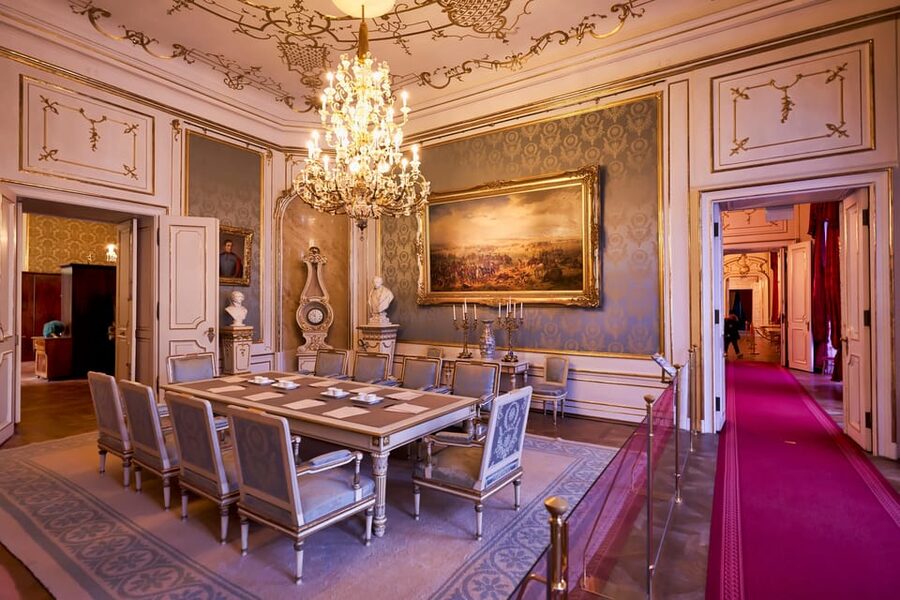
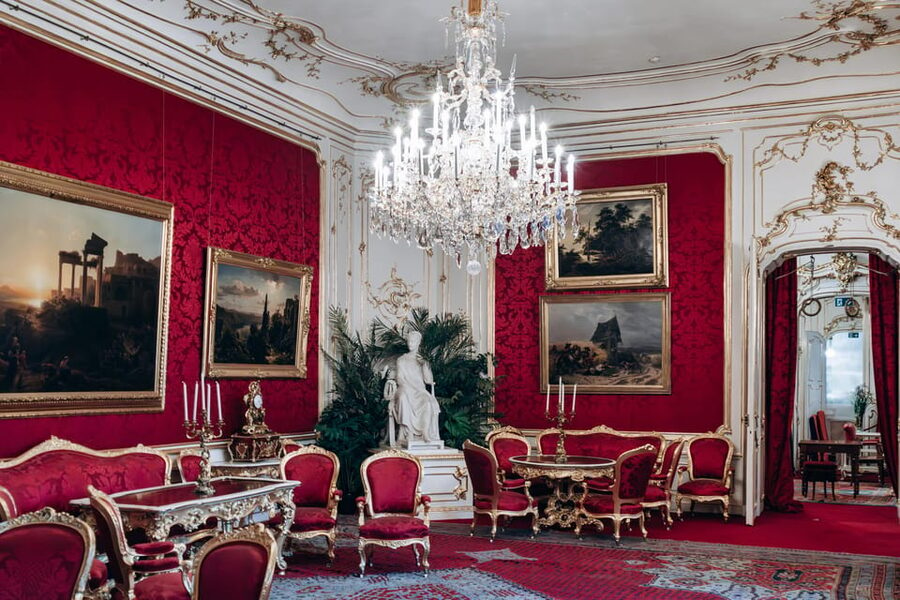
The tour continues into the Imperial Apartments, where the grand public image of the court meets the routines of domestic life. You see the spaces associated with the imperial household and gain a clearer sense of how Franz Joseph and Elisabeth occupied the palace.
The rooms are elegant, but do not expect every chamber to feel enormous. In crowded conditions, some rooms may seem fairly small, especially compared with the scale of the exterior courtyards and ceremonial façades. The décor is the point here: furnishings, formal arrangements, and the controlled setting show how rank and protocol shaped daily life.
This is where a good guide earns the admission price. A list of rooms can blur together. A skilled storyteller gives each space a purpose and links it to the people who lived or worked there. Michael was repeatedly praised for explaining Sisi, Franz Joseph, and the wider Austrian story in a way that worked for both adults and younger visitors. One family found his pace comfortable even with a six-year-old.
You may hear a great deal in a short period. Habsburg family connections can become hard to track, particularly if you are not familiar with Austrian royal names. One useful improvement would be a simple family chart for the people mentioned. If you find yourself losing the lineage, ask your guide to pause and place the names in order.
More museums:
- Vienna Kunsthistorisches Museum Day Admission Ticket
★ 4.6 · 3,690 reviews - Vienna: Chocolate Workshop in Chocolate Museum w/ Tasting
★ 4.5 · 1,802 reviews - Sigmund Freud Museum Ticket
★ 4.6 · 1,668 reviews - Vienna: St. Stephen’s Cathedral & Dom Museum Wien Tickets
★ 4.5 · 1,652 reviews
Hofburg Courtyards and Heroes’ Square
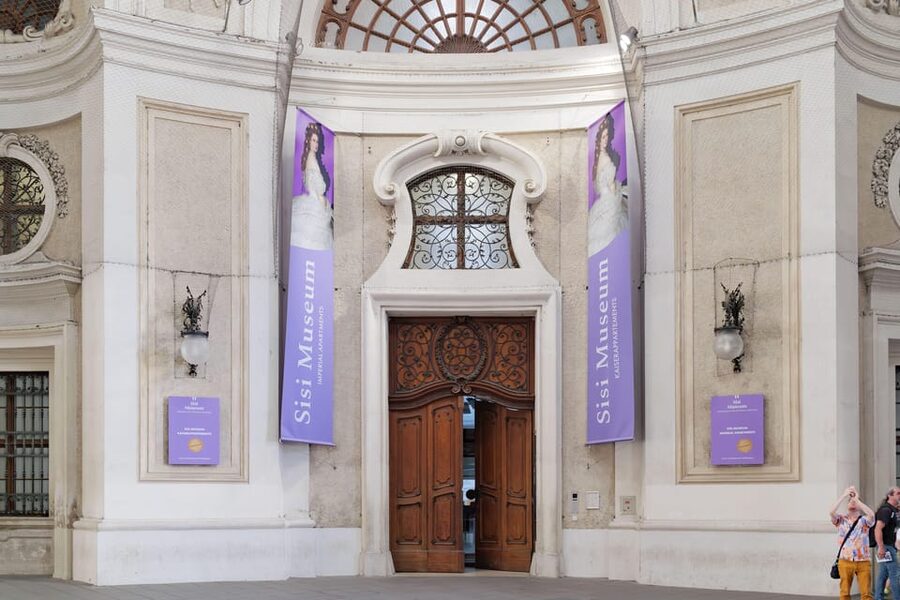
After the indoor rooms, the route opens into the Hofburg Courtyards and Heroes’ Square, known in German as Heldenplatz. This outdoor section gives you room to see the palace as an urban complex rather than a series of interior displays.
Heroes’ Square is one of the most important public spaces connected with the Hofburg. Your guide explains the setting and the buildings around it, adding the political and ceremonial meaning that is easy to miss when you simply cross the square for a photograph.
The outdoor walk also gives the group a change of pace. After the controlled museum route, you can look up at the façades, watch the movement through the palace grounds, and get a better sense of Vienna’s imperial center.
Weather matters here. One group enjoyed the tour even in rain, but you should bring suitable clothing because part of the experience takes place outside. The guide may need to keep moving in poor weather, so this is not the time to expect a long, leisurely courtyard stop.
Passing the Spanish Riding School
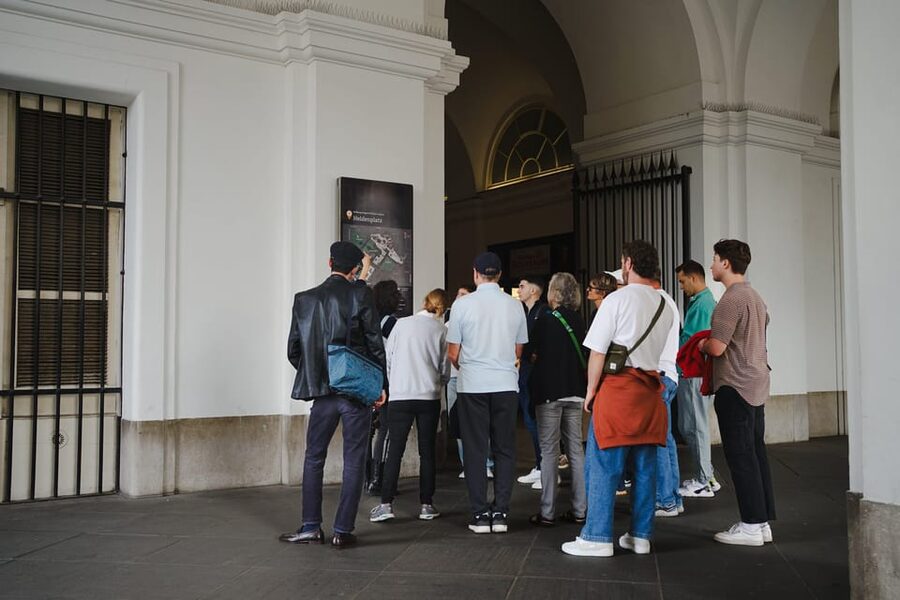
The route passes by the Spanish Riding School, home of Vienna’s famous Lipizzaner stallions. This is a highlight for many people, but it is important to understand what is included.
You pass the riding school as part of the walking route. This is not presented as a full performance or stable visit. If you want to see the Lipizzaners in action, you would need to arrange a separate experience.
Even so, the stop adds a useful layer to the palace story. The riding school is part of the living imperial tradition that still shapes Vienna’s image. Your guide can place it within the wider Hofburg setting rather than treating it as an isolated photo stop.
Horse lovers may wish the tour went further. For everyone else, the brief pass-by is a practical way to include one of Vienna’s signature sights without stretching a two-hour schedule.
Josefplatz and the Augustinian Church
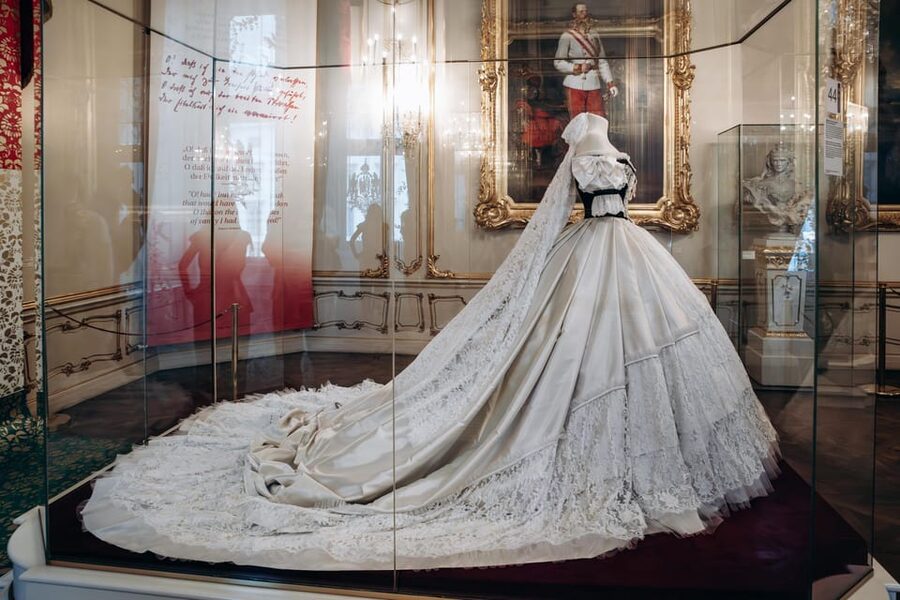
The tour ends at Josefplatz, near the statue of Emperor Joseph II. This is a convenient finish because you remain in the historic center, with several places close by for your next stop.
The route also passes the Augustinian Church, where Habsburg weddings were held. The church has a strong royal connection, including the wedding of Marie Antoinette, who spent her youth in Vienna.
You may enter the Augustinian Church on your own, but the guide cannot conduct the tour inside. Plan on a quiet independent visit rather than an extension of the guided experience. Since the church is not included as a guided stop, confirm its opening conditions separately if it is important to your plans.
Ending at Josefplatz also makes the tour easy to combine with other central Vienna sights. You can continue exploring on foot, stop for food, or return to the U3 from the city center without arranging additional transport.
Why the guide matters more than the ticket
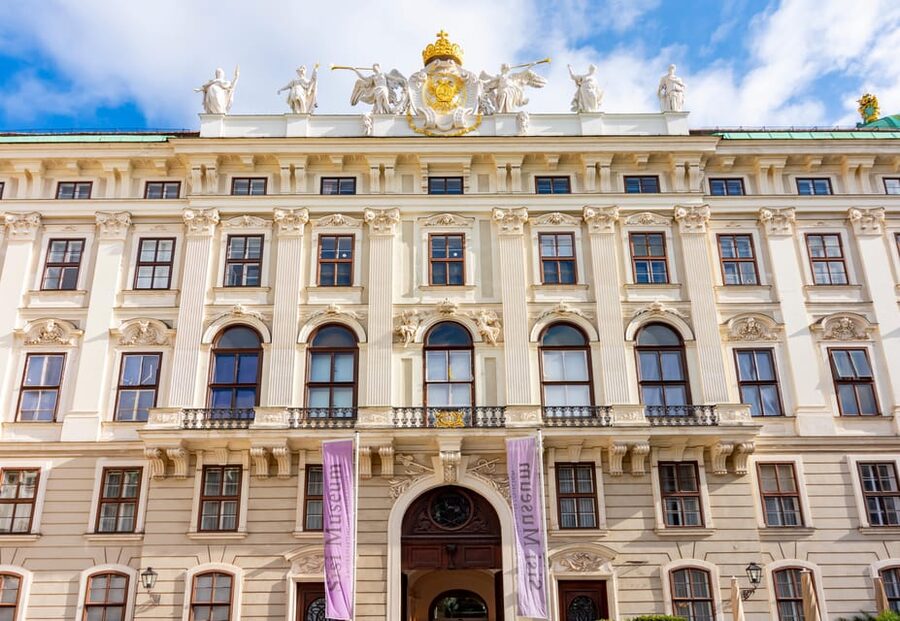
The most consistent strength of this experience is the human explanation. Nearly every strong account praises the guide’s delivery, clarity, humor, or ability to manage the group in crowded rooms.
Michael received especially high praise for his storytelling, pacing, and command of the subject. Claudia was appreciated for making stories come alive with humor. Celine was praised for watching the group, shortening explanations in crowded areas, and using visual examples. Veronica, Petra, Kristina, Janka, Karen, and Christine were also noted for clear, engaging presentations.
That range of names suggests that the quality is not tied to one individual guide. Still, every guide has a personal style. Some visitors prefer brisk coverage, while others want time for questions and slower observation. The tour appears to favor an active pace, with the guide keeping the group moving through busy rooms and outdoor spaces.
I would book this instead of visiting the museum alone if you want to understand the people behind the rooms. If you mainly want photographs and a quiet look at the décor, an independent visit may give you more control, assuming you can arrange entry.
Crowds, pace, and practical limits
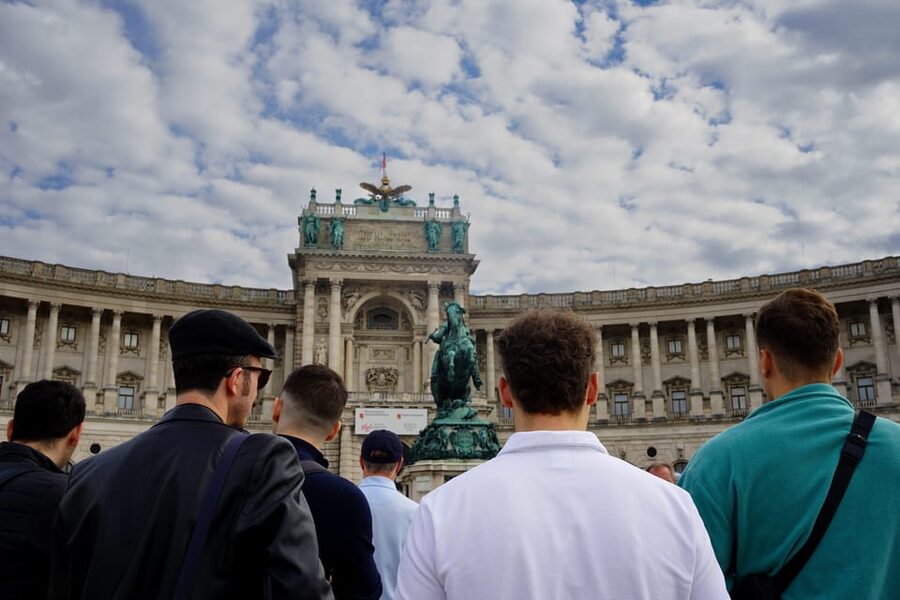
Two hours is enough for a well-shaped introduction, not a complete study of the Hofburg. You cover the museum, Imperial Apartments, courtyards, Heroes’ Square, the Spanish Riding School exterior, and Josefplatz. The benefit is focus. The tradeoff is that you cannot linger everywhere.
Crowding is the biggest practical issue. The Sisi Museum and Imperial Apartments are popular, and busy periods can make the interiors feel compressed. A guide helps by holding the group together and choosing when to move on, but skip-the-line access does not mean you will have empty rooms.
The pace is generally manageable, though this is a walking tour through a large palace complex. The experience is not suitable for wheelchair users or people with mobility impairments. Pets are not allowed, and you should not bring luggage, large bags, or backpacks. Flash photography is also prohibited.
Since transportation is not included, you handle your own route to the meeting point and away from Josefplatz. The U3 to Herrengasse is the simplest stated option for arriving.
Is $55 per person fair value?
At $55 per person, this is not the cheapest way to see the Hofburg. You are paying for more than admission, though. The price includes a professional live guide, reserved access to the Sisi Museum and Imperial Apartments, and a guided walk through the courtyards and Heroes’ Square.
I think the value is strongest for first-time visitors who want context. A guide can explain why Sisi matters, how the imperial household functioned, and how the different Hofburg spaces relate to one another. The price also buys convenience at a popular museum with timed entry.
The value is weaker if you dislike group tours, want to read every display at your own pace, or already know the Habsburg story well. Crowds can reduce the sense of space, and the two-hour format leaves little time for long personal stops.
Free cancellation up to 24 hours before the start and reserve-now, pay-later booking make it easier to fit the tour into a changing Vienna schedule. Those policies do not fix a late arrival, however. The reserved museum time is firm, so set out early.
Who should book this Hofburg experience?
I would recommend it to:
- First-time Vienna visitors who want a clear introduction to the Habsburg world
- People interested in Empress Elisabeth and the Sisi story
- Families who benefit from a lively guide rather than a long audio program
- Visitors with only a few hours for the Hofburg
- Anyone who values reserved museum entry and a planned route
- History fans who enjoy questions, anecdotes, and personal detail
I would think twice if you have limited mobility, are carrying luggage, or prefer a slow solo visit. I would also make a separate plan for the Spanish Riding School if seeing the Lipizzaner stallions perform is a main goal.
Final verdict: book it for the stories
Book this tour if you want the Hofburg to feel like more than grand rooms and royal portraits. The strongest guides turn Sisi, Franz Joseph, and the Habsburg family into people with difficult choices, public duties, and private lives.
The drawbacks are real: crowds, a firm arrival time, a brisk two-hour route, and limited accessibility. Still, the combination of reserved entry, central sights, and consistently praised storytelling makes $55 a reasonable price for a focused first visit.
Choose an early start if possible, arrive well before the meeting time, carry only what you need, and keep the Augustinian Church for an independent visit after the tour. If that plan suits you, this is a useful and entertaining way to begin understanding imperial Vienna.
FAQ
How long does the Hofburg and Sisi Museum tour last?
The tour lasts two hours, including the guided museum visit and the walk through the Hofburg Courtyards, Heroes’ Square, the Spanish Riding School area, and Josefplatz.
Where does the tour meet?
You meet your guide by the statue of Emperor Franz I at Hofburg Palace. The guide holds a sign. From Herrengasse U3 station, the walk to the Innerer Burghof courtyard takes about five minutes.
Does the tour include skip-the-line entry?
Yes. Skip-the-line access is included for the Sisi Museum and the Imperial Apartments. The museum uses reserved entry times, so arrive at least 10 minutes early.
Which languages are available?
The live tour guide is available in English, German, and Italian.
Is transportation included?
No. You arrange your own transportation to the Hofburg meeting point and from the Josefplatz finish.
Can I visit the Augustinian Church with the guide?
No. You may visit the Augustinian Church on your own. Guiding inside the church is not permitted.
Can wheelchair users join this tour?
No. The experience is not suitable for wheelchair users or people with mobility impairments. Pets, luggage, large bags, backpacks, and flash photography are also not allowed.
More Skip-the-Line Tickets
- Vienna: Schönbrunn Palace & Gardens Skip-the-Line Tour
★ 4.7 · 7,739 reviews - Vienna: Skip-the-Line Schönbrunn Palace & Gardens Tour
★ 4.8 · 5,411 reviews - Vienna: Bus & Schönbrunn Palace Skip-the-Line Guided Tour
★ 4.3 · 2,802 reviews - Vienna: Skip-the-Line Entrance Ticket to the Danube Tower
★ 4.5 · 2,303 reviews
Just added around Vienna
- Mobile puzzle rally tour at the Vienna Central Cemetery★ 4.5 · 3 reviews
- RAXI (E-Rickschaw) big private Vienna tour★ 4.5 · 3 reviews
- 8 days European Highlights PRIVATE TOUR from Budapest including Budapest Vienna Prague and Bratislava★ 5.0 · 3 reviews
- Private Transfer from Vienna to Prague with 1 hour Stop in Kutna Hora★ 4.5 · 3 reviews
- Palais Lobkowitz Audio Guide Tour★ 4.0 · 3 reviews
- Private Tour from Vienna to Melk and Dürnstein★ 4.5 · 3 reviews
- Vienna: Designer Fashion Time Capsule Experience★ 5.0 · 3 reviews
- Private day trip from Munich to Eagle’s Nest & Hallstatt★ 4.7 · 3 reviews
Hofburg & Imperial Palaces, compared.

Skip-the-Line Sisi Museum, Hofburg and Gardens Tour
Read our review →

Entry Ticket Upper Belvedere, Klimt’s Kiss & Permanent Collection
Read our review →
Combo Ticket: Kunsthistorisches Museum & Imperial Treasury
Read our review →
“Sisi’s Amazing Journey” Virtual Reality Experience
Read our review →Browse the lists this tour appears in