
Reviewed · HOFBURG & IMPERIAL PALACES
Vienna: Imperial Treasury in the Hofburg Palace
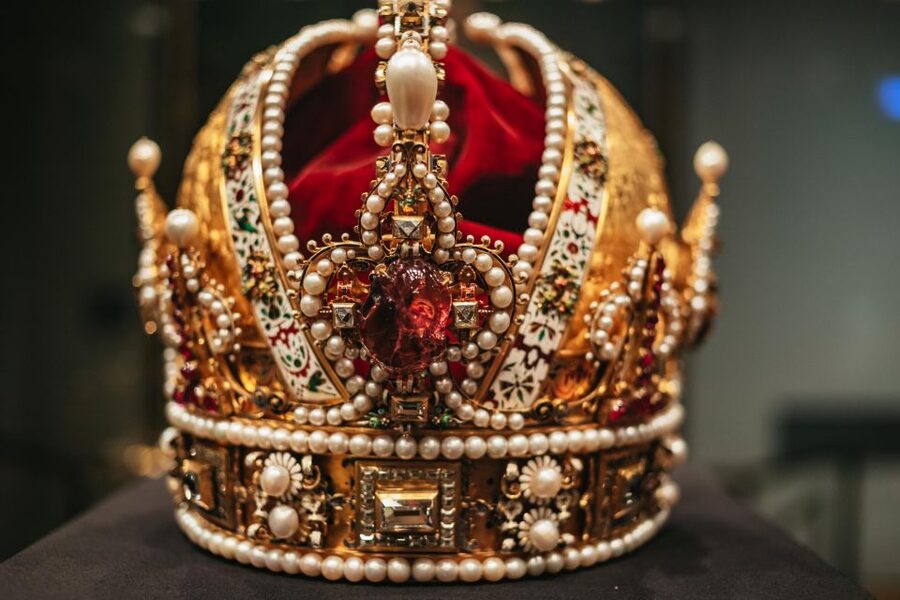
Royal treasure rarely feels this personal. In Vienna’s oldest Hofburg section, the Swiss Wing, I like the way this visit brings the Habsburg dynasty close through crowns, robes, jewels, religious relics, and everyday symbols of court power. I especially like the Austrian Imperial Crown and the Holy Roman Empire regalia, along with the remarkable emeralds, agate bowl, and other objects that sound almost too strange to be real. At $18 per person, it is a good-value stop for anyone interested in European history, art, or royal ceremony.
I also like that you can see the collection at your own pace. Most people need about an hour to an hour and a half, though a careful visit with an audio guide can take much longer. The main drawback is the ticket arrangement: you need a printed voucher, and several people found that they still had to exchange it at the ticket counter, so this is not always the quick skip-the-line experience you might expect.
In This Review
- Key points to know before you go
- Finding the Treasury inside the Hofburg Palace
- The first rooms: power worn on the body
- The Habsburg jewels and Empress Elisabeth’s personal connection
- The emeralds, agate bowl, and objects that sound impossible
- Religious relics and the Order of the Golden Fleece
- Burgundy, royal childhood, and the human side of monarchy
- How long should you spend inside?
- Is the audio guide worth it?
- Price, value, and who should visit
- Should you book the Imperial Treasury?
- FAQ
- Where is the Imperial Treasury located?
- What is the price?
- How long does the visit take?
- Is a guided tour included?
- Is an audio guide included?
- Do I need a printed voucher?
- Are children admitted free?
- Is the Imperial Treasury wheelchair accessible?
- Can I cancel the booking?
- Is the ticket valid for more than one day?
Key points to know before you go
- The Austrian Imperial Crown is the main event: This famous crown is one of the finest objects in the collection and a clear symbol of Habsburg authority.
- The Holy Roman Empire regalia is here: You can see the Imperial Crown and other objects tied to the medieval empire.
- Strange legends share the cases with serious history: The Holy Lance, a huge agate bowl known as the Holy Grail, and a supposed unicorn horn add plenty of curiosity.
- Empress Elisabeth appears through her jewelry: Parts of the original jewelry associated with Sisi are displayed among the personal treasures of Habsburg women.
- Plan on one to one and a half hours: That is enough for a brisk visit, but the audio material and detailed labels can extend your stay.
- The ticket is not a guided tour: Entrance is included, but an audio guide and personal guide are not included in the listed price.
Finding the Treasury inside the Hofburg Palace
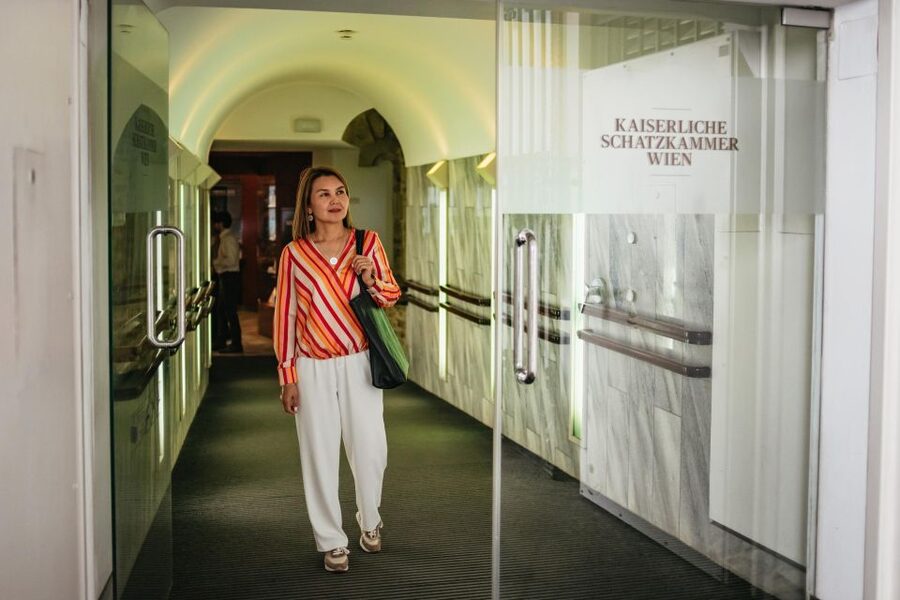
The Imperial Treasury is in the Swiss Wing of the Hofburg Palace, the oldest part of the vast palace complex. That detail matters because the Hofburg is not one simple building with one obvious entrance. It is a collection of courtyards, wings, museums, and former royal rooms, and the signs around the palace can be less helpful than you would hope.
I would allow a little extra time to find the Swiss Wing, especially if you are arriving on a tight schedule. Your meeting point is the Swiss Wing itself, not another Hofburg attraction. Once inside, the museum is fairly compact and easy to cover, although the layout can feel confusing at first.
The ticket process deserves attention. A printed voucher is required, and a QR code on your phone may not be accepted as the final admission ticket. Some ticket holders had to wait in line to exchange the voucher for an actual ticket. If you book online, print the voucher before you arrive. That small step could save you an annoying pause at the palace entrance.
The activity is listed as a small-group experience limited to 10 participants, but the admission itself is not a conventional guided walk. You receive entrance to the Treasury, then explore the rooms independently unless you arrange your own guide or obtain an audio guide separately.
More Hofburg and imperial palace visits:
- Vienna: Skip-the-Line Sisi Museum, Hofburg and Gardens Tour
★ 4.8 · 5,918 reviews - Tickets for the Albertina Exhibitions
★ 4.7 · 2,126 reviews - Vienna: Imperial Crypt Entrance Ticket
★ 4.6 · 1,507 reviews
The first rooms: power worn on the body
The Imperial Treasury is best understood as a collection of symbols. These are not simply beautiful objects placed in glass cases. Crowns, robes, keys, staffs, and ceremonial decorations helped announce who had the right to rule and how that ruler fit into the religious and political order of Europe.
The Austrian Imperial Crown deserves your first careful look. It is one of the most beautiful crowns in the collection, but its value is not only visual. It represents the authority of the Austrian rulers and gives you a useful starting point for understanding the Habsburgs as a dynasty that held power across centuries and territories.
The crown jewels of the Holy Roman Empire add a different layer. The Imperial Crown connects the Treasury to the long story of the empire, where religious ceremony and political rule were closely joined. You may find the formal objects more impressive once you understand that they were made to be seen during major public rituals, not merely admired as luxury goods.
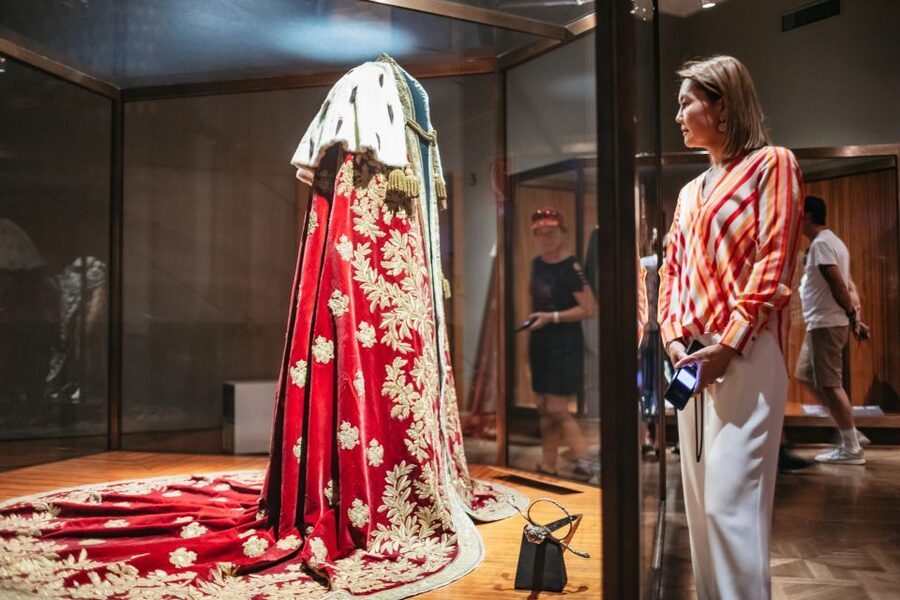
Look beyond the famous crowns. Chamberlains’ keys, court clothing, tabards, and other less obvious objects can be surprisingly rewarding. The keys, for example, speak to the structure of palace life and the many officials who controlled access to the ruler. The tabards show how ceremony turned court servants and officials into part of a carefully managed public display.
This is one reason I would not rush straight to the largest crown. The smaller objects help you picture how the court worked. They also keep the visit from becoming a parade of similar jewels.
The Habsburg jewels and Empress Elisabeth’s personal connection
The collection includes jewelry connected with Habsburg empresses and princesses. These pieces give the Treasury a more human scale. A crown may represent a state, but a necklace, brooch, or other personal ornament suggests how royal women presented themselves at court and how clothing carried political meaning.
Parts of the original jewelry associated with Empress Elisabeth, usually called Sisi, are especially appealing if you have already encountered her story elsewhere in Vienna. The display does not replace a full museum devoted to her life, but it gives you a direct link to the woman behind the famous image.
I like this section because it breaks up the grand political objects. The Habsburgs can seem remote when viewed only through imperial titles and ceremonial crowns. Personal jewelry brings the family closer, even while reminding you that royal life was carefully staged.
The jewelry also helps explain the $18 admission. If you only want to see one famous crown, the price may feel a little high for a visit that can take about an hour. But if you take time with the women’s jewelry, court clothing, religious works, and dynastic objects, the collection offers much more than a single display case.
The emeralds, agate bowl, and objects that sound impossible
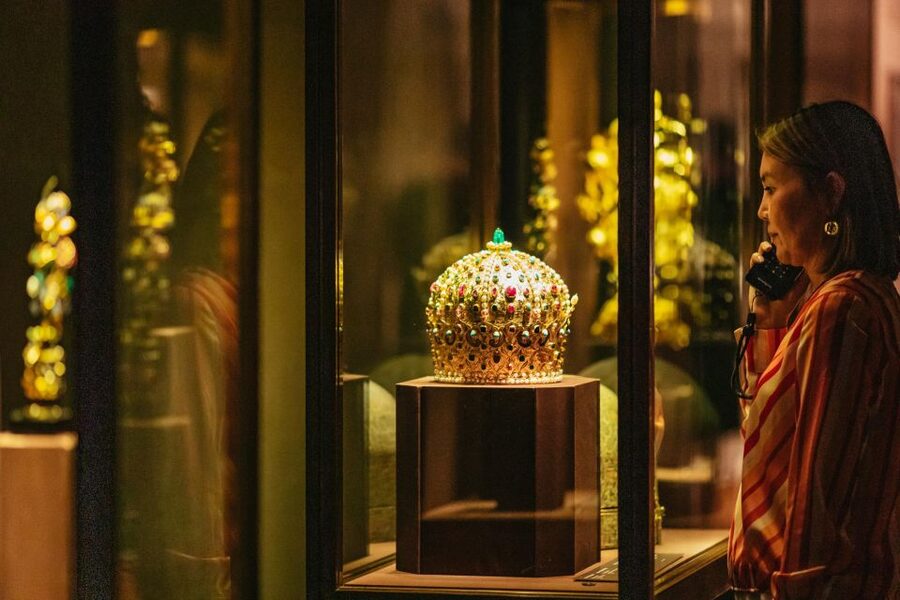
Some of the Treasury’s appeal comes from objects that are difficult to categorize. The collection includes one of the largest emeralds in the world, described in the material for this visit as the largest cut emerald in the world. Either way, it is a striking reminder that the Habsburg rulers collected rare natural objects as carefully as they collected crowns and religious treasures.
The large agate bowl is known as the Holy Grail. You should treat the name as part of the object’s long legend rather than as a simple historical label. Its size and material make it memorable, while the Grail association shows how stories and sacred meaning could grow around objects held by powerful families.
Then there is the horn of a unicorn. In modern terms, this is a wonderfully odd exhibit. It reflects an earlier age when rare animal horns, minerals, relics, and other unusual items could be treated as signs of nature’s wonders. The Treasury is at its most entertaining when it lets these legends sit beside formal imperial regalia.
The Holy Lance, dating from the 8th century, gives the religious collection another major focus. It is one of the legendary sacred objects on display, and it helps explain why the Treasury is more than a royal jewelry museum. Religious devotion, imperial ambition, and medieval legend are mixed together throughout the rooms.
A few more trips of this kind worth comparing:
- Vienna: Vivaldi’s Four Seasons Concert in Karlskirche
★ 4.7 · 14,951 reviews - Vienna: Spanish Riding School Training
★ 3.9 · 9,281 reviews - Vienna: Skip-the-cashier-desk-line Giant Ferris Wheel Ride
★ 4.5 · 7,859 reviews - Vienna: Schönbrunn Palace & Gardens Skip-the-Line Tour
★ 4.7 · 7,739 reviews
Religious relics and the Order of the Golden Fleece
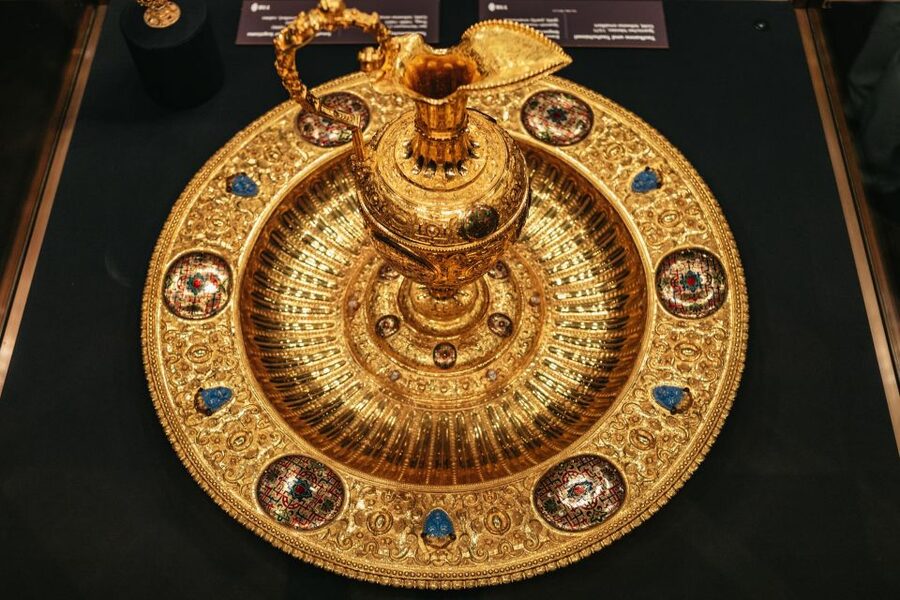
The religious objects may be the most surprising part of the visit if you arrive expecting only crowns. Relics and ecclesiastical treasures show how closely political power was linked to the Church. The Habsburg rulers did not present themselves only as wealthy monarchs. They also placed themselves within a sacred tradition.
The Treasury of the Order of the Golden Fleece is another important group. This was a prestigious order associated with the Habsburg court, and its objects reflect the honors, ceremonies, and alliances that helped bind the dynasty to European nobles.
I would give this section more time than you might expect. The crown jewels are naturally the visual stars, but the religious and ceremonial pieces explain the world that gave those jewels their meaning. Without that context, you see fine metalwork. With it, you begin to understand how rulers used ritual to reinforce their position.
The presentation is generally clear, and the objects are displayed attractively. Still, the larger story could be easier to follow. The arrangement may not provide the smoothest narrative for every visitor, so an audio guide can be useful if you want more than labels and your own reading.
Burgundy, royal childhood, and the human side of monarchy
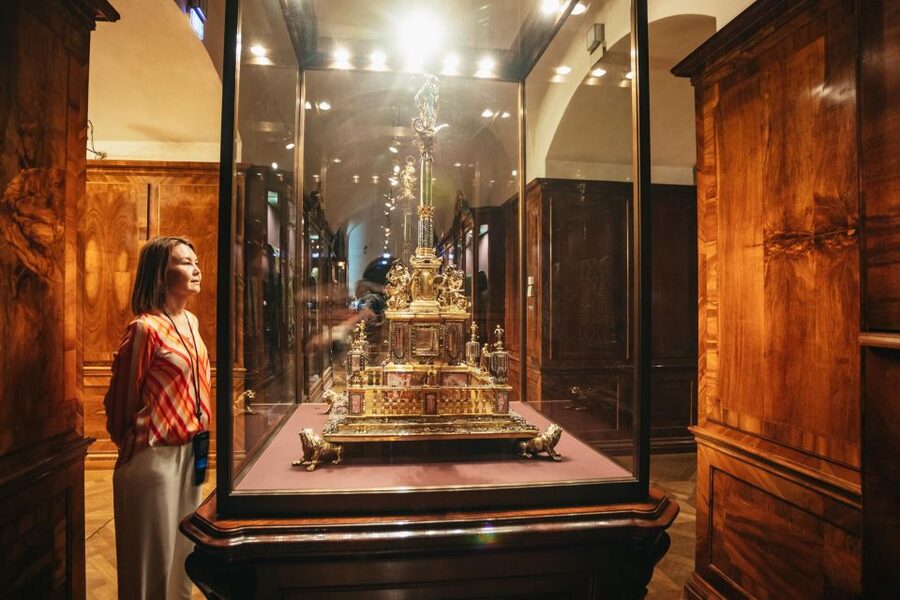
The Treasury also includes collections from 15th-century Burgundy. These objects widen the story beyond Vienna and show how Habsburg wealth and influence were connected to older European courts. For anyone interested in dynastic marriage, court culture, or the movement of objects between ruling families, this is an important part of the museum.
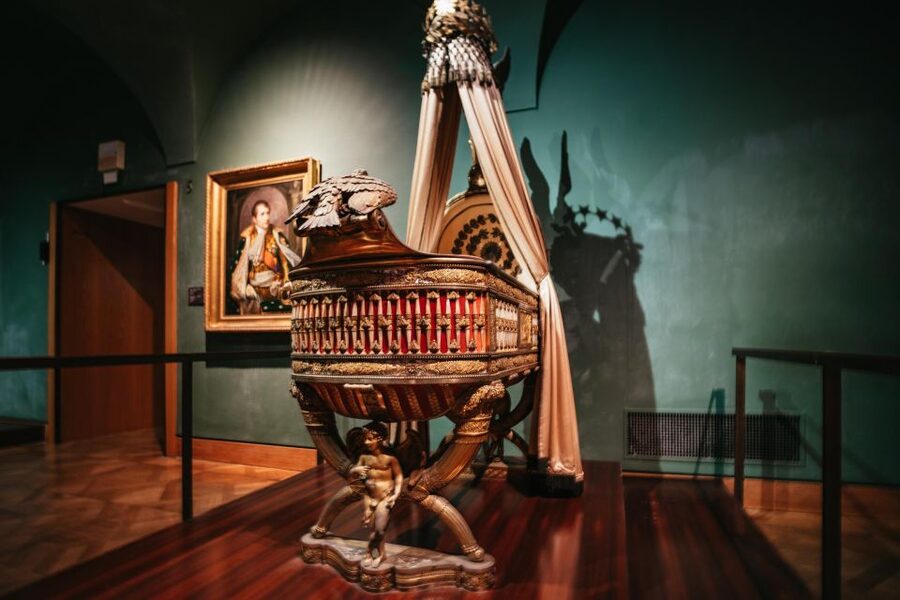
A more unusual item is the cradle of the King of Rome, Napoleon II. It is a small, intimate object compared with the crowns and religious treasures, yet it carries a great deal of political weight. A royal cradle turns an infant into a symbol of succession, expectation, and dynastic ambition.
I find displays like this helpful because they interrupt the grand scale of imperial power. A crown can feel abstract. A child’s cradle makes the family structure more visible and reminds you that dynasties depended on births, marriages, and heirs as much as on armies and ceremonies.
If you are visiting with children, these objects may help hold their attention. The stories of a crown, a supposed unicorn horn, and a royal cradle are easier to grasp than a long explanation of imperial administration. Children and young people under 19 generally receive free admission, which makes this a sensible addition to a family day at the Hofburg.
How long should you spend inside?
A brisk visit takes about an hour. That is enough to see the major crowns, imperial regalia, jewelry, religious pieces, and unusual objects without studying every label.
I would plan closer to 90 minutes if the Treasury is one of your main Vienna interests. That gives you time to pause at the Imperial Crown, compare the ceremonial pieces, read about the Habsburg women, and give the unusual relics proper attention.
An audio guide can change the timing considerably. Some visitors found that listening to detailed explanations while examining each display took several hours. Since the entrance ticket does not include an audio guide or a guided tour, check the current options before you arrive rather than assuming one is part of admission.
The museum can also work well as a shorter stop between other Hofburg sights. One visitor needed a break halfway through and was able to leave and return with help from the staff. If you need a pause, ask before exiting so you understand the reentry procedure.
Is the audio guide worth it?
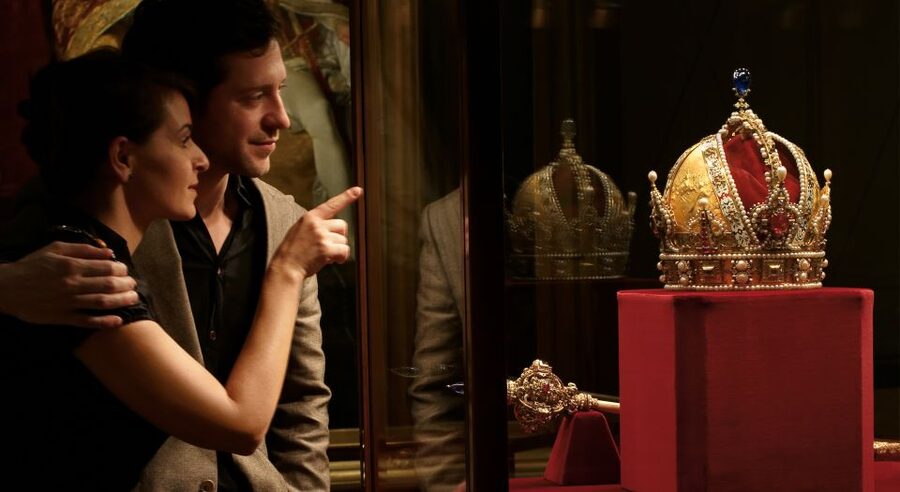
I would choose the audio guide if you want the objects explained in sequence. The collection covers several centuries and mixes political, religious, personal, and legendary material. Without added interpretation, it is possible to admire the cases without seeing how the pieces connect.
The ticket information lists the audio guide as not included. Yet some recent accounts describe an audio guide as available at no extra cost, while others advise buying one. This suggests that the arrangement may change, or that different ticket types provide different options. Confirm at the entrance before you decide how much time to allow.
A personal guide can make the experience stronger, especially if you want to ask questions about the Habsburgs, Franz Joseph, or Sisi. Guides named Petee and Alex received especially warm praise for giving clear explanations and responding well to questions. If you prefer a guided visit, remember that a guide is not included with this basic admission.
For groups of more than 10 adults, one accompanying guide may receive free admission with the proper booking arrangement. For groups of fewer than 10, guide places are not available under that rule, and the guide is charged as a paying participant. State-certified tourist guides generally enter free.
Price, value, and who should visit
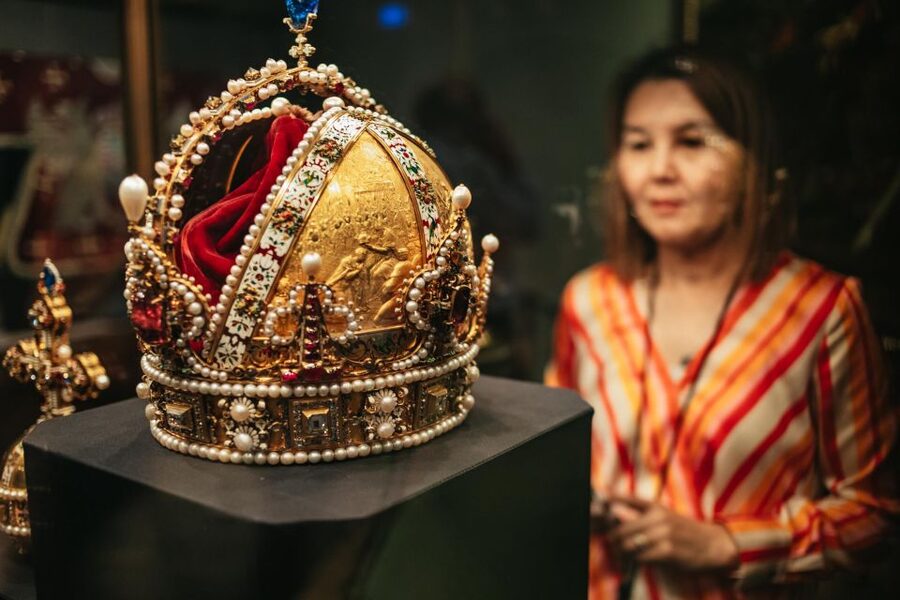
At $18 per person, the Imperial Treasury is reasonably priced for a central Vienna museum with this level of royal and religious material. I would call it good value if you enjoy crowns, dynasties, art objects, or unusual historical stories.
The price feels less convincing if you are racing through Vienna and plan to spend only 30 minutes inside. This is not a huge museum, but the objects reward attention. You are paying for a concentrated collection rather than a full day of entertainment.
I would recommend it especially for:
- Anyone interested in the Habsburgs or the Holy Roman Empire
- Visitors who enjoy royal jewelry and ceremonial objects
- Families, since admission is generally free for children and young people under 19
- Art and history enthusiasts who like religious relics and medieval legends
- Visitors already planning to see other Hofburg sights
I would be more cautious if you dislike museums without a live guide. The collection is well presented, but the story may not always unfold in the clearest order. Also, if you expect a digital ticket to take you straight inside, the printed voucher rule may frustrate you.
The Treasury is wheelchair accessible. Free cancellation is available up to 24 hours before the visit, and reserve now, pay later booking can help if your Vienna schedule is still changing. The ticket is valid for one day, with availability and starting times shown when you select your date.
Should you book the Imperial Treasury?
Yes, if you want to see Vienna’s royal power in its most concentrated form. The Austrian Imperial Crown, Holy Roman Empire regalia, Habsburg jewelry, Sisi’s personal pieces, huge emeralds, religious relics, and legendary objects make this a memorable stop inside the Hofburg.
I would book it early in your Vienna stay. The objects provide useful context for other palace visits and city sights, and you can finish the main collection in about an hour before moving on.
Print your voucher, allow time to find the Swiss Wing, and decide whether you want an audio guide or personal guide. If you do those three things, the $18 admission buys a compact but unusually powerful look at the family that shaped much of central Europe.
FAQ
Where is the Imperial Treasury located?
It is located in the Swiss Wing of the Hofburg Palace in Vienna, Austria.
What is the price?
The listed price is $18 per person.
How long does the visit take?
A quick visit takes about one hour. Allow around an hour and a half if you want to examine the displays carefully. An audio guide may extend the visit to several hours.
Is a guided tour included?
No. The entrance ticket includes admission only. A guided tour is not included, although you can visit with your own guide.
Is an audio guide included?
The listed inclusions do not include an audio guide. Information about audio guide availability may vary, so check at the entrance or when booking.
Do I need a printed voucher?
Yes. A printed voucher is required. A phone QR code may need to be exchanged for an actual ticket at the counter.
Are children admitted free?
Children and young people under 19 generally receive free admission. School groups under 19 must register through the museum’s booking department.
Is the Imperial Treasury wheelchair accessible?
Yes, the activity is wheelchair accessible.
Can I cancel the booking?
You can cancel up to 24 hours in advance for a full refund.
Is the ticket valid for more than one day?
No. The ticket is valid for one day. Check availability for the starting times offered on your chosen date.
Just added around Vienna
- Mobile puzzle rally tour at the Vienna Central Cemetery★ 4.5 · 3 reviews
- RAXI (E-Rickschaw) big private Vienna tour★ 4.5 · 3 reviews
- 8 days European Highlights PRIVATE TOUR from Budapest including Budapest Vienna Prague and Bratislava★ 5.0 · 3 reviews
- Private Transfer from Vienna to Prague with 1 hour Stop in Kutna Hora★ 4.5 · 3 reviews
- Palais Lobkowitz Audio Guide Tour★ 4.0 · 3 reviews
- Private Tour from Vienna to Melk and Dürnstein★ 4.5 · 3 reviews
- Vienna: Designer Fashion Time Capsule Experience★ 5.0 · 3 reviews
- Private day trip from Munich to Eagle’s Nest & Hallstatt★ 4.7 · 3 reviews
Hofburg & Imperial Palaces, compared.

Skip-the-Line Sisi Museum, Hofburg and Gardens Tour
Read our review →

Entry Ticket Upper Belvedere, Klimt’s Kiss & Permanent Collection
Read our review →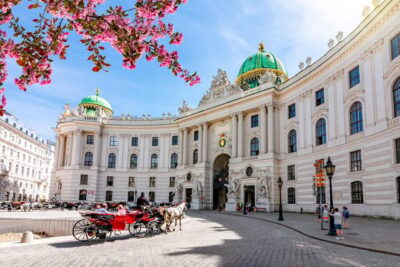
Skip-the-Line Hofburg and Empress Sisi Museum Tour
Read our review →
Combo Ticket: Kunsthistorisches Museum & Imperial Treasury
Read our review →
“Sisi’s Amazing Journey” Virtual Reality Experience
Read our review →Browse the lists this tour appears in