
Reviewed · SELF-GUIDED TOURS IN VIENNA
Vienna: The Great Plague Exploration Game
Vienna’s past becomes a puzzle trail. This self-guided city game links medieval churches, old taverns, imperial sights, and small street details through a story about the Great Plague and the song of dear Augustin. I like the private format, since your group sets the pace, and I like how the route pulls you into lanes you might skip on a standard sightseeing walk. It is also a smart pick for families whose children need something to do besides listen to dates.
The main tradeoff is simple: there is no human guide. You need your own smartphone, and the experience depends on the app working well and accepting your answers. One participant had trouble with installation and another found that correct answers were rejected because of spelling and wording. At about $7.23 per person, the price is low, but this is a playful puzzle walk rather than a full history tour.
In This Review
- Key points at a glance
- How the Great Plague game works
- Starting beside Vienna’s oldest church
- Griechenbeisl and Vienna’s old tavern culture
- Bäckerstrasse, backgammon, and a strange old mural
- Stephansplatz and the Stock im Eisen
- St. Stephen’s Cathedral and its tiled roof
- The Albertina brings art into the route
- Ending at the Hofburg Palace
- What the price really gives you
- App tips and possible frustrations
- Who should book this Vienna activity?
- Should you book the Great Plague Exploration Game?
- FAQ
- How long does the Vienna Great Plague Exploration Game take?
- Where does the game start?
- Where does the game finish?
- Is a tour guide included?
- Is the game available in English?
- Are attraction admission fees included?
- Can I cancel for a refund?
Key points at a glance
- A 90-minute route through central Vienna: Begin at St. Rupert’s Church and finish at the Hofburg, passing major sights and quieter old streets.
- The city itself is your game board: Look for clues, inspect façades, and solve questions at each stop.
- Best for families and small private groups: Children can search, guess, and lead instead of simply following a guide.
- Flexible timing: Start any time from 7:00 a.m. to 10:00 p.m., pause for coffee, and continue later.
- A strong bargain at $7.23: The low cost makes it an easy add-on, though entrance fees at St. Stephen’s Cathedral, the Albertina, and the Hofburg are not included.
- Bring patience with the app: Exact spelling, capitalization, and wording may matter when entering answers.
How the Great Plague game works
This is a city exploration game made by Questo. You book online, receive confirmation, and play with your own group. There is no guide waiting at the starting point and no fixed departure time. Instead, you use your smartphone to follow directions, hear audio stories, and solve clues that lead to the next location.
That structure changes the feel of the outing. You are not being marched from sight to sight. You may stop to examine a doorway, take a coffee break, or wander briefly before returning to the next clue. The advertised playing time is about 1 hour and 30 minutes, though the flexible format means you can take longer.
The route is private to your party. If your group has more than 15 people, you need to make multiple bookings. Children play free, which makes the price especially attractive for a family.
The game is offered in English, and most people can take part. The route begins at Ruprechtsplatz and ends near the Hofburg in central Vienna. Public transportation is nearby, and service animals are allowed.
More Self-Guided Tours in Vienna
- Vienna: Tickets for Mozarthaus Vienna with Audio Guide
★ 4.2 · 2,344 reviews - Vienna: New Hofburg Palace Audio-Guided Tour & Entry Ticket
★ 4.1 · 566 reviews - Vienna: Schlumberger Wine Cellar Guided or Self-Guided Tour
★ 4.8 · 285 reviews
Starting beside Vienna’s oldest church
Your first stop is St. Rupert’s Church, or Ruprechtskirche, at Ruprechtsplatz. This is a fitting starting point for a game about plague-era Vienna. The church is about 13 centuries old and was built with stone taken from an ancient Roman settlement.
Look closely at the building before you begin searching for the answer. St. Rupert’s is linked with the salt merchants of the Danube and is dedicated to St. Rupert of Salzburg. It also contains Vienna’s oldest bells and oldest stained-glass window.
The window in the vaulted apse dates from the 13th century. It shows Christ on the cross, with the Madonna and Child below. That small detail gives the opening stop real weight. You are not just checking in at a random landmark. You are looking at one of the city’s oldest surviving pieces of religious art.
The game asks you to inspect the area and find the answer to a question before moving on. Allow about 10 minutes. Admission is free, though the church’s concert program is separate from the game. In summer, ancient music concerts are held here, with evening performances in July.
Griechenbeisl and Vienna’s old tavern culture
The next stop takes you to Griechenbeisl, one of Vienna’s oldest restaurants. The name means Greek Inn, a nod to the Greek merchants and Levant travelers who settled in this part of town.
This stop works well because it combines a puzzle with a place that still has a clear sense of purpose. Griechenbeisl is not only an old building to photograph. It is a tavern with a long dining and music tradition. Mozart, Beethoven, and Schubert ate here, and the Mark Twain room displays framed signatures from famous diners. Luciano Pavarotti and Johnny Cash are also connected with the room.
You do not need to buy a meal to complete the stop. The game asks you to look around, solve a question or challenge, and learn the story of the place. Plan on about 15 minutes.
I would not treat the stop as a substitute for a proper visit to Vienna’s coffeehouse and restaurant culture. Still, it gives you a useful reason to notice details that you might otherwise pass without a glance. If you want to eat here, keep in mind that the meal would be an extra cost and could make the route much longer than 90 minutes.
Bäckerstrasse, backgammon, and a strange old mural
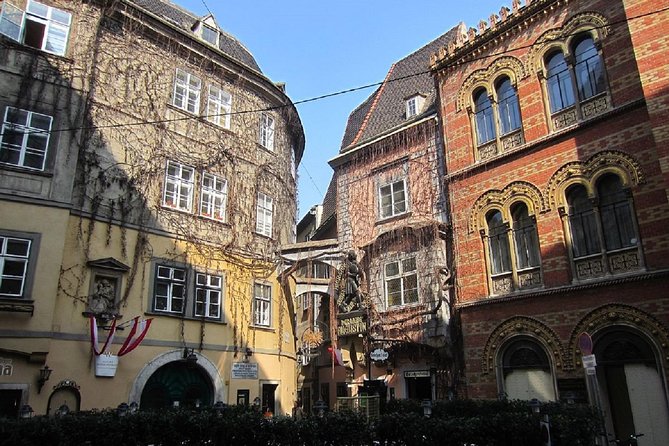
Bäckerstrasse is one of the route’s most rewarding stretches. The street has handsome 17th and 18th-century façades, old courtyards, arcades, and galleries. The game points you toward No. 2, where a peculiar mural appears on the façade of the Hasenaus, or Hare House.
The painting shows a wolf and a cow wearing spectacles while playing backgammon. It is an odd image, and that is exactly why it works in a scavenger hunt. You must look up, inspect the façade, and decide what detail the clue is asking you to find.
The mural may relate to a larger medieval scene, or it may symbolize the conflict between Protestants and Catholics. The game uses the image as a prompt to explore the street rather than offering a long lecture about its meaning.
This stop takes about five minutes. That sounds brief, but it is enough if you find the correct façade. Give yourself extra time to enjoy Bäckerstrasse itself. No. 2 has a 17th-century tower, No. 8 was the Palace of Count Seilern from 1722, and No. 16 has a Renaissance courtyard. No. 7, the Schwanenfeld House, is also noted for its courtyard with arcades and galleries.
More self-guided tours:
- Vienna: Scavenger Hunt Self-Guided Tour
★ 4.7 · 83 reviews - Vienna Walking Tour with Audioguide on Your Smartphone
★ 4.0 · 52 reviews - Vienna: Self-Guided Audio Walking Tour on Your Phone
★ 3.8 · 33 reviews - The Heart of Vienna: A Self-Guided Audio Tour
★ 4.0 · 29 reviews
Stephansplatz and the Stock im Eisen
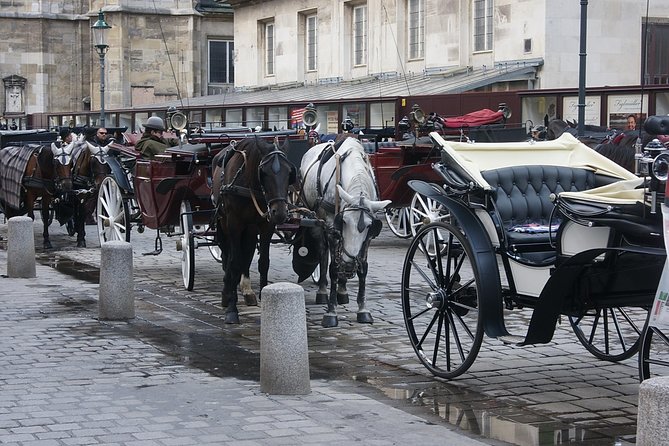
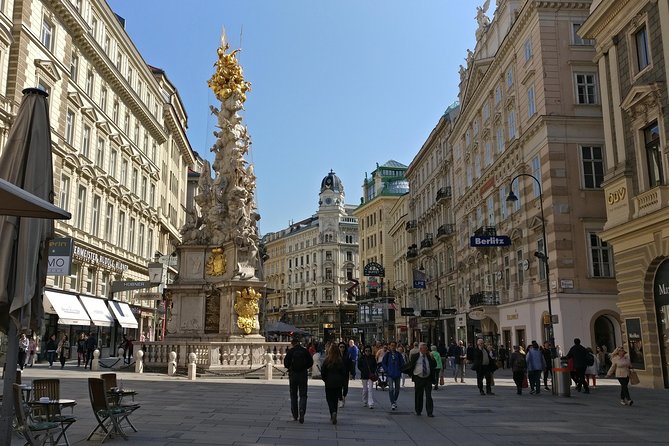
From Bäckerstrasse, clues guide you toward Stephansplatz. The square is one of central Vienna’s main meeting points, but the game asks you to approach it with a close eye rather than simply cross it on the way to the cathedral.
The puzzle gives you instructions for continuing the story. Allow about 10 minutes. Since the route is self-paced, you can pause here to orient yourself, take photos, or study the cathedral from outside.
Nearby, you find the Stock im Eisen, often called Vienna’s Nails Tree. It is the middle section of a medieval tree trunk, set on a pedestal about 1.5 meters high. An iron ring surrounds it, complete with a dummy lock.
For generations, people hammered nails into the tree for good luck. At first glance, its appearance is strange enough that it was once blamed on Satan. The ordinary explanation is more interesting: it is a record of a folk tradition that lasted through many years.
The game sends you here by clue and lets you take as much time as you wish before following the next instruction. That flexibility matters in a crowded square. You can finish the puzzle without feeling rushed.
St. Stephen’s Cathedral and its tiled roof
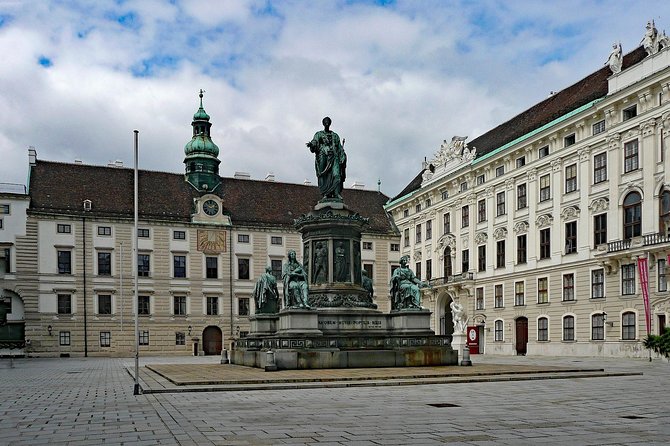
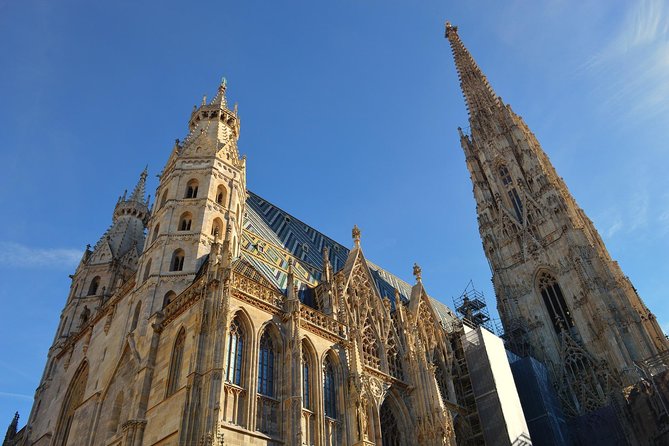
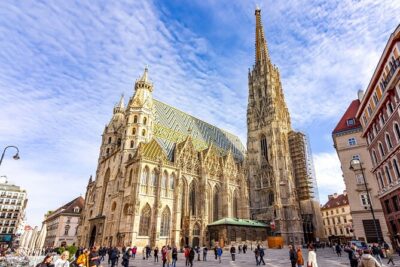
St. Stephen’s Cathedral is the grandest sight on the route. The cathedral has occupied this location since the 12th century and is one of Austria’s key Gothic buildings. Even if you have seen photographs, the roof deserves a close look in person.
Its 230,000 glazed tiles form bright patterns 38 meters above the ground. The roof includes the double-headed eagle, a symbol of the Austrian Empire under the Habsburgs. Two other eagles on the north side carry the arms of Vienna and the Republic of Austria.
The game gives you a question or challenge that requires you to inspect the cathedral and find a detail. Plan for about 15 minutes. Admission to the cathedral is not included, so you should not assume the game gives you access to every interior area or tower.
The cathedral’s tower room contains 13 bells and offers a view over Vienna, but visiting those areas would be a separate decision and expense. This is one of the route’s clear limitations. The game helps you notice the building, but it is not a cathedral tour and does not replace a full visit.
A useful nearby pause is Café Frauenhuber on Rauhensteingasse. It dates to 1746 and is known as Vienna’s oldest coffeehouse. Mozart and Beethoven reportedly played table music for diners there several times between 1782 and 1791. The café is described as peaceful and unpretentious, making it a natural place to stop if you want to stretch the outing beyond the basic playing time.
The Albertina brings art into the route
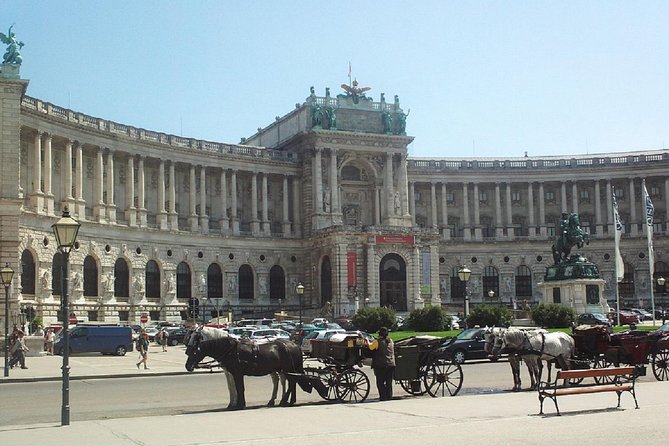
The route then moves toward the Albertina, located in one of the largest Habsburg residential palaces within the Hofburg complex. The museum has been part of Vienna’s cultural life since 1805.
Its holdings include more than 50,000 drawings and over 1 million master prints, shown on a rotating basis. The museum also covers modern art, graphic art, architecture, and photography. Works connected with Impressionism, Fauvism, German Expressionism, and the Russian avant-garde are part of its displays. Monet’s The Water Lily Pond is one noted highlight.
The game gives you about 10 minutes here. Admission is not included, so the Albertina is best treated as an optional extension rather than a built-in stop. If art is a major reason for your Vienna visit, you may want to pause the game and give the museum several hours. If you are traveling with children, the puzzle may be enough to make the exterior and surrounding palace area more interesting without committing to a museum visit.
This is one of the route’s strengths: it links art, imperial power, religious buildings, and small street curiosities without forcing you to enter every attraction.
Ending at the Hofburg Palace
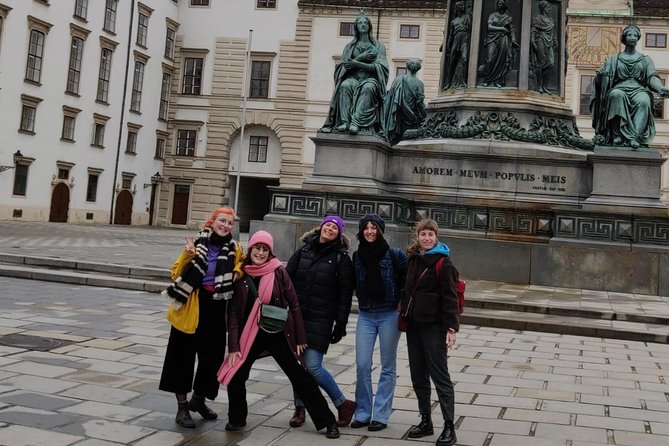
The final stop is the Hofburg, the former center of Habsburg power and the present workplace of Austria’s president. The palace has been connected with Vienna’s government since the 13th century and remained the Habsburg residence and seat of government until 1918.
There is plenty to see here. The complex includes the Imperial Apartments, a 24-room Sisi Museum, the silver collections, and the National Library. The 19th-century Hall of Ceremonies is still used for Viennese balls.
The final puzzle asks you to look around and learn the story of the palace. After about 10 minutes, the game ends, and you can continue exploring independently. Admission to the Hofburg attractions is not included.
Ending here makes practical sense. You finish in one of Vienna’s most important central areas, with several museums and palace sights nearby. The route also gives you a clear choice. You can stop after the game, or turn the final location into a longer imperial history visit.
What the price really gives you
At $7.23 per person, this is inexpensive for a private activity in central Vienna. A family can use it as a low-cost way to fill part of an afternoon, especially since children play free. Group discounts are also available.
The value comes from the structure rather than from admission to attractions. You are paying for the app, clues, audio stories, route design, and a reason to look closely at places you might miss. You are not paying for entry to St. Stephen’s Cathedral, the Albertina, or the Hofburg.
I would compare it with the price of a snack and a short independent walk. At this rate, the risk is small. The bigger question is whether you want a puzzle game or a traditional guided tour.
App tips and possible frustrations
The app is central to the experience, so install and activate it before reaching the starting point. One player had trouble getting the game running, though support resolved the problem within about 15 minutes. Another stopped after the first point because the app was difficult to use and support was not available in the moment.
Answer entry can also be fussy. A correct answer may fail if capitalization, spelling, or a connecting word such as and is missing. Type carefully, and if an answer is rejected, try the exact wording suggested by the clue rather than assuming the puzzle is wrong.
The clues were considered easy by at least one group, which may suit families and casual players. If you want difficult puzzles, this might feel light. The story and route are the main attraction.
Who should book this Vienna activity?
I would recommend it most strongly to:
- Families with children who enjoy searching and solving.
- Couples or friends who want a private, flexible walk.
- First-time visitors who want both famous sights and lesser-known street details.
- Repeat visitors who have already seen central Vienna but want a fresh reason to inspect it.
- Budget-conscious visitors who do not need a guide.
I would be more cautious if you want detailed historical teaching, constant interpretation, or a carefully led walking tour. One participant expected more historical facts and felt the experience did not match that expectation. Read the format honestly: this is an interactive route with audio stories, not a lecture.
Should you book the Great Plague Exploration Game?
Book it if you want an affordable, self-paced way to connect Vienna’s old streets with a playful story. The route covers a lot in a short time, from St. Rupert’s Church and Griechenbeisl to Bäckerstrasse, St. Stephen’s Cathedral, the Albertina, and the Hofburg. The best moments come when the clues make you notice a mural, a tree trunk covered in nails, or an old façade that would otherwise blend into the street.
Skip it if you strongly prefer a live guide or if app problems would spoil your day. For everyone else, the low price and free child participation make it a sensible choice, especially for a family or small group that likes to wander at its own speed. Cancel at least 24 hours before the start time for a full refund, and remember that the experience can be played any time during the listed 7:00 a.m. to 10:00 p.m. window.
FAQ
How long does the Vienna Great Plague Exploration Game take?
The estimated playing time is about 1 hour and 30 minutes. You can take longer because the game allows breaks and flexible pacing.
Where does the game start?
It starts at St. Rupert’s Church, Ruprechtspl. 1, 1010 Vienna, Austria.
Where does the game finish?
The game ends at the Hofburg in central Vienna.
Is a tour guide included?
No. This is a self-guided experience played on your own smartphone, with audio stories and clues.
Is the game available in English?
Yes. The experience is offered in English.
Are attraction admission fees included?
No. Admission is not included for St. Stephen’s Cathedral, the Albertina, or the Hofburg attractions.
Can I cancel for a refund?
Yes. You can receive a full refund if you cancel at least 24 hours before the scheduled start time. Cancellations within 24 hours are not refunded.
Just added around Vienna
- Mobile puzzle rally tour at the Vienna Central Cemetery★ 4.5 · 3 reviews
- 8 days European Highlights PRIVATE TOUR from Budapest including Budapest Vienna Prague and Bratislava★ 5.0 · 3 reviews
- RAXI (E-Rickschaw) big private Vienna tour★ 4.5 · 3 reviews
- Private Transfer from Vienna to Prague with 1 hour Stop in Kutna Hora★ 4.5 · 3 reviews
- Palais Lobkowitz Audio Guide Tour★ 4.0 · 3 reviews
- Private Tour from Vienna to Melk and Dürnstein★ 4.5 · 3 reviews
- Vienna: Designer Fashion Time Capsule Experience★ 5.0 · 3 reviews
- Vienna Sight & Gourmet Tour – individual private tour★ 4.5 · 3 reviews
Self-Guided Tours in Vienna, compared.
Tickets for Mozarthaus Vienna with Audio Guide
Read our review →
New Hofburg Palace Audio-Guided Tour & Entry Ticket
Read our review →
Schlumberger Wine Cellar Guided or Self-Guided Tour
Read our review →
Vienna Walking Tour with Audioguide on Your Smartphone
Read our review →
Vienna’s Old Town and Attractions Self-Guided Tour Booklet
Read our review →Browse the lists this tour appears in