

Reviewed · SELF-GUIDED TOURS IN VIENNA
Vienna’s Old Town and Attractions Self-Guided Tour Booklet
Vienna rewards slow walking. This self-guided booklet gives you a clear 3-kilometre route through the Old Town, with useful notes on 14 major sights and practical tips for planning your stops. I like the simple map and the freedom to pause for coffee, photos, or an interior visit without waiting for a group.
I also like the low price: $11 covers a group of up to 25 people, making it excellent value for couples, families, or friends. The main drawback is that the information is written, not spoken, so you must stop and read while walking. That can feel awkward, especially if you prefer an audio guide.
The route starts around St. Stephen’s Square and finishes at St. Stephen’s Cathedral, though you begin from your accommodation and make your way to the first stop. You receive the booklet as a PDF in one of 15 languages, with unlimited access and a 10% discount code for a future Rosotravel guided tour.
In This Review
- Key points at a glance
- A self-guided route through Vienna’s historic center
- St. Stephen’s Square and Mozart’s Vienna
- Haas House and Kärntner Street
- Sacher Café and the art at Albertina Museum
- The Imperial Crypt and Vienna’s imperial center
- Saint Michael Square and the Hofburg Palace
- Demel, Graben Street, and St. Peter’s Church
- Ending at St. Stephen’s Cathedral
- What the $11 price really gives you
- The written format is both strength and weakness
- Who should choose this Vienna walk
- Should you book it?
- FAQ
- How long does the self-guided Vienna tour take?
- How many attractions are included?
- Where does the route start?
- Where does the tour finish?
- Is a live guide included?
- Are entrance tickets included?
- How do I receive the booklet?
- Which languages are available?
- Is the tour wheelchair accessible?
- Does the booklet include café recommendations?
Key points at a glance
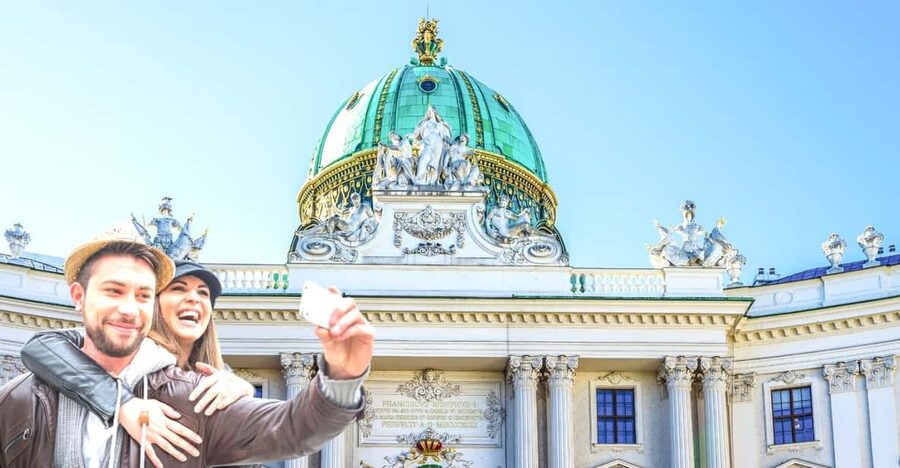
- Fourteen central attractions: The route includes St. Stephen’s Square, Mozart’s former residence, the Hofburg, the Spanish Riding School, cafés, churches, museums, and famous streets.
- A short, manageable walk: The itinerary covers about 3 kilometres and takes roughly 2 to 3 hours, before adding time for coffee or interior visits.
- Practical planning help: You get addresses, opening times, ticket information, reasons to visit, and suggestions for local establishments.
- A strong price for groups: At $11 for up to 25 people, the cost is far lower than a private guided walk.
- Flexible sightseeing: You decide which buildings to enter and how long to stay at each stop.
- Reading is required: The booklet is useful, but it does not replace an audio guide or live guide.
A self-guided route through Vienna’s historic center

This is best thought of as a well-organized walking plan rather than a traditional tour. You receive a PDF booklet and a marked map, then follow the route at your own pace.
The walk covers Vienna’s central Old Town, where grand imperial buildings, churches, museums, cafés, and shopping streets sit close together. The 3-kilometre distance is reasonable for most people, but the advertised three hours does not include every possible interior visit. If you enter a museum, tour a church, wait for a café table, or stop for photographs, you will need more time.
You start from your accommodation and make your way to the beginning of the route. The first listed point is St. Stephen’s Square, and the route ends at St. Stephen’s Cathedral. Since the meeting point is not a fixed public landmark, you have more freedom than on a scheduled walking tour, but you should read the directions in the booklet before setting off.
The PDF is available in English, German, Spanish, French, Dutch, Polish, Italian, Portuguese, Norwegian, Swedish, Russian, Hindi, Japanese, Standard Chinese, and Simplified Chinese. That range is useful for mixed-language groups and makes the booklet easier to share.
More Self-Guided Tours in Vienna
- Vienna: Tickets for Mozarthaus Vienna with Audio Guide
★ 4.2 · 2,344 reviews - Vienna: New Hofburg Palace Audio-Guided Tour & Entry Ticket
★ 4.1 · 566 reviews - Vienna: Schlumberger Wine Cellar Guided or Self-Guided Tour
★ 4.8 · 285 reviews
St. Stephen’s Square and Mozart’s Vienna
St. Stephen’s Square is a sensible starting point. It places you right in the heart of Vienna, with the cathedral as the major visual marker and several streets leading into the older center.
The booklet introduces the square and gives you context for the surrounding buildings. This is helpful because the area can feel crowded with shops and pedestrians, while the historical importance is easy to miss if you simply use it as a photo stop.
From here, the route points you toward Mozart’s former residence. This stop connects the city’s grand public image with the musical life that made Vienna famous. The booklet gives a short description, explains why the address matters, and includes practical details for deciding if you want to go inside.
That planning help is important. You are not being told that every interior is essential. Instead, you can check opening times and ticket information, then choose based on your schedule and interests. If you are focused on architecture and street life, you can keep moving. If Mozart is a priority, you have the basic facts needed to plan a visit.
Haas House and Kärntner Street
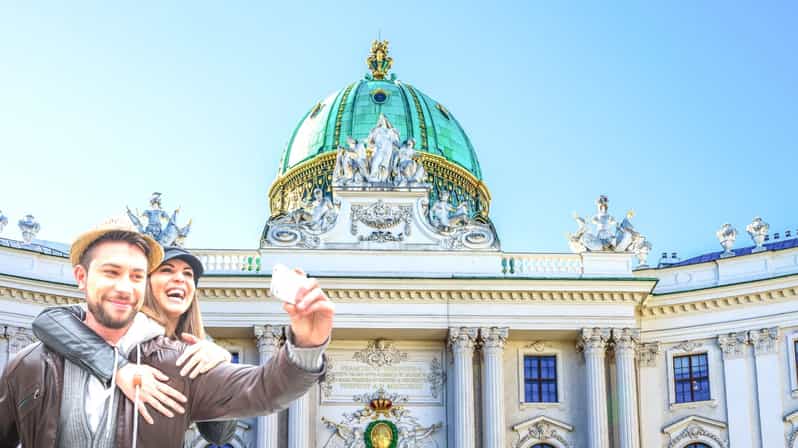
Haas House offers a change of mood. The route moves from older religious and residential history toward modern architecture in the center of Vienna.
The attraction is particularly useful as a reminder that the Old Town is not preserved in one single period. Historic buildings and newer design share the same central streets, and the booklet gives you a reason to notice that contrast rather than walk past it.
Kärntner Street then brings you onto one of the best-known central shopping streets. It is an easy place to understand Vienna’s modern city life, with plenty of movement and commercial activity.
The practical advantage of this part of the route is orientation. You are walking along recognizable streets rather than searching for scattered locations. The marked map should help you keep the route simple, although you will still need to pay attention at street corners and read the booklet as you go.
Sacher Café and the art at Albertina Museum
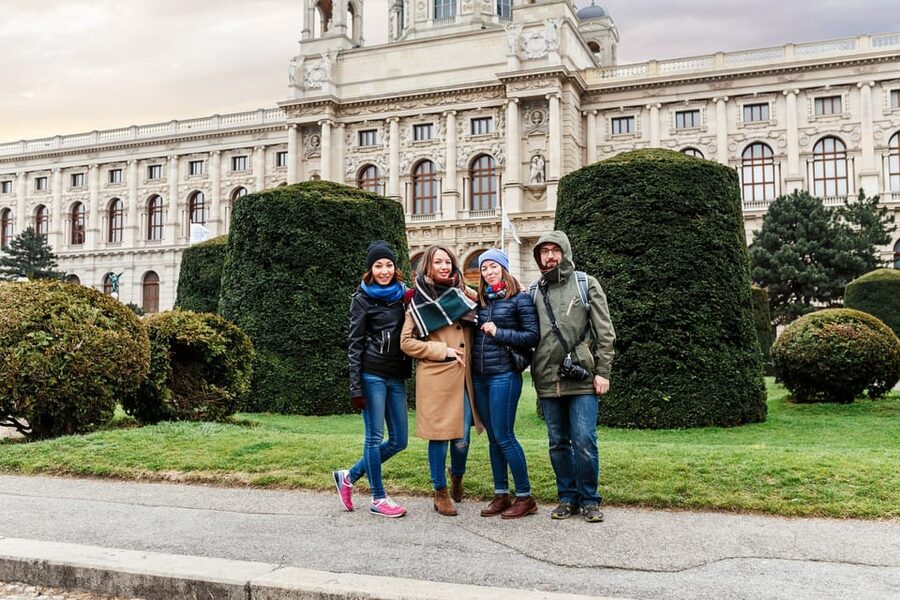
The Sacher Café is one of the route’s most tempting pauses. The booklet includes recommendations on what to order at popular coffee shops, which gives this stop more value than a basic address and one-line description.
Vienna’s café tradition is part of the experience, but a café stop affects your timing. You may need to wait for a table, and the cost of coffee or cake is not part of the $11 price. Treat the recommendation as planning advice, not as an included tasting.
The route also includes the Albertina Museum. This brings major art into a walk that otherwise focuses heavily on churches, palaces, streets, and cafés.
The booklet tells you why the museum is worth considering and provides opening hours and ticket information. That is especially useful if you have only one day in Vienna, because you can decide in advance if an interior visit fits your schedule. The tour does not include admission, so museum entry is an extra expense.
This is one of the better features of the booklet: it helps you separate sightseeing from decision-making. You can see the exterior, read the background, and save the museum for another time if you already have a full day planned.
More self-guided tours:
- Vienna: Scavenger Hunt Self-Guided Tour
★ 4.7 · 83 reviews - Vienna: The Great Plague Exploration Game
★ 4.5 · 60 reviews - Vienna Walking Tour with Audioguide on Your Smartphone
★ 4.0 · 52 reviews - Vienna: Self-Guided Audio Walking Tour on Your Phone
★ 3.8 · 33 reviews
The Imperial Crypt and Vienna’s imperial center

The Imperial Crypt adds a more solemn stop to the route. It is included among the attractions, along with practical details that help you decide if you want to enter.
As with every attraction on this walk, entry is optional and not included. That keeps the basic price low, but you must budget separately for tickets. If you want to visit several interiors, the final cost will be higher than the advertised $11.
The route continues to the Spanish Riding School, one of Vienna’s most recognizable institutions. Even if you do not attend a performance or guided visit, the stop helps explain the imperial character of this part of the city.
The booklet gives you information about visiting, opening times, addresses, and tickets. Since performance schedules and entry arrangements can shape your day, check those details before walking rather than assuming you can enter whenever you arrive.
Saint Michael Square and the Hofburg Palace

Saint Michael Square is a strong architectural stop because it leads directly into the Hofburg area. The square provides a broad view of Vienna’s former imperial center, while the Hofburg connects several parts of the city’s political and royal past.
The Hofburg Imperial Palace is not one quick sight with one simple entrance. It includes different visitor experiences, and your interests will determine how much time you need. The booklet’s short descriptions and ticket notes help you choose without forcing an interior visit into the walk.
I like this approach for first-time visitors. You receive enough background to understand what you are looking at, but you are not tied to a guide’s pace or a fixed entry time.
The limitation is that short written descriptions cannot offer the depth of a live guide. You will get the outline of the site, but not a long conversation about court life, architecture, or individual rooms. If you want detailed interpretation, use the booklet as a starting point and consider applying the 10% Rosotravel discount to a future guided tour.
Demel, Graben Street, and St. Peter’s Church
Demel is another chance to use the café recommendations. It is paired naturally with Graben Street, one of the central Old Town routes, so you can combine food, architecture, and people-watching without adding much distance.
The booklet’s suggestions about what to order are a practical touch. Many sightseeing guides tell you where to go but stop before the useful part. Here, you get help making a choice once you arrive.
Graben Street also gives the walk a strong sense of place. It is not only a route between monuments. It shows you how Vienna’s historic center functions as a public city space, with grand façades and daily city life sharing the same setting.
St. Peter’s Church adds another important religious building before the final cathedral stop. You can admire the exterior and read the background, then decide if you want to enter. Again, opening times and ticket information are provided, but any admission cost is yours.
Because these stops are close together, this section can move quickly if you want a short orientation. It can also become a longer break if you stop for coffee or spend time inside the church.
Ending at St. Stephen’s Cathedral

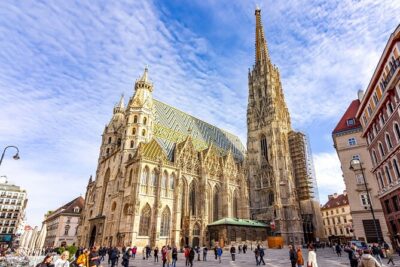
St. Stephen’s Cathedral is the final attraction and the natural closing point for the walk. After seeing the square, streets, churches, palace area, and museums, you arrive at the building that anchors the route.
The booklet explains why you should visit and includes practical information for planning an interior visit. The cathedral is not included as an admission experience, so check the provided details if you want to go beyond the exterior.
Ending here is convenient. You finish in one of Vienna’s most central areas, with the main route completed and the option to continue exploring on your own.
The route design also makes the experience easy to divide. You can treat it as a single morning or afternoon walk, or use the booklet over several days because access is unlimited. The latter approach works well if you want to return for museum visits or café stops.
What the $11 price really gives you
The $11 price is for a group of up to 25 people, not a per-person charge. For two people, it is already inexpensive. For a larger family or group of friends, the value becomes especially strong.
You are paying for planning, route design, historical notes, practical details, and a map. You are not paying for entrance tickets, transport, food, a live guide, or an audio narration.
That difference matters. If you want someone to lead you, answer questions, and tell stories as you walk, this is not the right product on its own. If you want a low-cost plan that keeps you from missing the major central sights, it works well.
The booklet may also save time before your trip. Instead of researching 14 addresses, opening times, and ticket rules separately, you have the information in one place. The direct Google Drive link appears on your voucher after booking, and you can download the PDF on any device.
The written format is both strength and weakness
The strongest practical feature is also the main limitation. You can read at your own speed, stop when you want, and revisit information later. But you must handle the booklet yourself while walking.
A verified booking note described the route as easy to follow and said it led to good places in town. That matches the purpose of the marked map and central route.
Another useful point was the wish for an audio option. That is a fair criticism. Reading on a busy street means stopping often, and you may miss details if you try to walk and read at the same time.
My advice is simple: download the PDF before leaving, review the route at your accommodation, and use the map for navigation while stopping in safe, convenient places to read the descriptions. Do not expect a hands-free audio tour.
Who should choose this Vienna walk
I would choose this experience if you want a cheap first look at central Vienna and prefer setting your own pace. It suits independent visitors, families who need flexibility, and groups who do not want to pay for several individual guided-tour tickets.
It is also useful if you have limited time and want a sensible route through major sights. The distance is short, the stops are central, and the booklet helps you decide which interiors deserve extra time.
You might choose something else if you want detailed storytelling, constant explanations, or an audio format. It is also less suitable if you dislike reading from a phone while walking.
The route is wheelchair accessible, which is a helpful feature for many visitors. Still, the experience remains self-managed, so you will need to use the route information and make your own decisions about each attraction.
Should you book it?
Book this booklet if you want a flexible Old Town plan at a very low group price. The marked map, 14 attractions, café suggestions, opening times, and ticket notes give you more than a bare walking map.
Skip it if your main goal is a live guide or spoken commentary. For everyone else, it is a practical way to get your bearings in Vienna, see the central sights, and decide where to spend more of your time and money.
The best use is to treat it as a framework, not a strict schedule. Follow the route, pause for coffee at Sacher Café or Demel, enter only the museums and churches that interest you, and keep the PDF available for a return visit.
FAQ
How long does the self-guided Vienna tour take?
The walking tour takes approximately 2 to 3 hours. The route covers about 3 kilometres, not including extra time for café stops or interior visits.
How many attractions are included?
The booklet covers 14 attractions in Vienna’s Old Town, including St. Stephen’s Square, the Hofburg Imperial Palace, Albertina Museum, Demel, Graben Street, and St. Stephen’s Cathedral.
Where does the route start?
The route starts from your accommodation, where you make your way to the first place on the route, St. Stephen’s Square.
Where does the tour finish?
The route finishes at historic St. Stephen’s Cathedral.
Is a live guide included?
No. This is a self-guided booklet and does not include a live guide.
Are entrance tickets included?
No. Attraction tickets are not included. You decide which attractions to enter and pay any admission costs separately.
How do I receive the booklet?
After purchasing, you receive a direct link to a Google Drive folder through the voucher. The booklet is provided as a PDF and can be downloaded on any device.
Which languages are available?
The booklet is available in 15 languages: English, German, Spanish, French, Dutch, Polish, Italian, Portuguese, Norwegian, Swedish, Russian, Hindi, Japanese, Standard Chinese, and Simplified Chinese.
Is the tour wheelchair accessible?
Yes, the activity is listed as wheelchair accessible.
Does the booklet include café recommendations?
Yes. It includes recommendations for local establishments and advice on what to order at popular Vienna coffee shops.
Just added around Vienna
- Mobile puzzle rally tour at the Vienna Central Cemetery★ 4.5 · 3 reviews
- RAXI (E-Rickschaw) big private Vienna tour★ 4.5 · 3 reviews
- 8 days European Highlights PRIVATE TOUR from Budapest including Budapest Vienna Prague and Bratislava★ 5.0 · 3 reviews
- Private Transfer from Vienna to Prague with 1 hour Stop in Kutna Hora★ 4.5 · 3 reviews
- Palais Lobkowitz Audio Guide Tour★ 4.0 · 3 reviews
- Private Tour from Vienna to Melk and Dürnstein★ 4.5 · 3 reviews
- Vienna: Designer Fashion Time Capsule Experience★ 5.0 · 3 reviews
- Private day trip from Munich to Eagle’s Nest & Hallstatt★ 4.7 · 3 reviews
Self-Guided Tours in Vienna, compared.
Tickets for Mozarthaus Vienna with Audio Guide
Read our review →
New Hofburg Palace Audio-Guided Tour & Entry Ticket
Read our review →
Schlumberger Wine Cellar Guided or Self-Guided Tour
Read our review →
Vienna Walking Tour with Audioguide on Your Smartphone
Read our review →
Browse the lists this tour appears in