Reviewed · TOURS
Vienna: Time Traveling Virtual Reality Sightseeing Tour
History comes alive at street level. This Vienna tour combines a 3.2-kilometer walk through the old town with six virtual-reality scenes that place you inside key moments from the city’s past. I like the clever mix of real streets and digital time travel, and I like that the route gives first-time visitors a useful introduction to central Vienna without trapping them indoors. The main drawback is that the VR graphics can look rough and blurry, while some of the tour is spent listening to audio as you walk.
The route is flat, wheelchair accessible, and easy to fit into a first day in Vienna. Still, this is not a nonstop headset show. You use the equipment at selected stops, while the walking portions rely on your guide and audioguide. At $45 per person, I find the price reasonable if you want history presented in a fresh way, but less attractive if you only want a traditional walking tour.
In This Review
- Key Points Before You Book
- A New Way to Get Your Bearings in Vienna
- Why the Combination of Walking and VR Works
- Scene One: White Sunday in 1483
- Scene Two: The Ottoman Siege of 1683
- Scene Three: Plague, Music, and Augustin
- Scene Four: Sisi and Franz Joseph at the Hofburg
- Scene Five: The Opera and Vienna in the 1920s
- Scene Six: St. Stephen’s Square in 1945
- The Live Guides and Audio Experience
- Price, Timing, and Who Gets Good Value
- Weather, Accessibility, and Simple Planning Tips
- Should You Book the Vienna VR Tour?
- FAQ
- Where does the Vienna VR tour begin?
- Where does the tour finish?
- How long does the experience last?
- How far do you walk?
- What languages are available?
- Are the VR glasses included?
- Is the tour wheelchair accessible?
- Is the tour suitable for children?
- Can people with epilepsy join?
- Can bad weather cancel the tour?
Key Points Before You Book
- Six VR scenes across central Vienna: See religious ceremony, war, plague, imperial life, 1920s opera culture, and the final days of World War II.
- A real 3.2-kilometer city walk: The route travels over flat ground from Neuer Markt to the Albertina.
- 360-degree viewing: The headset lets you look around in every direction, making each historical scene feel more immediate than a standard picture or lecture.
- English and German live guiding: The tour guide leads the walk, while an audioguide is available in English, Spanish, Dutch, French, Italian, and Russian.
- Good first-day orientation: The route connects major central sights and gives you stories that help explain how Vienna developed.
- A few practical limits: Children under eight and people with epilepsy should not join, and bad weather can cause a last-minute cancellation.
A New Way to Get Your Bearings in Vienna
I would use this tour early in a Vienna visit, especially if you want more than a list of palaces and dates. The walk gives you a basic sense of the old town, while the headset scenes show how the same places looked during major turning points.
The experience begins at Neuer Markt 6. Arrive 15 minutes early and look for the turquoise entrance. That detail matters because Neuer Markt has several businesses and passages, and arriving late could mean missing the equipment briefing.
You receive virtual-reality glasses and earphones for the audio guide. The guide explains how to use the headset, then leads the group through central Vienna toward the Albertina. The live tour is offered in English or German. The audio portion has more language choices, which is useful if you prefer to absorb historical detail in Spanish, French, Italian, Dutch, or Russian.
The route covers about 3.2 kilometers and takes roughly 100 minutes, though the guided sightseeing portion is also listed as 105 minutes. In practical terms, plan on about an hour and forty minutes, with a little flexibility. You are walking on flat terrain, but you still need comfortable shoes because this is a city tour, not a seated attraction.
A few more trips of this kind worth comparing:
- Vienna: Vivaldi’s Four Seasons Concert in Karlskirche
★ 4.7 · 14,951 reviews - Vienna: Spanish Riding School Training
★ 3.9 · 9,281 reviews - Vienna: Skip-the-cashier-desk-line Giant Ferris Wheel Ride
★ 4.5 · 7,859 reviews
Why the Combination of Walking and VR Works
The strongest idea here is the connection between present-day Vienna and the scenes from the past. A headset alone can feel like a video game. A walking tour alone can leave you trying to imagine buildings, crowds, and events that no longer exist. Here, the guide brings you to the real location, then the headset supplies the missing layers.
The 360-degree view is important. Instead of looking at one framed image, you can turn your head and inspect the scene around you. That makes the historical moments feel more physical. You are not simply told that a procession passed a cathedral or that soldiers entered a square. You get a chance to look around the setting as the event unfolds.
The technology is not perfect. One part of the experience has been described as slightly blurry, with indistinct faces and older-looking graphics. The 1920s opera scene may also feel less lively than expected because it does not fully show the dancing and period clothing some people hope to see. I would approach the headset as a strong teaching tool, not as a cutting-edge cinema production.
That distinction helps set the right expectations. If you want photorealistic VR, you may find the images dated. If you want a memorable way to connect places with historical events, the rough edges matter less.
Scene One: White Sunday in 1483
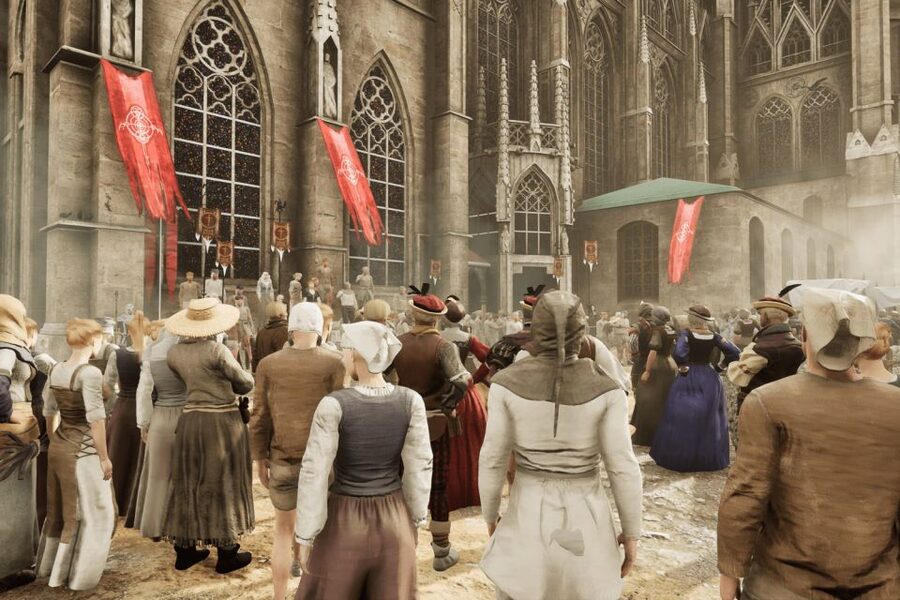
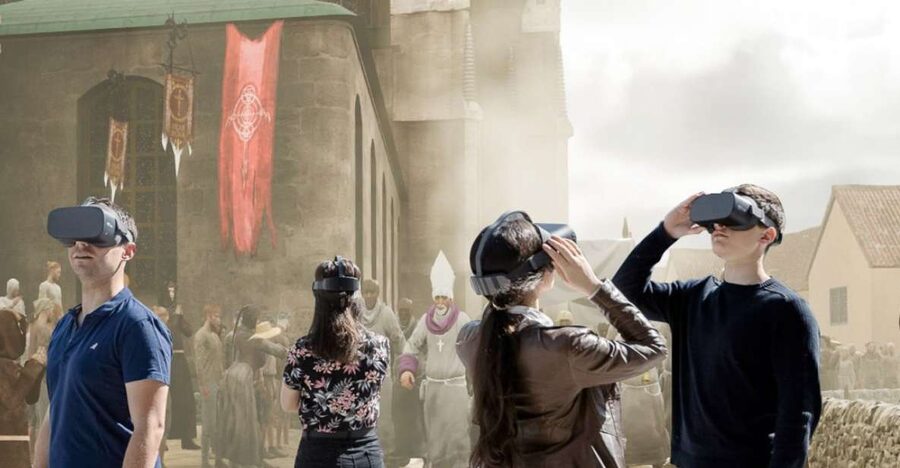
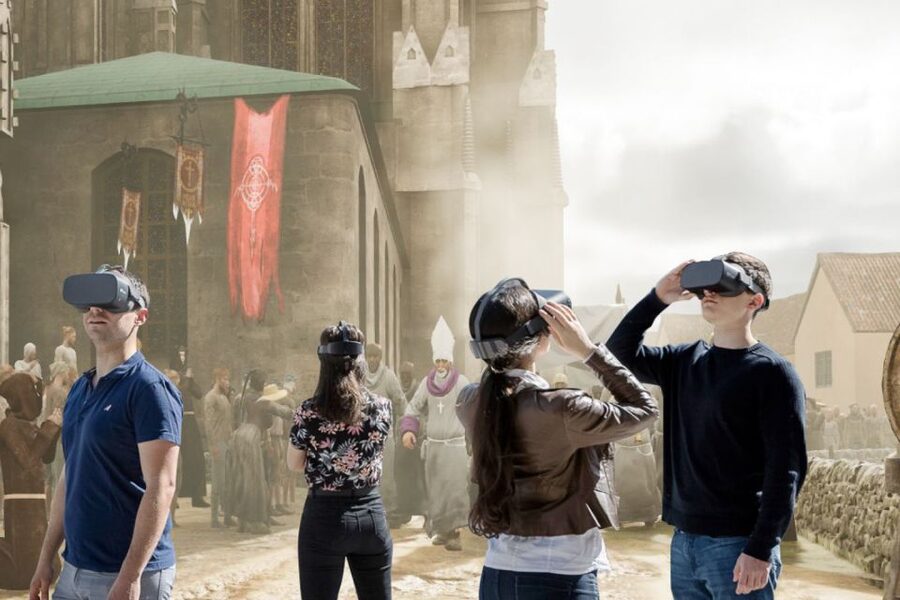
The first historical scene takes you to White Sunday in 1483. This was one of the rare occasions when religious ornaments were brought out and shown to the public, and the VR sequence places you inside the procession.
This moment works well because it shows Vienna before the imperial image most people know today. The city was shaped by church life, ritual, and public ceremony long before grand museums and palace boulevards became its calling cards.
At the real location, you can compare the modern streets with the older setting shown through the headset. Look around rather than staring straight ahead. The 360-degree view is designed for that, and the surrounding activity is part of the scene.
The historical material may appeal most to people who enjoy social history. You are not only hearing about rulers or battles. You are seeing how ordinary public life could revolve around religious display and ceremony.
Scene Two: The Ottoman Siege of 1683
The next scene puts you in Vienna during the second Ottoman siege in 1683. The mood changes quickly from ceremony to danger. You take cover while the city faces bombardment and another major threat from the Ottoman Empire.
This is one of the tour’s most direct demonstrations of how war shaped Vienna. The city’s location made it a target and a meeting point between different powers. Standing in the old town while the headset recreates the attack gives the event a local scale. It is no longer just a date attached to a textbook paragraph.
I appreciate that the scene is tied to a specific place rather than shown in an anonymous virtual setting. You can walk away with a better sense of why Vienna’s fortifications, walls, and political importance mattered.
The VR image quality may affect how much you enjoy this portion. If you are sensitive to blurry graphics, you may find the scene less convincing than the idea behind it. Still, the sound, movement, and setting help carry the story.
A completely different kind of day out in Vienna:
- Vienna: Schönbrunn Palace & Gardens Skip-the-Line Tour
★ 4.7 · 7,739 reviews - Vienna: Light of Creation Votive Church Immersive Light Show
★ 4.8 · 6,779 reviews - Vienna Spanish Riding School Guided Tour
★ 4.7 · 6,765 reviews - Vienna: Classical Concert in the World-Famous Musikverein
★ 4.6 · 6,673 reviews
Scene Three: Plague, Music, and Augustin
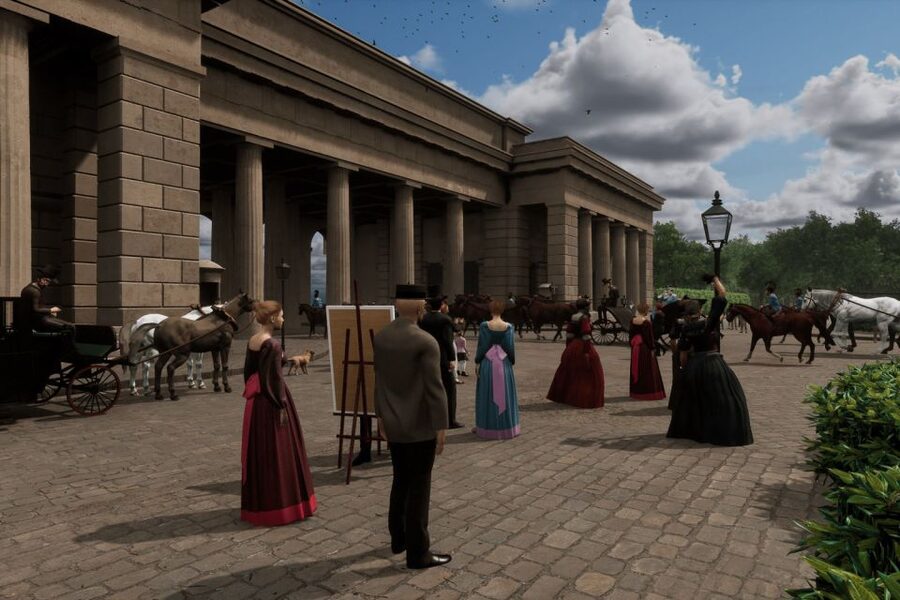
The plague scene is the darkest part of the tour. You see Vienna during the epidemic that killed half of Europe and hear the story of Augustin, a singer who used humor and music during a terrible period.
This section adds something that a parade of emperors and military victories cannot. It shows how people coped with fear, illness, and death. The story of Augustin gives the stop a human center, and the use of music keeps the scene from becoming only a grim statistics lesson.
You should expect a somber atmosphere here. The experience does not treat the plague as a colorful backdrop. It presents a city under pressure and shows how humor could help people endure frightening times.
For me, this is the kind of story that makes a city tour worthwhile. You learn not only what happened to Vienna, but also how people responded. That is more memorable than memorizing another royal date.
Scene Four: Sisi and Franz Joseph at the Hofburg
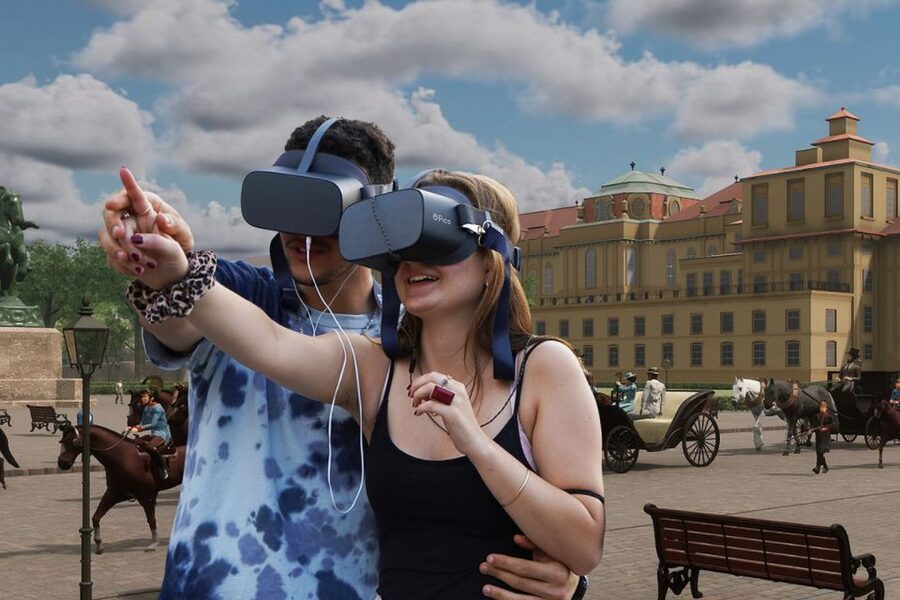
At the Hofburg, the tour shifts to imperial Vienna. On a sunny day, you walk near the palace and see Empress Sisi and Emperor Franz Joseph on a hunting trip.
The playful detail is that you are standing close to the road, so you can wink as they pass. That small touch keeps the scene from becoming stiff. Vienna’s imperial story can easily turn into a parade of formal names and grand rooms, but this moment gives the royal couple a more casual public presence.
The Hofburg is one of the best places for this kind of comparison. The modern palace complex is all around you, and the headset can show a past version of the area with the imperial household moving through it.
This stop will suit you if you enjoy the human side of royal history. It is less about explaining every palace room and more about giving you a quick picture of public life around the Habsburg court.
Scene Five: The Opera and Vienna in the 1920s
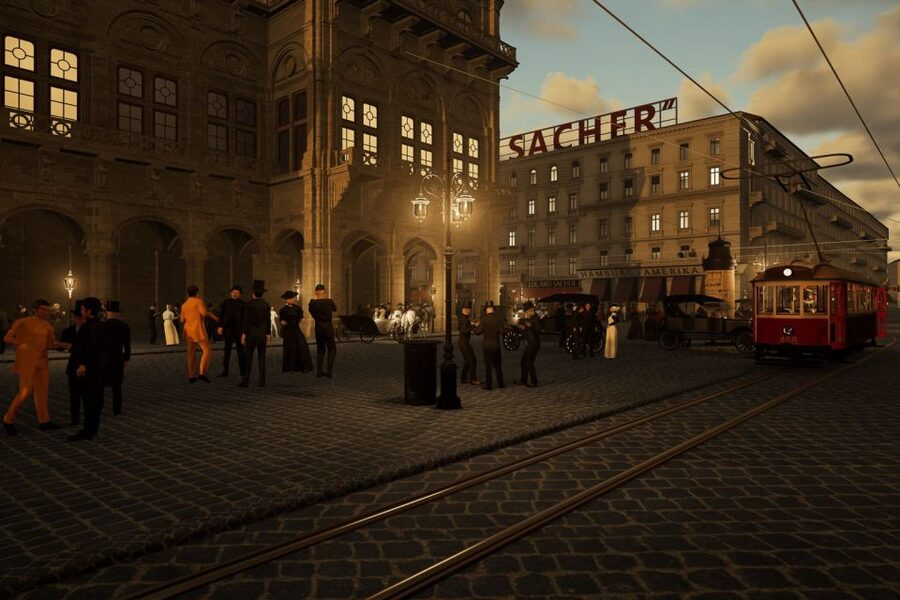
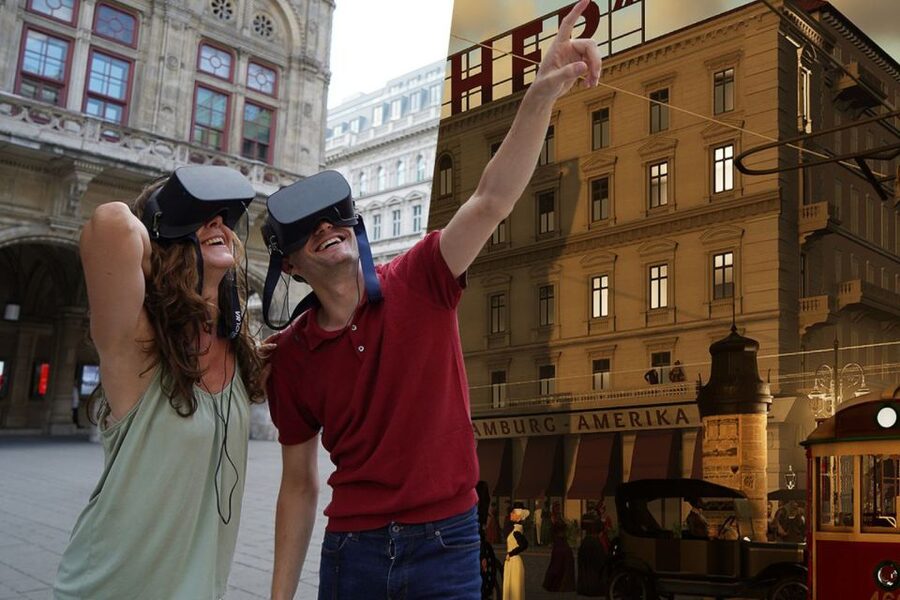
The Opera scene moves into the golden 1920s. You see people preparing for an evening performance and get a glimpse of Vienna’s cultural life around the opera house.
This part helps balance the military and political scenes. Vienna was not only a city of sieges, emperors, and disease. It was also a place of music, theater, dress, and public ritual.
The scene has a clear limitation. The VR does not fully deliver the lively social atmosphere some people expect from a 1920s setting. If you hope to see a full dance floor or detailed period fashion, the presentation may feel thin.
Even so, the stop works as a short cultural snapshot. The Opera is one of Vienna’s defining landmarks, and the historical layer gives you a reason to notice the building and its surroundings beyond taking a photograph.
Scene Six: St. Stephen’s Square in 1945
The final scene takes you to St. Stephen’s Square during the last month of World War II. You see the cathedral burning and witness Soviet forces driving the last German soldiers out.
This is the most powerful location-to-event connection on the route. St. Stephen’s Cathedral is one of Vienna’s central symbols, so seeing it damaged by war brings the city’s recent past into sharp focus.
The scene also prevents the tour from treating Vienna as a city frozen in imperial nostalgia. The modern city was shaped by destruction, occupation, and recovery as much as by palaces and music.
You may want to spend a few quiet minutes at the square after the headset sequence ends. The tour finishes at the Albertina, but St. Stephen’s is a natural place to pause and think about the distance between the current city and the wartime scene you have just seen.
The Live Guides and Audio Experience
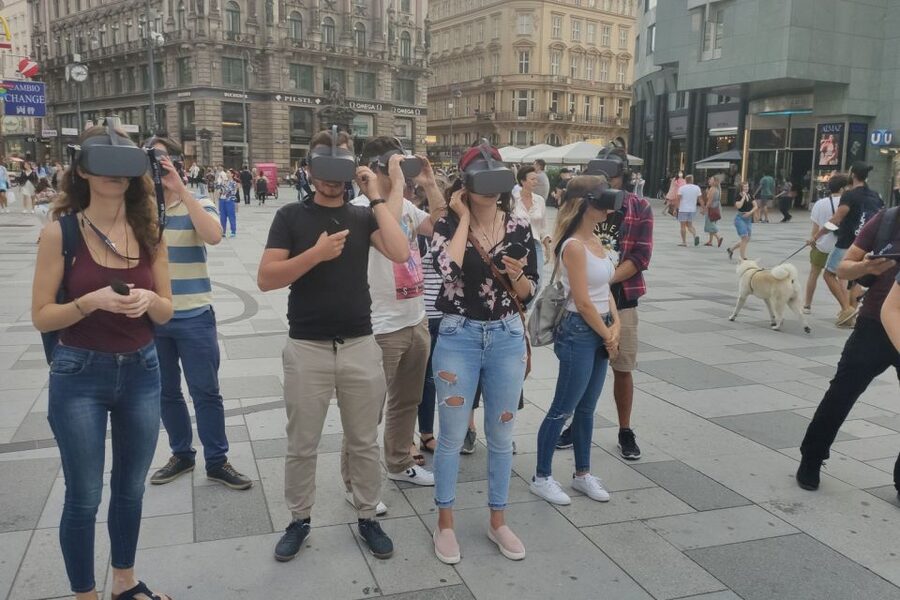
The guide matters because the headset cannot explain itself. The equipment needs a short introduction, and the walking sections depend on clear narration. Guides named Julian and Dr. Reiner have been associated with the experience, with Julian noted for speaking German and English fluently.
The live guide operates in English or German. If your group includes both languages, the delivery may take longer or feel less smooth because the guide has to switch between them. You may prefer a departure where your chosen language matches most of the group.
The audioguide adds flexibility. You receive earphones, and the audio is available in six languages: English, Spanish, Dutch, French, Italian, and Russian. This is a useful feature for anyone who understands written English better than spoken English or prefers to learn at a different pace.
The balance between live commentary and recorded material can vary. Much of the walk involves moving through city streets while listening, and only certain points use the VR headset. If you want constant interaction with the guide, a standard small-group walking tour may suit you better.
Price, Timing, and Who Gets Good Value
At $45 per person, this is not the cheapest way to see Vienna’s old town. You are paying for a guided walk, the VR equipment, the audio system, and the added work of creating six historical scenes.
I think the price makes sense for a first visit if you value unusual presentation and want a quick city introduction. It can also save you from booking a separate orientation walk and a separate history-focused attraction. You do not pay for food or drinks, so budget for those on your own.
The value drops if you already know central Vienna well or prefer long, detailed explanations at every monument. The tour covers many centuries in about 100 minutes, so each era receives a short treatment. Think of it as a lively overview that can help you decide which places deserve a longer visit later.
The tour is best for:
- First-time visitors who want an orientation
- Families with children eight or older who enjoy technology
- History fans who like visual storytelling
- People who want a flat, accessible route
- Visitors looking for something different from a standard walking tour
It is not suitable for children under eight or people with epilepsy. The headset and visual effects may also be uncomfortable if you dislike VR equipment, though that specific concern is not listed as a restriction.
Weather, Accessibility, and Simple Planning Tips
The route is wheelchair accessible and runs over flat terrain. That makes it easier for people who want to see the center without dealing with steep streets or a demanding hike.
Weather can affect the experience. Heavy rain or storms may cause cancellation, and the decision can be made at the last minute if conditions change quickly. Keep your plans flexible, especially during unsettled weather.
I would arrive 15 minutes early, find the turquoise entrance at Neuer Markt 6, and wear shoes you can walk in for 3.2 kilometers. Since food and drinks are not included, have a snack or meal before or after the tour rather than expecting a refreshment stop.
The tour ends at the Albertina, which is useful for planning the rest of your day. You can continue toward nearby central sights after the walk, though no extra itinerary is included with the experience.
Should You Book the Vienna VR Tour?
Book it if you want a memorable introduction to Vienna and like the idea of seeing major historical moments at the places where they unfolded. The combination of a real old-town walk, a multilingual audioguide, and six 360-degree scenes gives you more variety than a standard city stroll.
Skip it if you want polished, high-end VR graphics or a deep explanation of every landmark. The imagery can be blurry, and the walking portions may feel like a narrated overview rather than a fully interactive show.
For most first-time visitors, I would place this near the beginning of a Vienna stay. It gives you historical bearings, introduces the old town, and leaves you with several places to revisit. The technology is not flawless, but the idea is strong, and the most important scenes connect well with the city around you.
FAQ
Where does the Vienna VR tour begin?
The tour begins at Neuer Markt 6 in Vienna. Look for the turquoise entrance and arrive 15 minutes before the scheduled start.
Where does the tour finish?
The tour finishes at the Albertina.
How long does the experience last?
The stated duration is 100 minutes. The guided sightseeing portion is also listed as 105 minutes, so plan for roughly one hour and forty minutes, with slight timing variation possible.
How far do you walk?
The route covers about 3.2 kilometers over flat terrain.
What languages are available?
The live tour guide operates in English and German. The included audioguide is available in English, Spanish, Dutch, French, Italian, and Russian.
Are the VR glasses included?
Yes. Virtual-reality glasses and earphones for the audioguide are included.
Is the tour wheelchair accessible?
Yes, the tour is listed as wheelchair accessible, and the route uses flat terrain.
Is the tour suitable for children?
Children under eight years old are not permitted on the tour.
Can people with epilepsy join?
No. The experience is listed as unsuitable for people with epilepsy.
Can bad weather cancel the tour?
Yes. Heavy rain or storms can lead to cancellation, and the decision may be made at the last minute if weather conditions change quickly.
Just added around Vienna
- Mobile puzzle rally tour at the Vienna Central Cemetery★ 4.5 · 3 reviews
- 8 days European Highlights PRIVATE TOUR from Budapest including Budapest Vienna Prague and Bratislava★ 5.0 · 3 reviews
- RAXI (E-Rickschaw) big private Vienna tour★ 4.5 · 3 reviews
- Private Transfer from Vienna to Prague with 1 hour Stop in Kutna Hora★ 4.5 · 3 reviews
- Palais Lobkowitz Audio Guide Tour★ 4.0 · 3 reviews
- Private Tour from Vienna to Melk and Dürnstein★ 4.5 · 3 reviews
- Vienna: Designer Fashion Time Capsule Experience★ 5.0 · 3 reviews
- Private day trip from Munich to Eagle’s Nest & Hallstatt★ 4.7 · 3 reviews
Tours, compared.

Schönbrunn Palace & Gardens Skip-the-Line Tour
Read our review →

Skip-the-Line Sisi Museum, Hofburg and Gardens Tour
Read our review →
Skip-the-Line Schönbrunn Palace & Gardens Tour
Read our review →

Guided Walking Tour of City Center Highlights
Read our review →