
Reviewed · 2-HOUR EXPERIENCES
Vienna’s Highlights in two hours (two options)
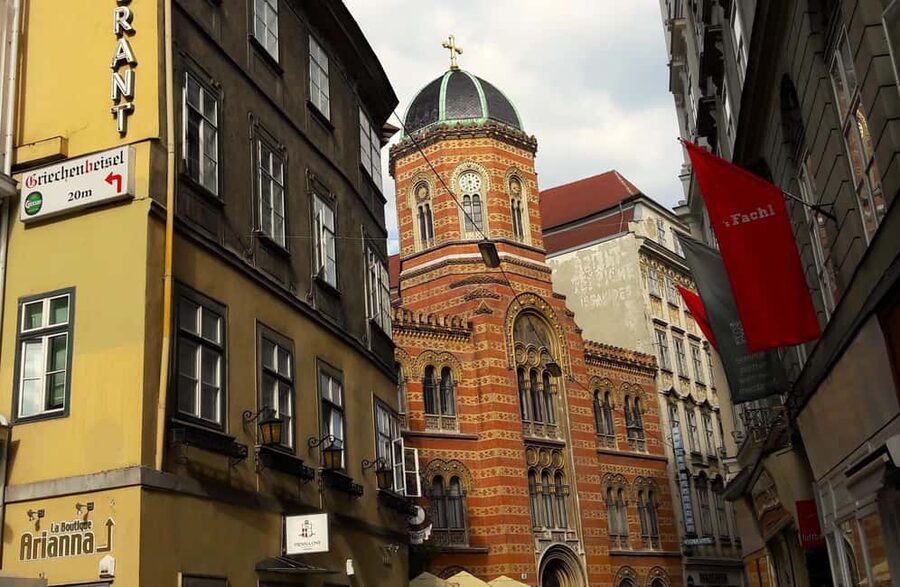
Vienna’s lesser-known stories matter. This private two-hour walk links the Greek Quarter, old printing houses, Art Nouveau facades, and local legends in a compact route through the historic center. I like the focus on places many first-time visitors miss, especially the oldest residential tower in Vienna and the tale of the basilisk. I also like the use of silent-guide headsets, which should make it easier to hear the guide on city streets.
The main consideration is that this is a short, story-led orientation rather than a complete tour of Vienna’s major sights. The walk is easy and not strenuous, but wheelchair users cannot join, and the exact starting arrangement depends on the option you choose.
In This Review
- Key points to know before booking
- Why Vienna’s Greek Quarter makes a good short tour
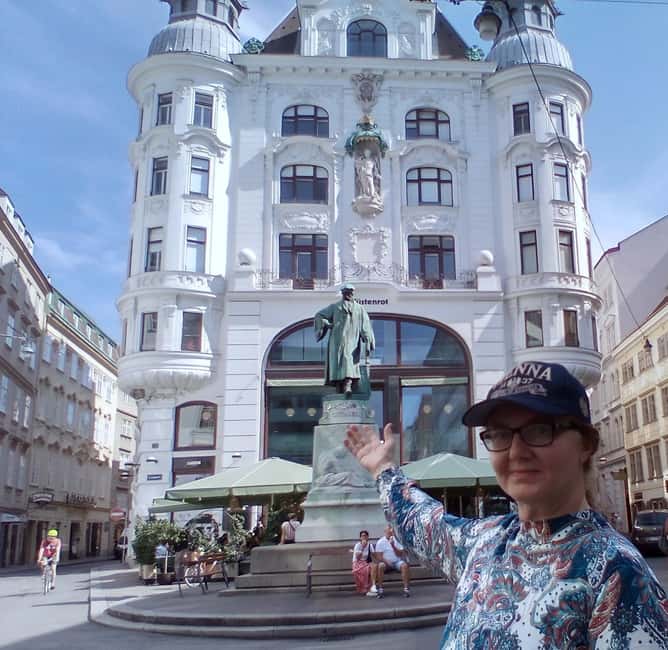
- Meeting near the Dr. Karl Lueger monument
- Fleischmarkt and Vienna’s unknown Art Nouveau
- Griechengasse and the Greek connection
- Schönlaterngasse and the basilisk legend
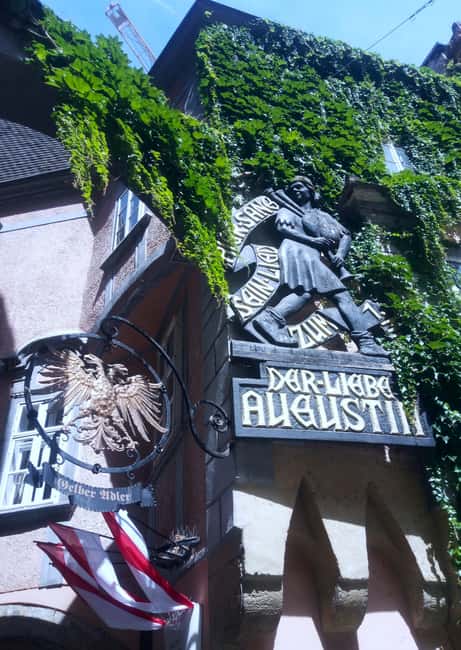
- The legend of Augustin and Vienna during the plague
- Lugeck, printing, musicians, and patrons
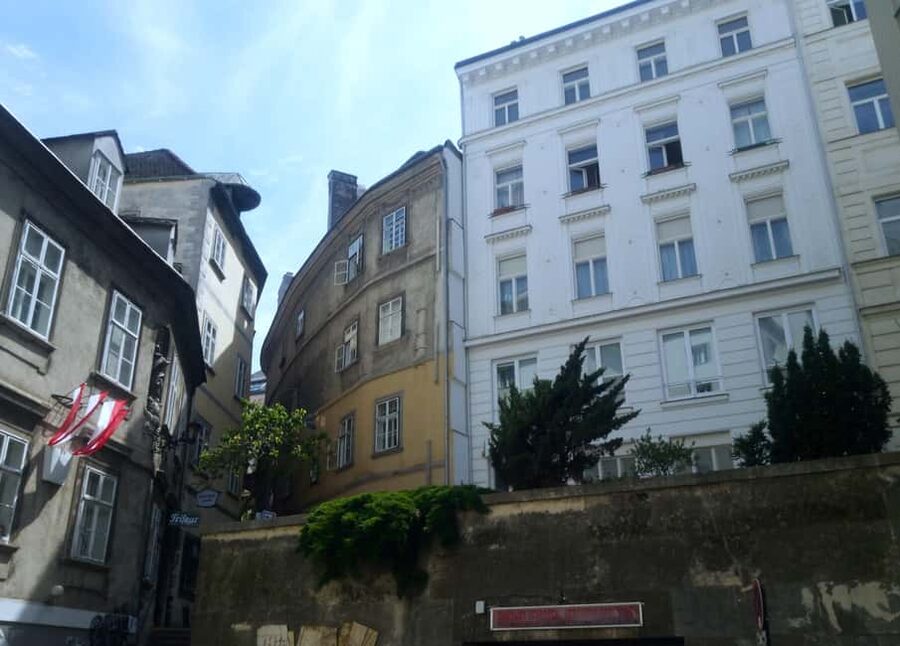
- The oldest residential tower in Vienna
- What the private format adds
- Walking effort, weather, and practical limits
- Who should book this two-hour Vienna walk?
- Should you book Vienna’s Highlights in Two Hours?
- FAQ
- How long does the Vienna highlights tour last?
- Where does the tour meet?
- Is hotel pickup available?
- Which languages are available?
- Is the tour private?
- Is this an underground tour?
- Is the tour accessible to wheelchair users?
Key points to know before booking
- The Greek Quarter is the heart of the tour: You explore Fleischmarkt, Griechengasse, Schönlaterngasse, and Lugeck, all tied to Vienna’s Greek merchants, churches, legends, and early printing history.
- Old stories guide the route: Expect the legend of Augustin, the saga of the basilisk, and tales of alchemists and medieval scientists.
- Art Nouveau gets unusual attention: Fleischmarkt includes little-known 19th-century facades that many standard city walks skip.
- You travel with a private guide: A silent-guide headset is included, and the guide speaks English, German, or Italian.
- The pace is gentle: The walk lasts two hours and involves limited walking, making it suitable if you want context without a strenuous outing.
- Pickup can be arranged by public transport: You may meet at your hotel lobby or an agreed station, but car and bus pickup are not offered.
Why Vienna’s Greek Quarter makes a good short tour
Vienna’s center is packed with grand buildings, imperial squares, and famous music landmarks. Yet the narrow streets around Fleischmarkt and Griechengasse offer a different view of the city. This is where Greek merchants and intellectuals were active in the 18th century, and where trade, publishing, religion, music, and political change crossed paths.
I like this area for a simple reason: it helps you see Vienna as a working city, not just an imperial stage. The stories here involve merchants, printers, church communities, musicians, patrons, and curious scholars. You get a sense of how ideas and money moved through the old city.
The route also connects several centuries. You may look at architecture dating from the 13th century, then shift to Art Nouveau work from the 19th century. That contrast gives the walk its shape. You are not simply looking at one old building after another. You are watching Vienna change while remaining tightly packed inside its historic center.
The tour is offered at $24 per person, which is a fair price for a private two-hour walk with a live guide and headset. The value depends on what you want. If you need a broad introduction to Schönbrunn Palace, the Hofburg, St. Stephen’s Cathedral, and Vienna’s grand boulevards, this is not the best match. If you want a focused walk through a less familiar quarter, the price is easier to justify.
A few more trips of this kind worth comparing:
- Vienna: Romantic Old Town 2-Hour Discovery Tour
★ 4.7 · 816 reviews - Vienna: 2 Hours Sightseeing Walking Tour
★ 4.8 · 332 reviews - Vienna: 2-Hour Historical Crimes Guided Walking Tour
★ 4.8 · 130 reviews
Meeting near the Dr. Karl Lueger monument
The usual meeting point is near the Dr. Karl Lueger monument by Stubentor subway station. This is a practical place to begin because it connects easily with Vienna’s public transport system. If you choose the optional pickup, you can arrange to meet in your hotel lobby or at a public transport station by email.
The pickup option needs careful reading. The guide uses public transport to reach the historic first district, and no car or bus pickup is available. That means this is not a door-to-door sightseeing service. It is a guided city walk with help getting to the start if you arrange it in advance.
The information gives two possible options, so check the selected option for the exact starting time and location. The listed end points include Lugeck 6 and the Austrian Parliament, while the meeting information also says the activity ends back at the meeting point. Since those details do not fully match, I would confirm the finish before booking if you have a restaurant reservation, train connection, or another tour afterward.
Fleischmarkt and Vienna’s unknown Art Nouveau
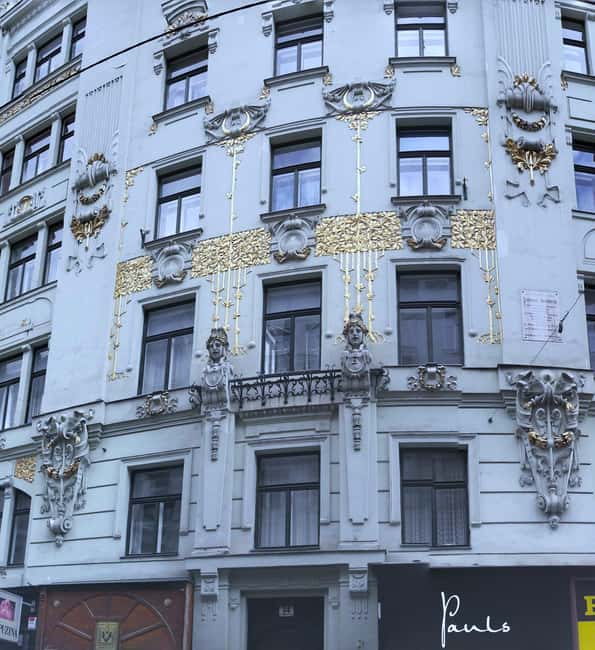
Fleischmarkt is one of the most interesting parts of the route because the buildings do not always announce their importance. Here, the guide points out Art Nouveau facades that are easy to pass without a second look.
The point is not only decoration. These buildings connect to the early printing houses of Vienna and to stories from the district’s past. The result is a useful lesson in reading a city. A doorway, facade, or small architectural detail can reveal who lived or worked nearby, how the street developed, and why the area mattered.
I appreciate this kind of explanation because Art Nouveau in Vienna is often reduced to a few famous names and grand buildings. This walk instead focuses on examples that are less familiar to tourists. You will not get a full survey of Viennese Art Nouveau, but you will see how the style appears in an older neighborhood shaped by trade and publishing.
The headset should help here. City streets can be noisy, and a guide explaining small details is easy to lose if you are standing a few steps away. The included silent guide is designed so you can hear the commentary clearly without the guide needing to raise their voice.
Griechengasse and the Greek connection
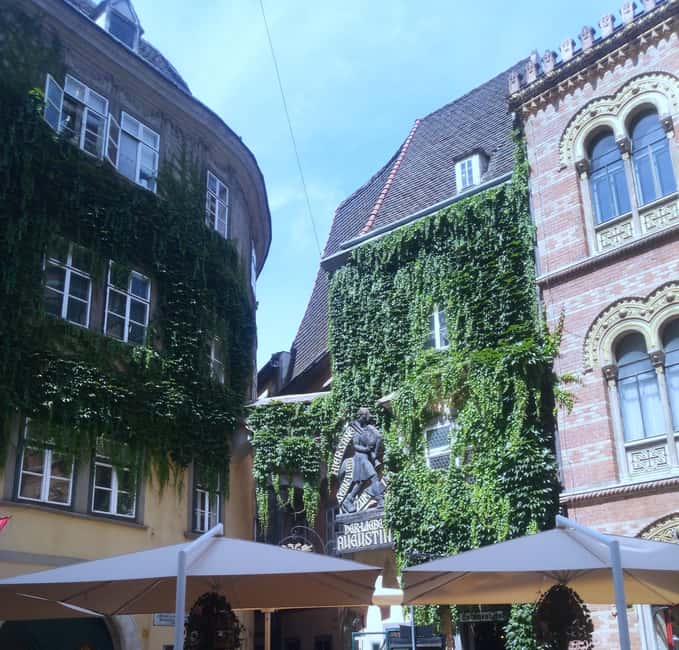
Griechengasse gives the tour its strongest sense of place. The street is tied to Vienna’s Greek community and to the area’s role as a border zone along the Danube.
That border idea is worth hearing about because it adds a political and commercial layer to the neighborhood. The Greek Quarter was not just a collection of old streets. Greek merchants and intellectuals were active here in the 18th century, and the district helped prepare the way for Greek independence.
The tour also includes churches and taverns connected with the Greek presence. These stops help you picture a neighborhood shaped by people who brought their language, faith, business ties, and intellectual life into Vienna.
You should not expect a museum visit or a long stop inside every building. The information describes a guided walk through the district, with attention to facades, stories, and historical connections. That format works well if you prefer moving through the streets rather than spending two hours indoors.
A completely different kind of day out in Vienna:
- Vienna: Vivaldi’s Four Seasons Concert in Karlskirche
★ 4.7 · 14,951 reviews - Vienna: Spanish Riding School Training
★ 3.9 · 9,281 reviews - Vienna: Skip-the-cashier-desk-line Giant Ferris Wheel Ride
★ 4.5 · 7,859 reviews - Vienna: Schönbrunn Palace & Gardens Skip-the-Line Tour
★ 4.7 · 7,739 reviews
Schönlaterngasse and the basilisk legend
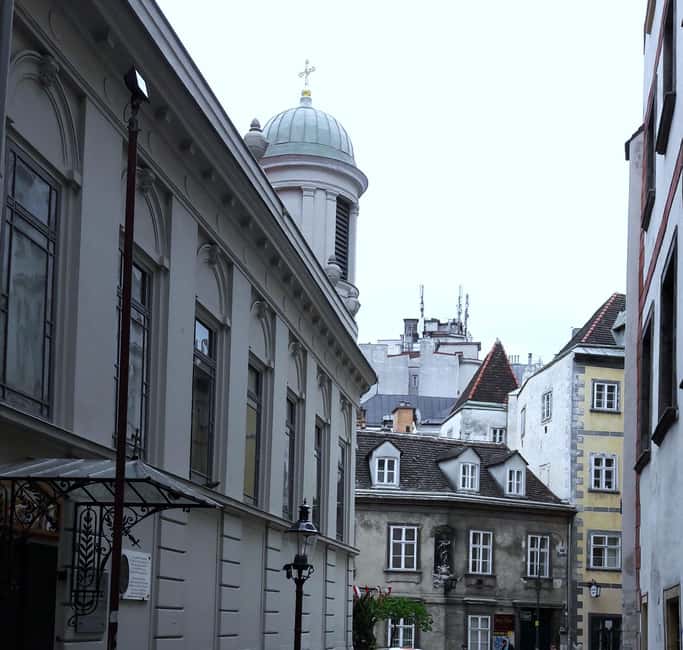
Schönlaterngasse brings in the kind of folklore that makes an old-city walk memorable. The street is linked with the saga of the basilisk, one of Vienna’s best-known legends.
The story gives the guide a chance to show how medieval fears and local storytelling became part of the city’s identity. You will also hear tales connected to alchemists and medieval scientists, figures who occupied the uncertain space between experiment, mystery, and magic.
I like this mix of fact and legend when it is presented clearly. Folklore is not a substitute for history, but it shows what people feared, admired, and passed down. In a compact tour, these stories also keep the route lively between architectural stops.
The walk does not promise an underground tour, so you should not expect vaults, crypts, tunnels, or hidden chambers below the streets. The reference to secret passages in the tour description means the guide points out connections and details that are difficult to spot alone. It does not mean you enter an underground network.
The legend of Augustin and Vienna during the plague
The story of Augustin is another major theme. In the Greek Quarter, Augustin is linked with giving people hope during the plague and helping them believe they could survive.
This is exactly the kind of local story that can change the way you see a neighborhood. Instead of viewing the streets as attractive old architecture, you begin to connect them with moments of fear, public morale, and survival.
The tour does not present Vienna as a series of polished imperial achievements. It also deals with illness, uncertainty, and ordinary people trying to make sense of hard times. That balance is one of the experience’s strengths.
If you enjoy legends, you will have plenty to take away. If you prefer only documented political history, ask the guide to separate historical fact from traditional story as you go. The guide is described as friendly and willing to answer questions, and that makes it easier to shape the discussion around your interests.
Lugeck, printing, musicians, and patrons
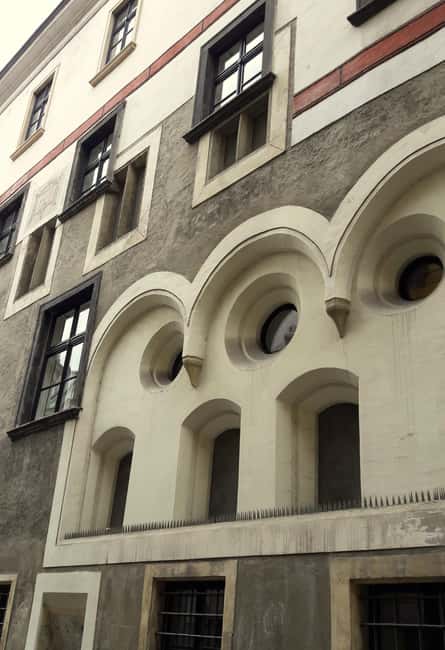
Lugeck ties together several of the tour’s themes. Here, the history of Vienna’s printing press connects with events from the beginning of the Habsburg monarchy and with additional local legends.
The printing connection is especially useful. Printed books helped ideas move through Europe, and the tour places Vienna’s early printing activity within the streets where people lived and worked. This gives Lugeck a wider importance than its appearance might suggest.
The route also touches on famous musicians and the patrons who supported them. Vienna’s musical identity did not grow from composers alone. Wealthy patrons, institutions, merchants, and residents helped fund and sustain musical life.
That is a worthwhile detail for anyone visiting Vienna for its music. You begin to see the city’s musical culture as part of a social system, not just a list of composers and concert halls. The guide connects the people, buildings, and money behind that culture.
A city-center walk can sometimes feel rushed because there is so much to cover. Here, the two-hour limit is both a strength and a restriction. It keeps the route manageable, but it also means some stories will receive only a short explanation. You should think of this as a focused introduction that may give you ideas for later independent walks.
The oldest residential tower in Vienna
One of the more distinctive stops is the oldest residential tower in Vienna. The tour does not treat the tower as an isolated monument. Instead, it places the building within the older fabric of the quarter and the many layers of architecture around it.
This is a good example of why a guide helps. On your own, you might photograph the tower and continue walking. With context, you can think about how residential buildings survived, how the street pattern changed, and how old structures were absorbed into a modern capital.
The experience is not built around grand interiors or long museum visits. Its appeal comes from seeing small pieces of the city in sequence and learning how they relate. That makes it a useful choice for a second day in Vienna, after you have seen the major imperial sights and want something more specific.
What the private format adds
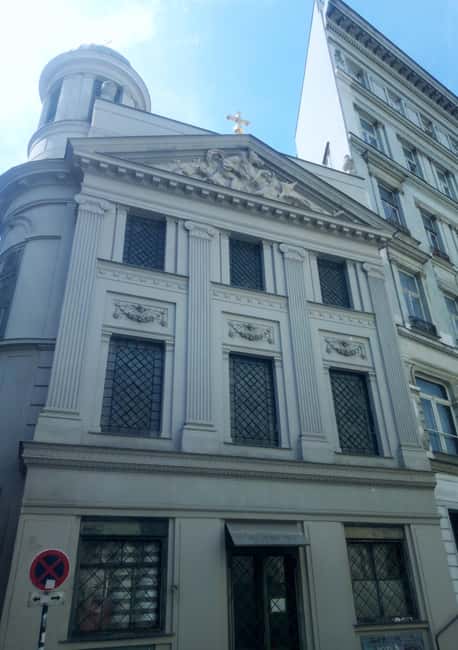
This is a private tour, so the guide can respond to your questions instead of delivering a fixed speech to a large group. That matters in a neighborhood where small details can be easy to miss.
A previous two-hour outing with the guide identified as Nicole, also spelled Nicol in one published comment, was praised for running smoothly and for the guide’s friendly answers to questions and concerns. The same account noted that the guide pointed out architectural facades and secret passages that were difficult to discover alone.
At the end, the guide provided a map of Vienna’s historic center with illustrated buildings. That is a useful extra, particularly if you plan to keep walking after the tour. A map like this can help you recognize buildings you pass later and plan your own route through the first district.
The guide speaks English, German, and Italian. If you have a strong interest in printing, architecture, Greek history, music, or local legends, tell the guide early. A private format gives you a better chance of spending more time on the subjects you care about.
Walking effort, weather, and practical limits
The tour is described as easy, with limited walking and no strenuous sections. That makes it suitable if you want a gentle introduction to central Vienna or need to conserve energy for a longer sightseeing day.
It runs rain or shine, so bring suitable clothing and shoes. The route is outdoors, and bad weather may affect how comfortable you feel while listening and looking closely at facades.
Wheelchair users cannot take part. The tour data does not provide a detailed explanation of the route’s barriers, so anyone with mobility concerns should ask the provider directly before booking.
You also cannot record the guide’s explanations. The tour is protected by copyright, so plan to listen and take your own notes afterward rather than recording audio.
Free cancellation is available up to 24 hours before the activity for a full refund. You can also reserve now and pay later, which helps if you are still arranging a busy Vienna schedule.
Who should book this two-hour Vienna walk?
I would recommend it to you if you have already seen some of Vienna’s major landmarks and want a more local-feeling route through the first district. It is also a good fit if you enjoy stories about old streets, legends, architecture, printing, and communities that shaped the city.
The tour suits couples, families with older children, and anyone who prefers a private pace. The limited walking makes it less tiring than a full-day city tour, while the headset helps you follow the guide without crowding around.
I would be less likely to choose it as my only Vienna sightseeing experience. It does not cover the city’s full collection of famous sights, and the two-hour format leaves little room for long interior visits. If this is your first few hours in Vienna, a broader orientation may be more useful before taking this specialized route.
Should you book Vienna’s Highlights in Two Hours?
Book this tour if you want a compact, private walk through Vienna’s Greek Quarter, with unusual architecture and memorable local stories. At $24 per person, it offers good value for two hours of personal guiding, clear audio, and a route that is hard to reconstruct from a standard map.
Skip it if you want palace interiors, a major museum, or an underground experience. Before you commit, confirm the exact option, meeting point, and finishing location, especially because the supplied details list both central drop-off points and a return to the meeting point.
For a relaxed look at Fleischmarkt, Griechengasse, Schönlaterngasse, and Lugeck, this is a smart addition to a Vienna visit. It gives you stories to carry into the rest of your time in the city, which is often the best souvenir a short walking tour can offer.
FAQ
How long does the Vienna highlights tour last?
The tour lasts two hours. Check availability for the current starting times.
Where does the tour meet?
The usual meeting point is near the Dr. Karl Lueger monument by the Stubentor subway station.
Is hotel pickup available?
Optional pickup may be arranged at your hotel lobby or at an agreed public transport station. The guide uses public transport to reach the historic first district, and car or bus pickup is not offered.
Which languages are available?
The live guide can conduct the tour in English, German, or Italian.
Is the tour private?
Yes. This is a private tour, and a silent-guide headset is included so you can hear the guide clearly.
Is this an underground tour?
No. The activity is a walking tour above ground through Vienna’s historic center.
Is the tour accessible to wheelchair users?
No. The activity is not suitable for wheelchair users.
Just added around Vienna
- Mobile puzzle rally tour at the Vienna Central Cemetery★ 4.5 · 3 reviews
- RAXI (E-Rickschaw) big private Vienna tour★ 4.5 · 3 reviews
- 8 days European Highlights PRIVATE TOUR from Budapest including Budapest Vienna Prague and Bratislava★ 5.0 · 3 reviews
- Private Transfer from Vienna to Prague with 1 hour Stop in Kutna Hora★ 4.5 · 3 reviews
- Palais Lobkowitz Audio Guide Tour★ 4.0 · 3 reviews
- Private Tour from Vienna to Melk and Dürnstein★ 4.5 · 3 reviews
- Vienna: Designer Fashion Time Capsule Experience★ 5.0 · 3 reviews
- Vienna Sight & Gourmet Tour – individual private tour★ 4.5 · 3 reviews
2-Hour Experiences, compared.

Jewish Life in Leopoldstadt 2-Hour Walking Tour
Read our review →
Browse the lists this tour appears in