Reviewed · TICKETS
Eisenstadt: Esterhazy Palace Admission Ticket
The palace has more stories than rooms. I like the way this $22 admission links grand Baroque interiors with personal stories, especially Joseph Haydn’s long service to the Esterházy princes and Melinda Esterházy’s life as a ballerina and princess. I also like that the ticket reaches beyond the polished state rooms to the old wine cellars.
The main consideration is scope: this is an admission ticket, not automatically a guided tour. The optional audio guide costs €2, and the meeting point can vary by booking option. If you want detailed commentary, check your option carefully. One recent visit praised guide Rebeca for her clear explanations, background knowledge, and affection for the palace.
In This Review
- Key things to know before entering Esterházy Palace
- Why Eisenstadt’s palace deserves your time
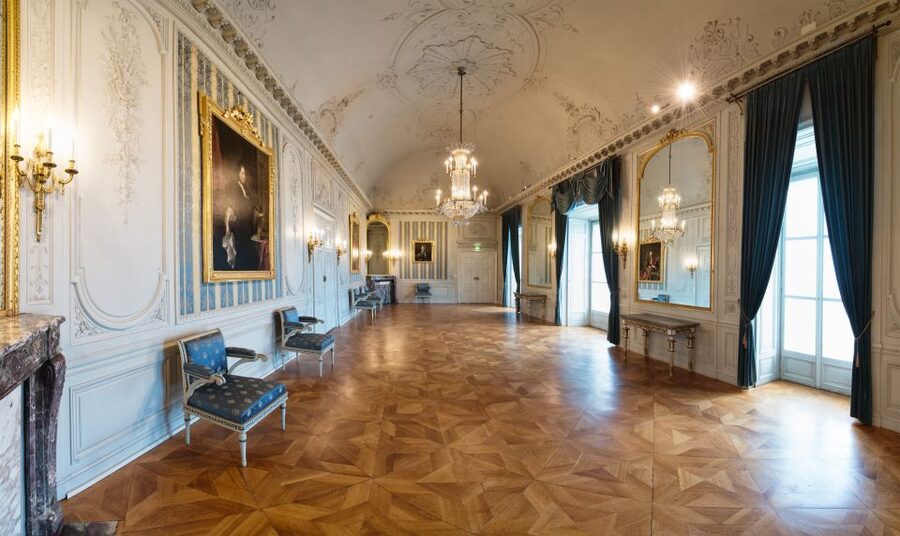
- The bel étage and the palace’s princely rooms
- Joseph Haydn, court composer and working professional
- Melinda Esterházy beyond the title of princess
- The old cellars and the Esterházy wine story
- How the ticket works and what the price means
- Who will get the most from this palace visit
- Practical advice for using your one day
- Should you book Esterházy Palace?
- FAQ
- Where is Esterházy Palace?
- How much does admission cost?
- How long is the ticket valid?
- Is an audio guide included?
- Which languages are available for the audio guide?
- What can I see in the palace rooms?
- Does the palace have a Joseph Haydn exhibition?
- Can I visit a wine museum at the palace?
Key things to know before entering Esterházy Palace
- The Neoclassical silver collection is a major highlight: You see the world’s largest surviving ensemble of Neoclassical silverware kept together as a set.
- Joseph Haydn’s Eisenstadt years get proper attention: Multimedia stations and installations trace his work for the Esterházy princes.
- Melinda Esterházy’s story adds a human scale: Her exhibition covers her career as a ballerina, her life as a princess, and the difficult turns in between.
- The wine museum sits in 300-year-old cellars: More than 700 objects explain winemaking under the Esterházy family.
- The ticket is valid for one day: You can take your time across the palace’s different areas instead of racing through one short tour.
- The €2 audio guide may be worth it: German, Hungarian, and English are available for visitors who want more background than the displays provide.
Why Eisenstadt’s palace deserves your time
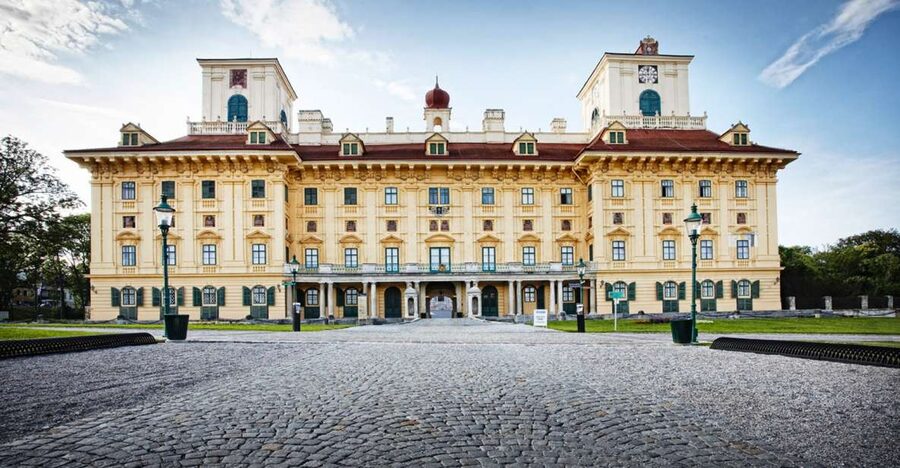
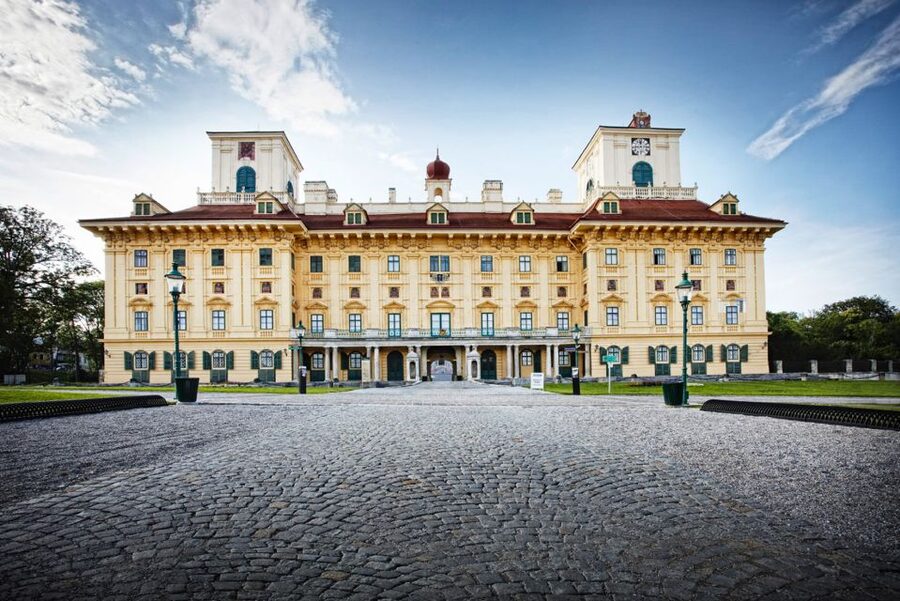
Eisenstadt is the capital of Burgenland, and Esterházy Palace sits at its center. The building gives the city a clear focal point, but this visit is not only about admiring a grand façade. Inside, you move through several versions of the Esterházy story: court life, music, family ambition, dance, wine, and the practical business of living in a princely household.
I like that range. Many palace visits give you a procession of rooms and a few portraits, then send you on your way. Here, the collections and exhibitions create several ways into the subject. You can care about decorative arts, come for Haydn, follow Melinda Esterházy’s career, or spend time with the wine-making displays.
The palace is especially useful for you if you want context rather than a quick photo stop. The rooms show how the family lived and presented itself, while the exhibits explain the people and work behind the formal setting. The result is a visit with more substance than its straightforward admission price suggests.
More attraction tickets:
- Vienna: Classic Ensemble Vienna in St. Peter’s Church Ticket
★ 4.7 · 4,819 reviews - Vienna Kunsthistorisches Museum Day Admission Ticket
★ 4.6 · 3,690 reviews - Vienna: Tickets for Mozarthaus Vienna with Audio Guide
★ 4.2 · 2,344 reviews
The bel étage and the palace’s princely rooms
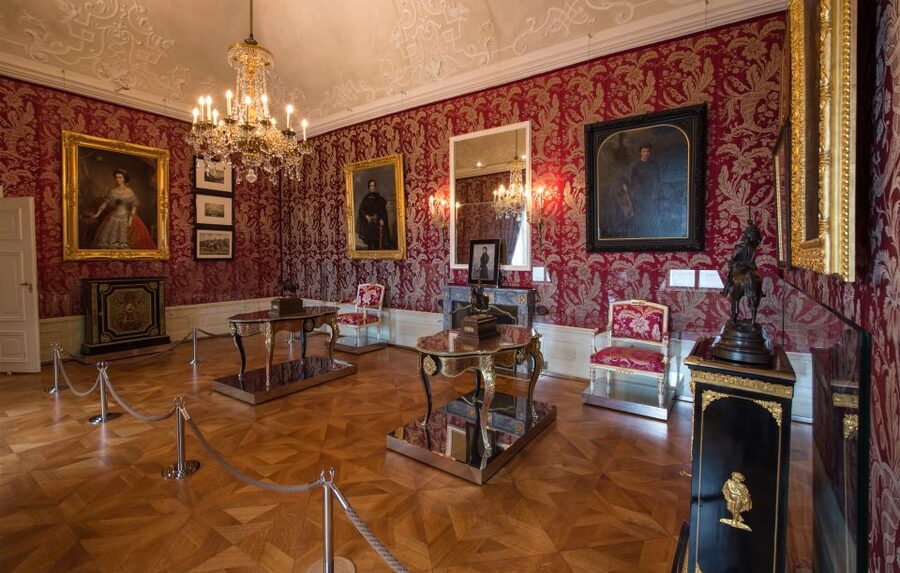
Your first major section is the bel étage, the principal floor designed for formal life and display. This is where you see the grand rooms and art-historical objects connected with the Esterházy family.
The setting matters. A palace is not simply a container for paintings and furniture. Room size, decoration, and the position of objects tell you how a powerful family wanted to be seen. As you move through the interiors, look at the relationship between the rooms and the collections. The palace itself becomes part of the exhibit.
The family silver is one of the clearest examples. The collection includes the world’s largest ensemble of Neoclassical silverware to survive as a complete set. That detail gives the display real weight. You are not looking at a few handsome serving pieces scattered across a case. You are seeing a large, coherent group that reveals the scale and precision of formal dining in an aristocratic household.
I would give the silver more time than you might expect. Its value is not only in the shine. Notice the repeated forms and the sense of order. A set like this shows how ceremony depended on matching objects, careful presentation, and a staff able to manage it all.
The rooms also help explain the palace as a building. You get a glimpse of how its spaces developed and how the Esterházy residence functioned over time. The available information does not promise a single fixed route or identical presentation for every booking option, so follow the directions given when you arrive.
This section suits anyone who enjoys interiors, decorative arts, or court culture. If ornate rooms are not your main interest, do not worry. The Haydn and Melinda exhibitions provide a change of pace and give the visit a more personal focus.
Joseph Haydn, court composer and working professional
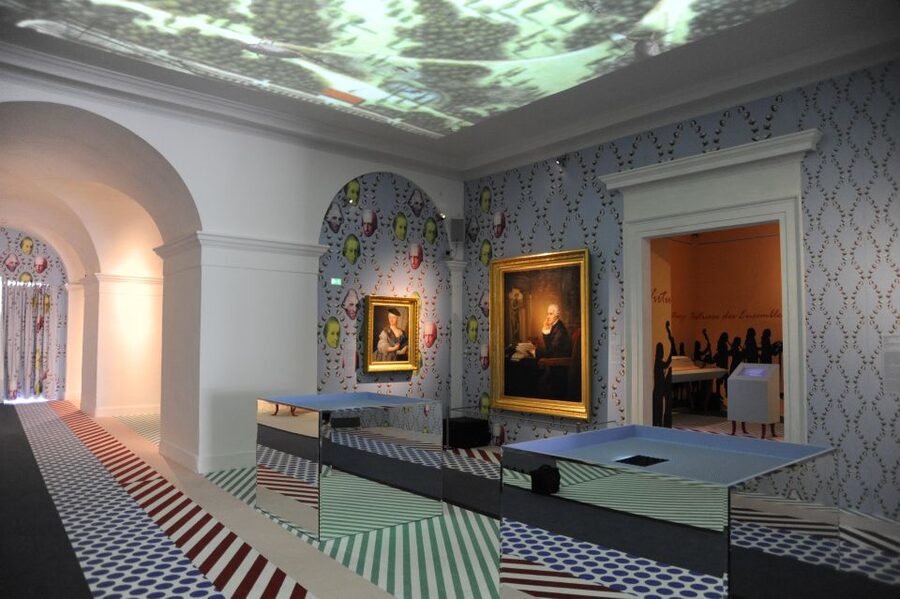
On the ground floor, an exhibition follows Joseph Haydn’s career as director of music and composer in Esterházy service. His connection to Eisenstadt and Eszterház is central to the palace story, and the display explains his work rather than treating him as a name on a plaque.
The multimedia stations and project installations are useful because music is hard to present in a silent room. They give you different ways to follow Haydn’s development, from his beginnings in Eisenstadt and Eszterház through his later music.
I find this approach valuable for two reasons. First, it places Haydn within the institution that employed him. He was not simply a famous composer passing through. He worked in the service of the Esterházy princes, where his duties and creative life were tied to the court.
Second, the exhibition connects the composer’s early years with his later work. You get a longer arc instead of a single-room tribute. The palace becomes a place where music was produced, organized, and heard, not just a backdrop for a celebrated figure.
If you already know Haydn’s music, the display gives you a stronger sense of place. If you know little about him, the multimedia format should make the subject more approachable than a wall of dates and formal labels.
The main limitation is that an admission ticket does not automatically promise a live music performance. You are visiting an exhibition about Haydn, not necessarily attending a concert. Plan your expectations around displays, installations, and historical explanation.
For many people, this is the most distinctive part of the palace. Haydn’s link with the Esterházy family turns a beautiful residence into a working cultural center. I would not rush through it, even if you came mainly for the architecture.
Melinda Esterházy beyond the title of princess
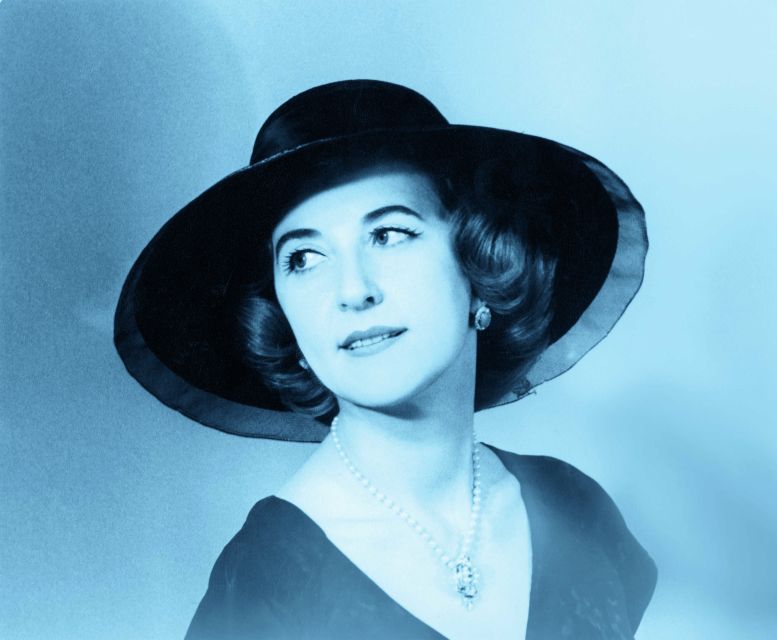
The first-floor exhibition turns from an institution and its famous composer to one woman’s life. Melinda Esterházy is presented as a ballerina, princess, and person whose life included both achievement and difficulty.
That combination gives the palace a needed human voice. Titles can make aristocratic history feel distant. A career in ballet, by contrast, brings discipline, ambition, physical work, and public performance into the picture. The exhibition follows her professional goals as well as the turbulent parts of her personal life.
I like that the display does not reduce her to a decorative figure in the Esterházy family. You learn about her ambitions and the highs and lows that shaped her life. This makes the first-floor visit different from the formal rooms below or the musical story on the ground floor.
Give yourself time here. The point is not simply to identify Melinda in family portraits. It is to understand how her own career and personality fit, and sometimes conflicted, with the expectations surrounding a princess.
This section may appeal most to you if you enjoy biography, dance, and modern personal stories. It also helps balance the palace’s older aristocratic setting. After the silver and formal rooms, Melinda’s story reminds you that the building’s history continued into a more recent age.
The supplied details do not specify the exact number of rooms or the precise display layout, so I would avoid planning your visit around a minute-by-minute route. Instead, treat the palace as a group of related sections and leave enough time to read and look closely.
A completely different kind of day out in Austria:
- Vienna: Vivaldi’s Four Seasons Concert in Karlskirche
★ 4.7 · 14,951 reviews - Vienna: Spanish Riding School Training
★ 3.9 · 9,281 reviews - Vienna: Skip-the-cashier-desk-line Giant Ferris Wheel Ride
★ 4.5 · 7,859 reviews - Vienna: Schönbrunn Palace & Gardens Skip-the-Line Tour
★ 4.7 · 7,739 reviews
The old cellars and the Esterházy wine story
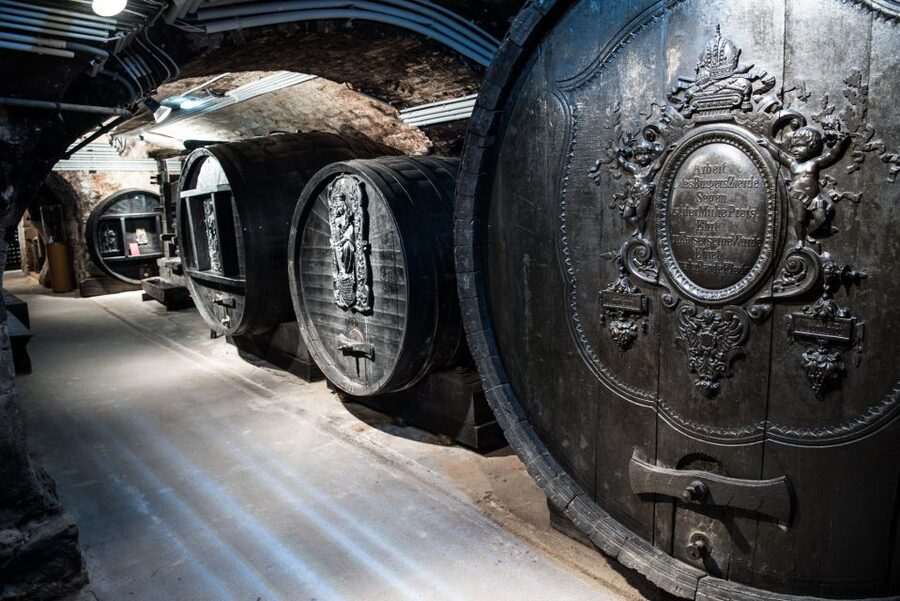
The Wine Museum takes you below the main palace into cellars more than 300 years old. This is where the family’s bacchanalian side comes into view, though the displays focus on the work and equipment behind wine production.
More than 700 objects relate to wine and viticulture under the Esterházy princes. That is a substantial collection, and its appeal comes from the change in atmosphere. Upstairs, you see courtly rooms and refined silver. Down here, the subject becomes barrels, presses, tools, storage, and the physical labor of making wine.
One especially notable object is Burgenland’s oldest Baumpresse, a type of basket press. It offers a direct connection to older wine-making methods and gives the museum an object with both local and technical importance.
I would save the cellars for a point when you want something less formal. The change in setting helps you understand that noble households depended on food, drink, storage, and production as much as they depended on ceremonies. Wine was not merely something served at a banquet. It required land, equipment, workers, and a system for keeping the supply moving.
The museum also broadens your view of Burgenland. The region’s wine tradition is not an unrelated add-on to the palace. It forms part of the economic and social world that supported the Esterházy family.
Do not expect this section to function as a wine tasting based on the information provided. The focus is a museum collection and the history of viticulture. If you want a guided explanation in English, the €2 audio guide may help, depending on your chosen option.
How the ticket works and what the price means
At $22 per person, the ticket is fairly priced if you plan to see all the main sections. You are not paying only for a quick look at a ceremonial room. The admission covers the palace experience, including the bel étage rooms and collections, the Melinda Esterházy exhibition, the Haydn exhibition, and the Wine Museum.
The value improves if you use the full one-day validity. You can spread your attention across the palace instead of treating it as a rushed stop between other sights. That is particularly useful because the experience covers very different subjects, and each section rewards a different pace.
The optional audio guide costs an additional €2 and is available in German, Hungarian, and English. That is a small extra charge, especially if you prefer explanations while moving through the rooms. Still, it is not essential for everyone. If you enjoy reading displays or want a shorter visit, you may prefer to keep the ticket cost lower.
The admission does not include a listed guided tour. That point matters. One recent booking praised Rebeca for excellent explanations, strong background knowledge, and clear affection for the castle, but you should not assume that every ticket includes her or another guide. Check the exact option before paying if personal commentary is important to you.
The rating attached to the experience is 4.8 from 40 reviews, with praise focused most clearly on the quality of explanation and the care shown by the guide. That supports choosing a guided option when available, but the ticket itself remains a self-directed palace admission.
Free cancellation is available until 24 hours before the visit, and you can reserve now and pay later. Those terms make the booking more flexible, particularly if your Eisenstadt plans are still changing. The ticket is valid for one day, with starting times subject to availability.
Who will get the most from this palace visit
I would recommend Esterházy Palace to you if you enjoy European court residences but want more than a sequence of grand rooms. The Haydn exhibition gives music lovers a strong reason to come, while the silver collection will appeal to anyone interested in design, craftsmanship, or aristocratic ceremony.
It also works well for people who enjoy biography. Melinda Esterházy’s career and personal story give the visit an emotional center, and the exhibition may interest you even if you arrive with little knowledge of the family.
The Wine Museum makes the ticket more useful for anyone curious about Burgenland’s wine culture. You see how the family’s social life connects with production and storage in the cellars.
I would be more cautious if you have only a few minutes in Eisenstadt. The visit has several sections, and its value comes from seeing the connections between them. A rushed pass through the bel étage would leave out the Haydn, Melinda, and wine stories that make this admission worthwhile.
You should also choose your language support with care. The available audio guide languages are German, Hungarian, and English. If you need a live guide, confirm that your selected option includes one rather than assuming it comes with basic admission.
Practical advice for using your one day
Start by checking the meeting point for the option you booked, since it can vary. Once inside, keep your ticket’s one-day validity in mind and resist the urge to treat the palace as a fast indoor stop.
I would pay close attention to the family silver, then move through the Haydn exhibition while the palace’s role as a working court is fresh in your mind. Follow that with Melinda’s biography, which shifts the focus from institutions to one person. Finish in the wine cellars if you want the visit to end with the most physical and local part of the collection.
If your visit includes guide Rebeca, listen closely to her explanations. Her clear background information and evident affection for the palace were singled out as major strengths. If you are visiting independently, consider the €2 audio guide in English, German, or Hungarian.
Allow enough time to read the displays and compare the different sections. The palace rewards attention more than speed. You will get more from the visit if you notice how silver, music, dance, and wine all reflect different sides of the Esterházy world.
Should you book Esterházy Palace?
Yes, I would book this admission if you have time for a full palace visit in Eisenstadt and want several subjects under one roof. The $22 price is reasonable because it covers far more than the formal rooms: you get the Neoclassical silver, Haydn’s court career, Melinda Esterházy’s demanding life, and a large wine collection in old cellars.
Choose the audio guide for €2 if you want extra context in English, German, or Hungarian. If a live guide is your priority, confirm the booking option first. For a quick photo stop, the ticket may feel like too much. For a thoughtful look at Burgenland’s princely, musical, personal, and wine-making past, it earns its place in your Eisenstadt plans.
FAQ
Where is Esterházy Palace?
Esterházy Palace is in Eisenstadt, the capital of Burgenland, Austria.
How much does admission cost?
The admission ticket costs $22 per person.
How long is the ticket valid?
The ticket is valid for one day.
Is an audio guide included?
No. An audio guide costs an additional €2.
Which languages are available for the audio guide?
The optional audio guide is available in German, Hungarian, and English.
What can I see in the palace rooms?
You can visit the bel étage rooms and see art-historical treasures from the Esterházy collection, including the family silver and its surviving Neoclassical silverware ensemble.
Does the palace have a Joseph Haydn exhibition?
Yes. The ground-floor exhibition covers Joseph Haydn’s work as director of music and composer for the Esterházy princes, using multimedia stations, project installations, and exhibits.
Can I visit a wine museum at the palace?
Yes. The Wine Museum is in the more than 300-year-old palace cellars and contains over 700 objects connected with wine and viticulture.
Just added around Austria
- Mobile puzzle rally tour at the Vienna Central Cemetery★ 4.5 · 3 reviews
- Power of Trees Private Tasting Tour★ 5.0 · 3 reviews
- 8 days European Highlights PRIVATE TOUR from Budapest including Budapest Vienna Prague and Bratislava★ 5.0 · 3 reviews
- RAXI (E-Rickschaw) big private Vienna tour★ 4.5 · 3 reviews
- Salzburg & “The Sound of Music” Full Day Driver-Guided Tour★ 5.0 · 3 reviews
- Private Transfer from Vienna to Prague with 1 hour Stop in Kutna Hora★ 4.5 · 3 reviews
- Palais Lobkowitz Audio Guide Tour★ 4.0 · 3 reviews
- Private Tour from Vienna to Melk and Dürnstein★ 4.5 · 3 reviews
Tickets, compared.
Classic Ensemble Vienna in St. Peter’s Church Ticket
Read our review →
Vienna Kunsthistorisches Museum Day Admission Ticket
Read our review →
Tickets for Mozarthaus Vienna with Audio Guide
Read our review →
Skip-the-Line Entrance Ticket to the Danube Tower
Read our review →