
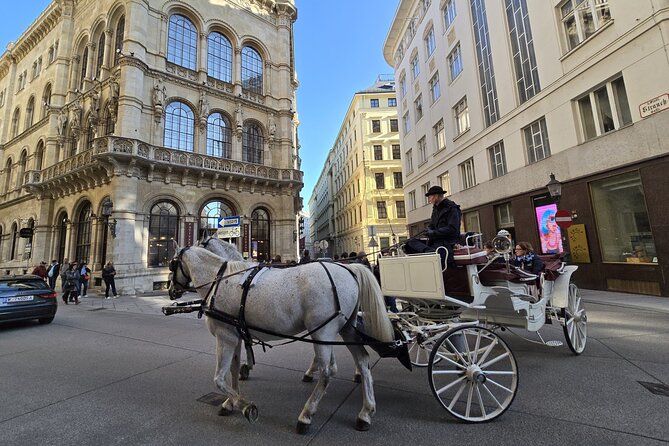
Reviewed · HISTORICAL TOURS
Highlights of Vienna in a Historical & Cultural 3h Walking Tour
Vienna rewards a good first walk. I like this tour for its strong city overview and its lively mix of Mozart, Habsburg power, coffeehouse tradition, and grand public buildings. The route links many major sights without charging museum admission, and guides such as Nikoleta, Nicoletta, Giselle, and Nicky are praised for clear storytelling, humor, and useful local advice. The main consideration is pace: thirteen stops in about three hours can feel hurried, especially in cold weather or with children.
I also like the small-group limit of 18 people, the printed Vienna information package, and the extra 30-minute coffeehouse break. You will not tour every palace room or museum gallery, since entrance fees are not included. Think of this as a well-told introduction to central Vienna, not a substitute for detailed visits inside the city’s museums.
In This Review
- Key points at a glance
- Starting with Mozart in Vienna’s old center
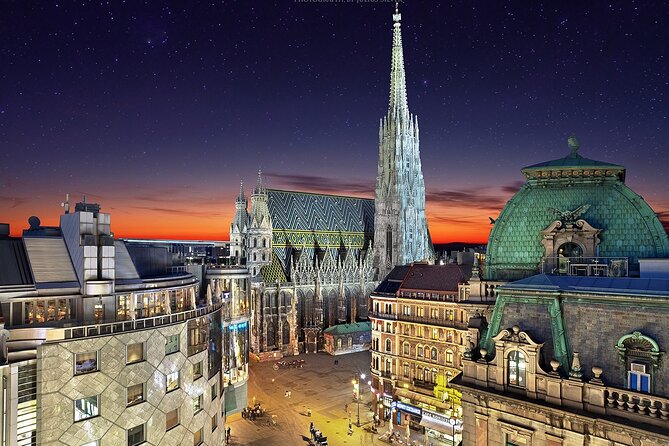
- St. Stephen’s Cathedral and the stories of central Vienna
- Coffee, cake, and the Viennese café tradition
- Parliament, Rathaus, and Vienna’s public face
- The Hofburg and the world of the Habsburgs
- Meeting the Lipizzaner horses at the Spanish Riding School
- Hotel Sacher and Vienna’s famous chocolate cake
- Finishing beneath the Vienna State Opera
- How the guide shapes the experience
- Price, pace, and practical value
- Who should book this Vienna walking tour?
- Should you book it?
- FAQ
- How long does the Vienna walking tour last?
- Where does the tour begin?
- Where does the tour finish?
- Is the tour offered in English?
- Are museum entrance fees included?
- How many people can join the tour?
Key points at a glance
- Mozart to Maria Theresa: Start with Mozart and move through the personalities and power struggles that shaped Vienna.
- Thirteen central stops: See St. Stephen’s Cathedral, Hofburg, the Spanish Riding School, Parliament, Rathaus, Burgtheater, and the State Opera.
- Small-group format: Groups range from 4 to 18 people, giving you a better chance to ask questions than on a large coach tour.
- Coffeehouse culture included: The route explains Vienna’s long café tradition and includes an extra 30-minute break in a traditional coffeehouse.
- Best early in your stay: Use the guide’s museum, restaurant, café, and sightseeing advice to plan the rest of your time.
- Three hours on foot: You need moderate fitness, comfortable shoes, and clothing suited to the weather.
Starting with Mozart in Vienna’s old center
The tour begins at Mozarthaus Vienna on Domgasse, where Mozart lived during an important part of his Vienna years. The scheduled stop is short, about 15 minutes, so you should expect an introduction to his life and major achievements rather than a full museum visit.
That short opening works well. Mozart gives the tour an immediate human focus before the route turns toward churches, palaces, and government buildings. You get a sense of the composer as a person connected to the city, not simply a name attached to a concert program.
Admission to the listed stops is shown as free, but museum entrance fees are not included in the tour price. If you want to explore the Mozarthaus interiors in detail, plan to return separately and pay the applicable admission.
From there, the route moves to St. Stephen’s Cathedral, Vienna’s great Gothic landmark. The guide explains its medieval architecture and long history during another short stop of about 15 minutes. This is enough time to admire the exterior and hear the context, but not enough for a slow, detailed visit inside.
That distinction matters. The tour gives you the city’s framework. You can then decide which places deserve your own longer visit.
More Walking Tours in Vienna
- Vienna: Guided Walking Tour of City Center Highlights
★ 4.7 · 4,989 reviews - Vienna: Vienna Central Cemetery Guided Walking Tour
★ 4.8 · 3,307 reviews - Vienna: Guided Walking Tour of City Highlights & Hidden Gems
★ 4.9 · 2,180 reviews
St. Stephen’s Cathedral and the stories of central Vienna
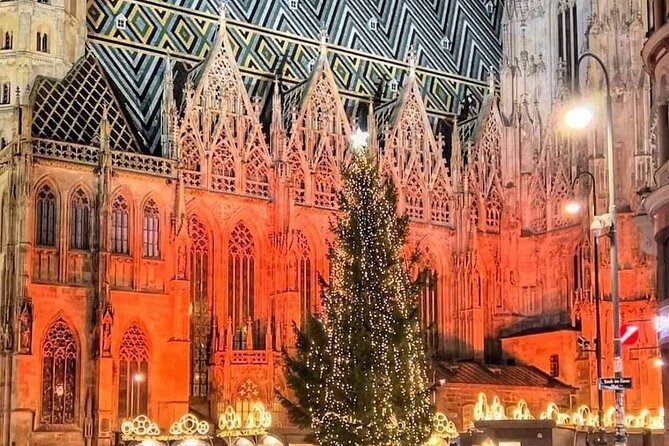
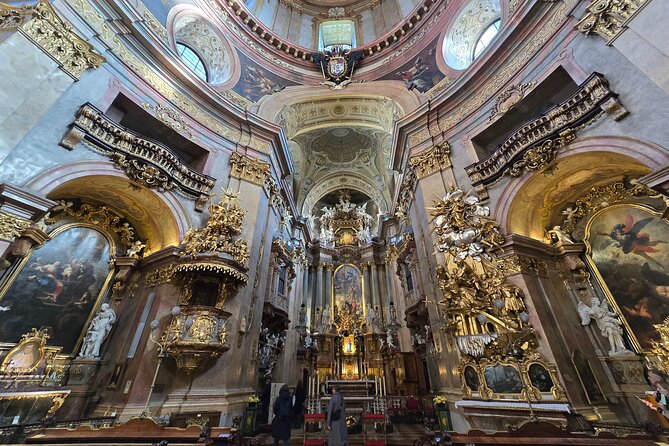
The historic center is compact, but it is crowded with details. Around St. Stephen’s Cathedral, the walk continues to St. Peter’s Church, the Plague Column, Demel cake shop, and other important sites.
The 20-minute historic-center segment is less about one single attraction and more about seeing how Vienna’s religious, commercial, and imperial life fits together. Your guide points out details that are easy to miss when you walk alone, especially if you are still learning the city’s layout.
The Plague Column adds a darker note to the elegant streets. Demel introduces Vienna’s pastry culture, while St. Peter’s Church provides another look at the city’s religious architecture. These brief stops keep the route moving, though anyone hoping to enter every church or linger over shop windows will need to return later.
One of the tour’s strengths is its range. You are not given three straight hours of palace history. Mozart, sacred buildings, desserts, public monuments, cafés, and imperial residences all appear in the same walk.
Coffee, cake, and the Viennese café tradition
At Julius Meinl on Graben, the guide explains how Vienna’s coffee culture developed over more than 300 years. This is one of the most useful cultural stops because a café in Vienna is more than a place to grab a drink and leave.
The scheduled explanation takes about 10 minutes. It gives you enough background to make later café visits more meaningful, especially if you plan to try traditional coffee and cake during your stay.
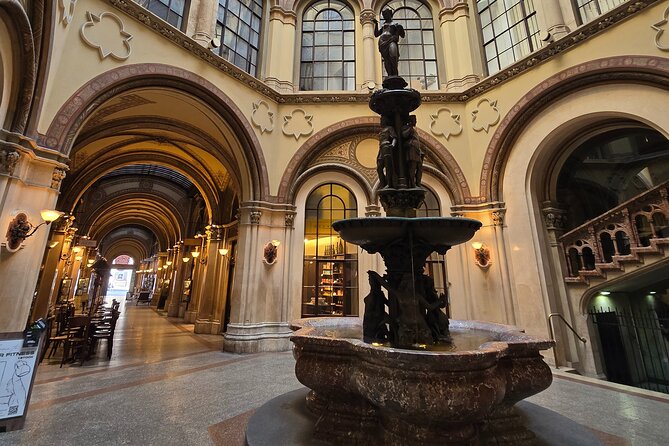
The route then passes through Freyung Passage, described as one of the most beautiful passages in the historic center. You also learn about Café Central, located at one of its corners. The stop itself is only about five minutes, so do not expect a long café sitting here.
The experience does include an extra 30-minute break in a traditional Viennese coffeehouse. That break is a useful practical feature, particularly during a winter visit. It gives you a chance to warm up, rest your feet, and ask the guide for food or café recommendations.
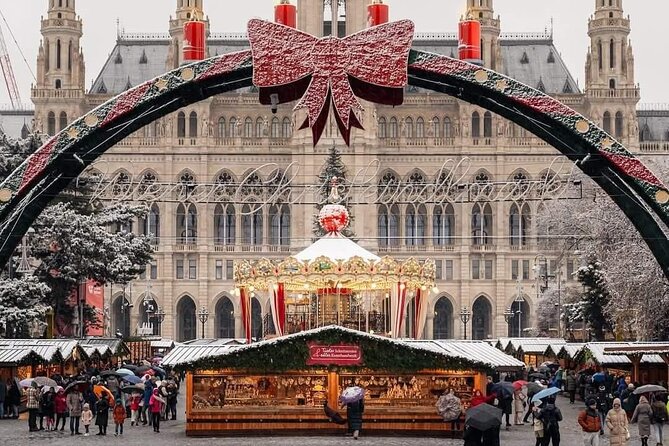
The timing of the break may vary with the group and the season. One group stopped at the Christmas market near Rathaus for a warm drink, a snack, and a restroom break. That detail shows the tour can adapt to conditions and local events, but you should not assume that the same stop will occur on every departure.
Parliament, Rathaus, and Vienna’s public face
After the old center, the walking route reaches several grand civic buildings. The Austrian Parliament is presented in its Greek-style design, along with the Pallas Athene Fountain in front.
This stop is short, about five minutes, so the value comes from the guide’s explanation and the view rather than an interior visit. You get the essential visual and historical context, then keep moving.
The Rathaus, or Vienna City Hall, provides a change of architectural mood. Its Gothic design is one of the city’s most memorable civic sights, and it often serves as a backdrop for seasonal events. A Christmas market near the building made the route feel more relaxed for some departures, with time to pause before continuing.
Next comes the Burgtheater, the city’s royal theater. The building’s Renaissance architecture and connection to the reign of Maria Theresa give the guide another opening to explain how court life, culture, and imperial ceremony shaped Vienna.
These stops are especially useful for first-time visitors because they help you understand the Ringstrasse area. You see that Vienna’s public buildings were designed to make political and cultural power visible. The tour does not ask you to memorize dates for their own sake. It connects buildings to the people and institutions behind them.
More historical tours:
- Vienna: Time Travel and Magic Vienna History Tour
★ 4.6 · 3,879 reviews - Vienna: World War II Historical Walking Tour
★ 4.8 · 1,772 reviews - Vienna Historic Center Small Group Walking Tour
★ 5.0 · 1,746 reviews - Time Travel-Magic Vienna History Tour Ticket
★ 4.5 · 1,099 reviews
The Hofburg and the world of the Habsburgs
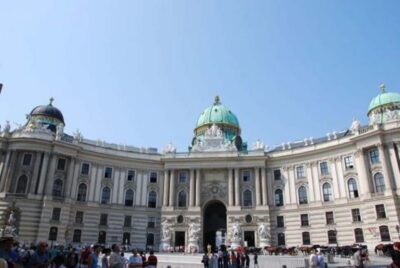
The Hofburg is the historical center of the tour. This vast winter palace served as the residence of the Habsburgs from the 13th century, and the guide introduces important emperors and empresses who lived and ruled here.
The scheduled Hofburg stop lasts about 20 minutes. That is enough for a useful outside orientation and a clear explanation of the palace complex, but not enough to explore the imperial apartments, museums, or ceremonial rooms in depth.
The nearby Kunsthistorisches Museum stop adds an important planning benefit. The guide explains what you can find in the 18 museums in and around the winter palace. This advice can save you time later because the Hofburg area contains more attractions than most people can fit into one visit.
Entrance fees to museums are not included. You should treat this part of the walk as a preview that helps you choose where to spend your admission budget. If you have only one full day in Vienna, this guidance may be worth as much as another landmark stop.
I especially like this approach because imperial Vienna can become a blur of grand façades. A guide who explains which museum suits your interests, and which places may not deserve your limited time, gives you a more useful visit than a long list of names.
Meeting the Lipizzaner horses at the Spanish Riding School
The route continues to the Spanish Riding School, a Vienna institution with roots reaching back to the 15th century. The tour includes a visit to the stables to see the horses.
This is one of the more distinctive parts of the experience. You are not merely looking at another palace exterior. You are connected to a living tradition associated with Vienna’s imperial court and equestrian culture.
The stable stop is scheduled for about 10 minutes. It is not a riding performance, training session, or full behind-the-scenes program. You should also remember that the general price excludes entrance fees, so the exact access included on your departure is worth confirming when booking.
Even with that limitation, the stop breaks up the architectural focus of the walk. For families, it can also provide a welcome change after several churches, monuments, and government buildings.
Hotel Sacher and Vienna’s famous chocolate cake
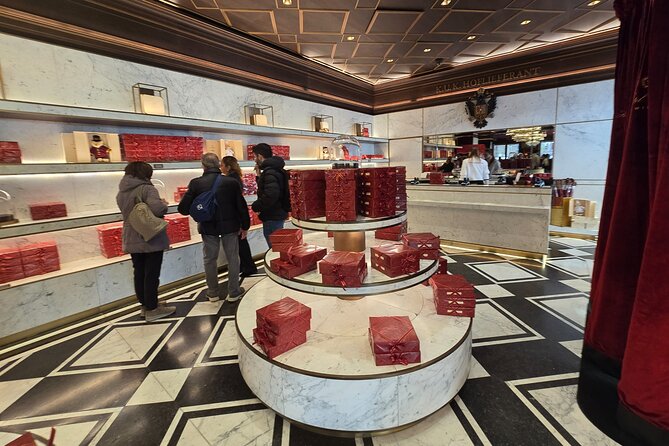
Near the end of the route, the guide introduces Hotel Sacher and the story behind Austria’s famous chocolate cake, Sachertorte. The stop lasts around 10 minutes.
This is a small but effective piece of cultural history. Vienna’s identity is not only emperors and composers. It also lives in pastries, hotel dining rooms, elegant cafés, and the rituals surrounding an afternoon break.
You may want to return to try the cake yourself, but the tour price does not include food or drinks. The guide’s recommendations can help you decide where to spend your money, particularly if you want to compare famous cafés with less heavily promoted places.
The culinary side of the tour was praised along with its historical content. That balance suits Vienna well. A city walk should leave you with ideas for your next meal, not only a head full of dates.
Finishing beneath the Vienna State Opera
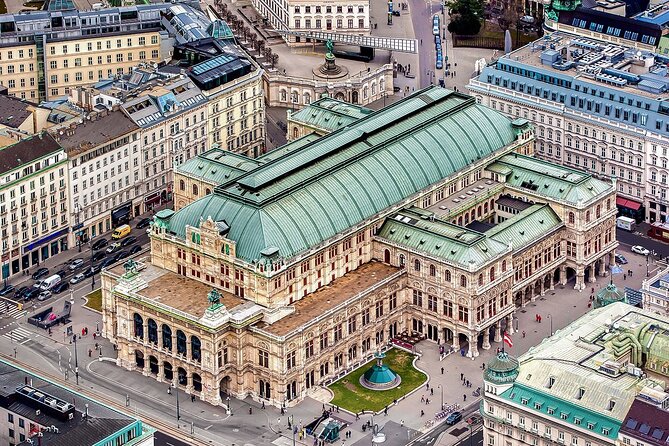
The final stop is the Wiener Staatsoper, or Vienna State Opera, on Opernring. The guide explains why the opera house is considered one of the city’s most beautiful buildings and tells the story of the emperor’s disappointment when he first saw it, along with the consequences of his harsh criticism.
It is a strong ending because the opera brings together architecture, court taste, public opinion, and the pressures faced by artists working under imperial rule. The tour finishes directly in front of the building, which makes the location practical for continuing your sightseeing.
You can use the ending point to return to the opera later, visit nearby attractions, or stop for a meal. The tour does not include an opera performance or interior admission, so those require separate planning.
From Mozarthaus to the State Opera, the route gives you a clear east-to-west sense of central Vienna. It is long enough to show how the major sights connect, but short enough to fit into a half-day plan.
How the guide shapes the experience
The guide matters greatly on this walk. The strongest praise goes to Nikoleta, Nicoletta, Giselle, and Nicky for their clear explanations, humor, warmth, and ability to make history interesting for adults and children.
Nikoleta is repeatedly described as engaging and good at storytelling. One family found that she kept both adults and children interested, while another appreciated her honest advice about which places deserve time and which are mainly popular because of social media.
That kind of judgment is useful. You can easily spend a day chasing famous names in Vienna and miss the places that fit your interests. A guide who explains what to prioritize helps you build a better schedule for the days that follow.
The group size ranges from 4 to 18 people. A group of four should feel quite personal, while 18 is still manageable for a city walk. You can ask questions, but you should not expect the same private attention as on a one-to-one tour.
The style appears friendly and flexible. Guides have adjusted the pace for families, allowed extra breaks, and sometimes extended the walk when a group moved slowly. That is encouraging, though you should not count on extra time every day.
Price, pace, and practical value
At $66.37 per person, this is not the cheapest way to see Vienna’s center. It can still be good value if you want a guide who links the sights, gives cultural background, and helps plan the rest of your visit.
You are paying for three hours of guided time, a small-to-medium group, a city map, a printed information package, practical recommendations, and a coffeehouse break. You are not paying for museum admission, food, drinks, or an opera experience.
The price makes the most sense when you take the tour early in your stay. You can use the guide’s suggestions for museums, cafés, restaurants, and venues during the rest of your visit. If you already know Vienna well, or prefer to read your own guidebook while walking, the value will be lower.
The physical demand is moderate. You will walk through the central city for about three hours, with stops and a 30-minute break. Wear comfortable shoes and prepare for weather changes. Cold conditions have made the pace feel brisk on some departures, while children may need additional pauses.
The tour is offered in English and includes a mobile ticket. It is generally suitable for people who can manage a half-day city walk, but it is not presented as a specialized accessible tour.
Free cancellation is available up to 24 hours before the start time. Poor weather or an insufficient number of bookings can lead to a change of date or a full refund.
Who should book this Vienna walking tour?
I would recommend it most strongly for first-time visitors who want an organized introduction without spending half a day inside one palace. Families can also benefit from the mix of stories, horses, cafés, and major buildings.
It suits you if you enjoy history explained through anecdotes rather than a long lecture. It also works well if you want honest suggestions about what to see next.
You may want a different experience if you need extensive museum time, a private guide, or a very slow photographic walk. The itinerary is ambitious, and some stops last only five or ten minutes.
Should you book it?
Book this tour if you want to understand Vienna’s central sights before choosing which ones to revisit. The route covers Mozart, the cathedral, Habsburg power, the Spanish Riding School, café culture, Parliament, Rathaus, the Burgtheater, Hotel Sacher, and the opera in one well-planned walk.
I would schedule it near the start of your stay, preferably when you can use the guide’s recommendations afterward. At $66.37, it is a fair choice for a friendly small-group introduction, but budget separately for museums, coffee, cake, and any palace interiors you want to enter.
FAQ
How long does the Vienna walking tour last?
The guided walk lasts approximately three hours. An additional 30-minute break in a traditional Viennese coffeehouse is included.
Where does the tour begin?
The tour begins at Mozarthaus Vienna, Domgasse 5, 1010 Vienna.
Where does the tour finish?
It finishes in front of the Vienna State Opera at Opernring 2, 1010 Vienna.
Is the tour offered in English?
Yes. The experience is offered in English.
Are museum entrance fees included?
No. Entrance fees to museums are not included in the tour price.
How many people can join the tour?
The group size ranges from 4 to 18 people. A moderate level of physical fitness is recommended.
More 3-Hour Experiences
- Classic Vienna: 3-Hour Guided Bike Tour
★ 4.7 · 1,846 reviews - Vienna by Bike 3-Hour All-In-One City Bike Tour in English
★ 4.7 · 438 reviews - The unknown Vienna City- a guided walking tour in 3 hours
★ 4.7 · 137 reviews - 3-Hour Walking Tour of Vienna Central Cemetery
★ 4.7 · 71 reviews
More Walking Tours
- Vienna: Viennese Underworld Guided Walking Tour
★ 4.7 · 1,865 reviews - Vienna: Private Walking Tour with a Local Guide
★ 4.6 · 1,420 reviews - Vienna: 1.5-Hour Underground Walking Tour
★ 4.9 · 1,146 reviews - Vienna: Ghosts and Legends Guided Nighttime Walking Tour
★ 4.4 · 1,088 reviews
Just added around Vienna
- Mobile puzzle rally tour at the Vienna Central Cemetery★ 4.5 · 3 reviews
- RAXI (E-Rickschaw) big private Vienna tour★ 4.5 · 3 reviews
- 8 days European Highlights PRIVATE TOUR from Budapest including Budapest Vienna Prague and Bratislava★ 5.0 · 3 reviews
- Private Transfer from Vienna to Prague with 1 hour Stop in Kutna Hora★ 4.5 · 3 reviews
- Palais Lobkowitz Audio Guide Tour★ 4.0 · 3 reviews
- Private Tour from Vienna to Melk and Dürnstein★ 4.5 · 3 reviews
- Vienna: Designer Fashion Time Capsule Experience★ 5.0 · 3 reviews
- Private day trip from Munich to Eagle’s Nest & Hallstatt★ 4.7 · 3 reviews
Historical Tours, compared.



Vienna Historic Center Small Group Walking Tour
Read our review →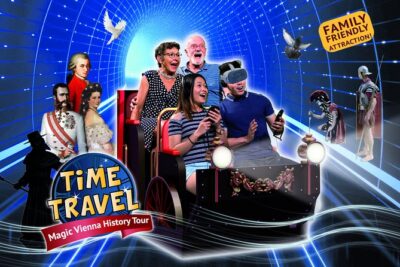
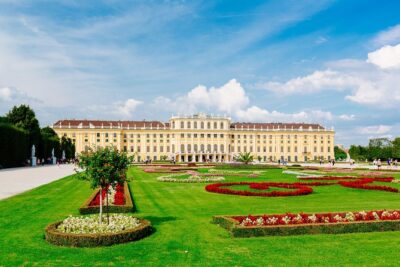
Skip-the-Line Schonbrunn Palace Guided Tour and Vienna Historical City Tour
Read our review →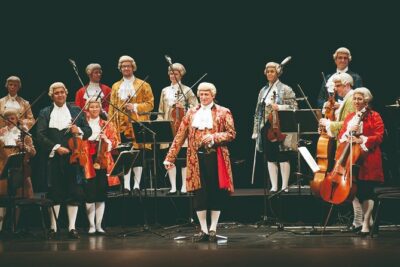
Vienna Mozart Concert in Historical Costumes at the Musikverein
Read our review →
Browse the lists this tour appears in