
Reviewed · HISTORICAL TOURS
Vienna: Historical Walking Tour – Hitler and the 1900s
Vienna’s past is not always comfortable. This two-hour walk brings Adolf Hitler’s early years, the artistic break led by figures such as Klimt and Wagner, and Vienna’s shift from imperial capital to modern city into one focused route. I like the way it goes beyond the postcard center, and I like the local guides’ use of anecdotes and personal insight. The main consideration is that this is a serious history tour, not a light sightseeing stroll.
The route includes Karlsplatz, MuseumsQuartier, and other central places tied to Vienna’s political and cultural changes. Joseph is praised for his memorable stories, while Cristina is described as clear, warm, and able to hold attention for hours. At $22, the price is fair for two hours with a live English-speaking guide, though food, museum entries, and transport are extra.
In This Review
- Key points to know before you book
- Why this Vienna walk is different
- Following Hitler’s early footsteps in Vienna
- Karlsplatz and Vienna’s imperial crossroads
- MuseumsQuartier and the artistic break
- From Habsburg capital to modern metropolis
- The guides are the main reason to go
- What two hours and $22 really buy you
- Practical details that affect your day
- Who will get the most from this experience
- How to fit it into a Vienna visit
- Should you book the Hitler and 1900s walking tour?
- FAQ
- How long does the Vienna historical walking tour last?
- What language is the tour conducted in?
- What is the price?
- Where does the tour meet?
- Where does the tour finish?
- Is the walking tour wheelchair accessible?
- Are museum entrance fees included?
- Is food or drink included?
- Can I cancel for a full refund?
- Can I reserve the tour and pay later?
Key points to know before you book
- Hitler’s early Vienna takes center stage: You look at his formative years in the city without treating the subject as a sensational attraction.
- Klimt and Wagner add a cultural second thread: The tour connects political change with the artistic revolution of the early 1900s.
- Karlsplatz and MuseumsQuartier show two sides of Vienna: Imperial planning and modern cultural life meet along the route.
- Local guides make the difference: Joseph is praised for anecdotes, while Cristina earns high marks for clear and engaging storytelling.
- Two hours keeps the walk manageable: You get a focused introduction without giving up half a day.
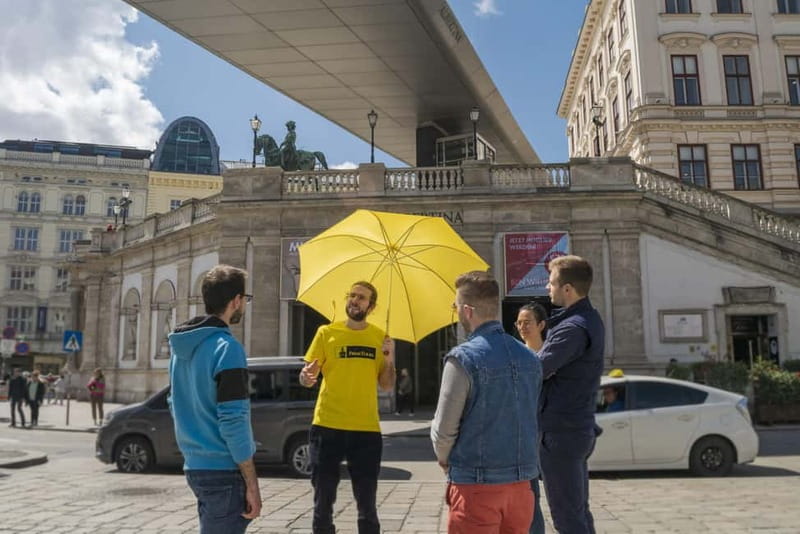
- The yellow umbrella is your meeting point: Look for the YELLOW PRIME TOURS UMBRELLA, then expect to finish where you started.
Why this Vienna walk is different
Many Vienna tours stay with palaces, grand churches, and the Habsburg court. This one asks a harder question: how did an imperial capital become the setting for political conflict, artistic rebellion, and modern urban life?
That broader frame is the tour’s real value. You are not simply collecting buildings. You are looking at how public spaces, architecture, cultural movements, and personal ambition fit together during a restless period.
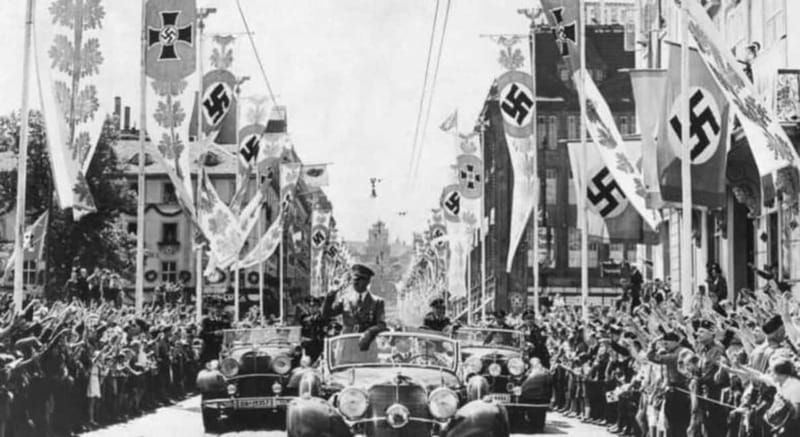
The Hitler section is likely to attract the most attention, but the experience is not presented as a single-person biography. The stated focus is his early life in Vienna and the ways that period influenced his later path. That makes the subject useful for understanding the city as a place of ideas and tensions, rather than turning the walk into a glorification of a dictator.
I appreciate that balance. A historical tour about Hitler needs a steady tone. It should explain, not sensationalize. Based on the route and guide comments, this walk uses his early footsteps as one thread in a larger story about Vienna around the turn of the twentieth century.
More Walking Tours in Vienna
- Vienna: Guided Walking Tour of City Center Highlights
★ 4.7 · 4,989 reviews - Vienna: Vienna Central Cemetery Guided Walking Tour
★ 4.8 · 3,307 reviews - Vienna: Guided Walking Tour of City Highlights & Hidden Gems
★ 4.9 · 2,180 reviews
Following Hitler’s early footsteps in Vienna
The walk explores the years Adolf Hitler spent in Vienna before his later political career. You will hear about the city he encountered and the experiences that shaped his outlook, with attention to the difference between a young man’s time in Vienna and the much larger events that followed.
That distinction matters. It is easy for tours about famous and infamous people to make every street corner sound like a direct cause of later history. A good guide instead gives you context and lets you judge the connection. The available information points to a tour built around that sort of explanation, with stories about Vienna’s political and social changes rather than a parade of dramatic claims.
You should expect this part of the walk to be thought-provoking. It may also feel heavier than a standard city tour. If you want only cheerful anecdotes and pretty facades, this is probably not your best two hours. If you want to understand how Vienna’s early twentieth-century climate fed into later events, the subject has real value.
The route also takes you beyond the obvious tourist circuit. That does not mean every stop is secret or inaccessible. It means the guide uses familiar central places to point out less familiar connections, stories, and changes in the city’s identity.
Karlsplatz and Vienna’s imperial crossroads
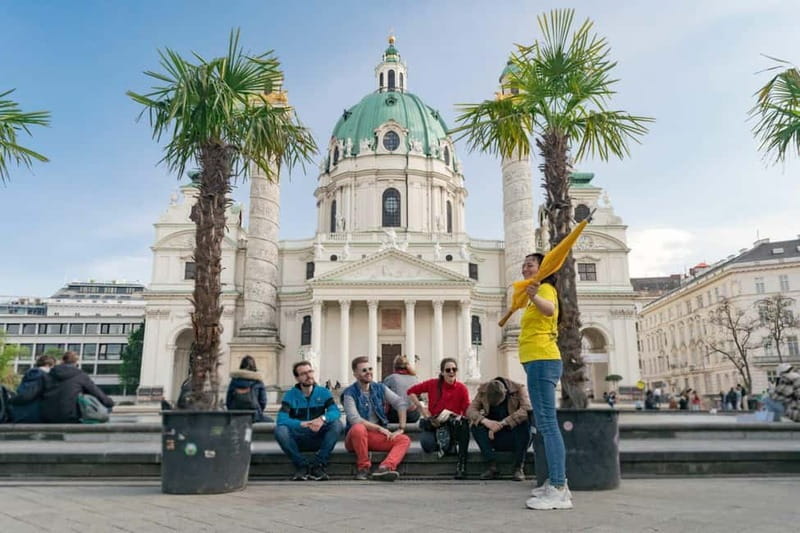
Karlsplatz is one of the named stops, and it is a useful place to think about Vienna’s transformation. The square reflects the grand scale associated with the Habsburg capital, yet it also belongs to a city that kept changing around those old imperial foundations.
Here, listen for how the guide links architecture with political history. Buildings and public spaces are not just scenery. They show what a government wanted to project, how a city organized movement and power, and how later generations reused the same setting for different purposes.
I like this sort of stop because it gives the tour a physical anchor. Instead of discussing the Habsburg Empire in the abstract, you can look at Vienna’s urban design while the guide explains the shift toward a modern metropolis.
Do not expect an extended architectural lecture or an indoor visit. The experience is a walking tour, and entrance fees are not included. Karlsplatz works best as an outdoor setting where you can absorb the guide’s explanation, take in the surroundings, and connect the visual evidence with the larger story.
MuseumsQuartier and the artistic break
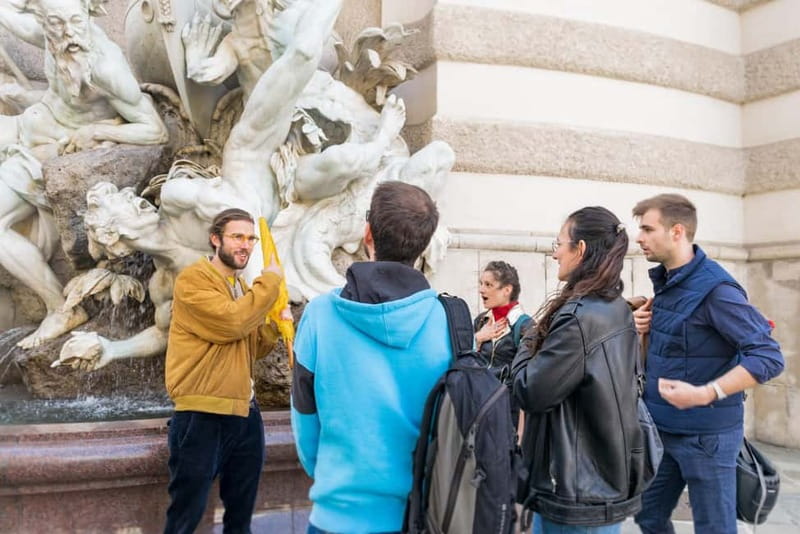
MuseumsQuartier brings the cultural side of the tour into clearer focus. The route connects Vienna’s early 1900s artistic revolution with figures such as Gustav Klimt and Otto Wagner, two names that help explain how the city challenged older artistic and architectural habits.
Klimt represents the bold new art associated with Vienna’s period of cultural change. Wagner points toward a more modern way of thinking about architecture and urban design. You do not need a specialist background to follow this section. The useful point is that Vienna’s modern turn was not only political. It was also visible in art, buildings, and public taste.
This is one of the tour’s strongest ideas: political and cultural change happened at the same time. While old imperial structures still shaped the city, artists and designers were testing new forms. The contrast helps you see Vienna as more than a preserved Habsburg showpiece.
MuseumsQuartier also gives the walk a link to Vienna today. The city’s present cultural life grows from those earlier arguments about art, modernity, and public space. The tour does not include museum admission, so you will not be entering attractions as part of the $22 price. Still, the outdoor explanation can help you decide what deserves a separate visit later.
More historical tours:
- Vienna: Time Travel and Magic Vienna History Tour
★ 4.6 · 3,879 reviews - Vienna: World War II Historical Walking Tour
★ 4.8 · 1,772 reviews - Vienna Historic Center Small Group Walking Tour
★ 5.0 · 1,746 reviews - Time Travel-Magic Vienna History Tour Ticket
★ 4.5 · 1,099 reviews
From Habsburg capital to modern metropolis
The tour’s larger story is Vienna’s change from imperial center to modern city. That change was not a clean handoff from one age to another. Older institutions, grand architecture, new artistic movements, and political strain overlapped.
A guide can make that overlap easier to grasp. Rather than seeing the Habsburg period, Hitler’s youth, and Vienna’s present as separate chapters, you begin to see how each period left traces in the next. The walk gives you a framework for noticing those traces during the rest of your stay.
I find this especially useful early in a Vienna visit. A palace tour can show you how the imperial court wanted to be seen. This walk asks what happened around that official image and how the city responded to pressure from modern politics and culture.
The route’s present-day angle also keeps the experience from becoming a museum piece. Vienna is not frozen in the 1800s. The streets still function as part of a living capital, and the tour uses that present setting to discuss the past.
The guides are the main reason to go
The written feedback is strongest on the guides, and that is important for a history walk. A route can be excellent on paper, but the experience depends on whether the person leading it can make complicated subjects clear and human.
Joseph is praised for using many anecdotes and interesting stories. That suggests a guide who adds texture instead of reciting dates. Anecdotes can help you remember a place, especially when the subject includes political ideas and artistic movements that might otherwise blur together.
Cristina receives similar praise for her clear speaking style and command of the material. For you, that means the guide’s delivery may be as valuable as the stops themselves. Historical walking tours involve standing outdoors, moving through city streets, and paying attention for two hours. A clear, engaging voice makes a real difference.
Ángeles and Mia also describe their guide as highly informed and the history as particularly interesting. Across these comments, the pattern is consistent: the human storytelling earns the strongest praise.
You can also ask your guide for suggestions after the formal route ends. Insider tips are included, and an additional tip is welcome on the spot. That is optional, but if Joseph, Cristina, or another guide gives you a memorable afternoon of context, you may want to show your appreciation directly.
What two hours and $22 really buy you
At $22 per person, this is a modestly priced introduction to a complicated subject. You are paying for a two-hour walking route, an English-speaking local guide, and the advantage of having the city’s locations explained as you see them.
The value is strongest if you would otherwise walk through Karlsplatz or MuseumsQuartier without understanding their place in Vienna’s political and cultural changes. A guide helps you notice connections that are easy to miss when you are sightseeing on your own.
The price does not cover food, drinks, museum admission, or transport to and from the meeting point. That keeps the basic cost simple, but you should allow extra time and money if you want to visit an attraction after the walk.
The tour ends back at the meeting point, which is convenient for planning the rest of your day. Since starting times vary, check availability before booking. A two-hour duration is long enough to provide substance, yet short enough to fit beside a museum visit or another central Vienna activity.
Practical details that affect your day
Look for the YELLOW PRIME TOURS UMBRELLA at the meeting point. This is the most useful arrival detail, especially in a busy central area where several groups may gather.
The tour is conducted in English and includes a live guide. It is wheelchair accessible, which makes it a practical option for many visitors, though it remains a walking experience through the city.
Transport to the starting point is not included. You need to make your own way there, so leave enough time to arrive before the group sets off. The activity finishes at the same meeting point rather than at a separate attraction.
You can reserve now and pay later, which helps if your Vienna schedule is still shifting. Free cancellation is available up to 24 hours in advance for a full refund. These policies are useful, but the bigger planning question is whether you want a serious history walk on the day you choose.
The participation notice says the walk is voluntary and that the guides are freelance or self-employed. It also places responsibility for injuries to people or property on the participant. That is a formal warning rather than a comment on the route, but you should still wear sensible shoes and pay attention on city streets.
Who will get the most from this experience
I would choose this tour if you enjoy modern European history, political context, architecture, or Vienna’s artistic movements. It also suits anyone who has already seen the main imperial sights and wants a different angle on the city.
Students and first-time visitors can benefit from the structure. The guide connects several subjects that are often taught separately: Hitler’s early years, the late Habsburg period, the art associated with Klimt, Wagner’s architectural ideas, and Vienna’s modern identity.
The tour may also work well for repeat visitors. Familiar streets can feel new when you learn why they mattered during a period of major change.
I would think twice if you want a relaxed photo walk, a palace-focused tour, or a route with museum interiors. This experience is built around explanation, outdoor stops, and difficult historical themes. You should also be comfortable walking for two hours and listening closely.
How to fit it into a Vienna visit
For a first visit, I would schedule this early in your stay if the subject interests you. The historical frame can sharpen later visits to museums, public squares, and architectural landmarks.
You could pair it with a separate museum visit after the walk, since admission is not included. MuseumsQuartier is particularly useful in that regard, but the tour itself does not promise entry to any attraction.
Avoid packing the same part of central Vienna with too many time-sensitive bookings. The start time depends on availability, and the guide may spend more or less time explaining a stop according to the group’s questions. Keep the rest of the day flexible.
Bring water and wear comfortable shoes. Food and drinks are not included, and the tour takes place on foot. A small notebook could be useful if you want to remember names, ideas, or recommendations from the guide.
Should you book the Hitler and 1900s walking tour?
I would book it if you want Vienna presented as a city of conflict and change, not just imperial elegance. The combination of Hitler’s early life, Klimt and Wagner, Karlsplatz, MuseumsQuartier, and the move toward modern city life gives the two hours a clear purpose.
The strongest reason to go is the guide quality. Joseph’s anecdotes and Cristina’s clear, engaging delivery suggest that the experience depends less on checking off sights than on hearing the city explained well.
Skip it if the subject feels too heavy for your trip or if you need indoor attractions included in the price. For everyone else, $22 is a sensible cost for a focused English-language introduction, especially if you want a thoughtful route and practical local tips.
FAQ
How long does the Vienna historical walking tour last?
The tour lasts two hours.
What language is the tour conducted in?
The live tour guide speaks English.
What is the price?
The price is $22 per person.
Where does the tour meet?
Look for the YELLOW PRIME TOURS UMBRELLA at the meeting point.
Where does the tour finish?
The activity ends back at the meeting point.
Is the walking tour wheelchair accessible?
Yes, the activity is listed as wheelchair accessible.
Are museum entrance fees included?
No. Entrance fees to museums or other attractions after the tour are not included.
Is food or drink included?
No. Food and drinks are not included.
Can I cancel for a full refund?
Yes. You can cancel up to 24 hours in advance for a full refund.
Can I reserve the tour and pay later?
Yes. You can reserve your spot and pay later, so you do not need to pay at the time of booking.
More Walking Tours
- Vienna: Viennese Underworld Guided Walking Tour
★ 4.7 · 1,865 reviews - Vienna: Private Walking Tour with a Local Guide
★ 4.6 · 1,420 reviews - Vienna: 1.5-Hour Underground Walking Tour
★ 4.9 · 1,146 reviews - Vienna: Ghosts and Legends Guided Nighttime Walking Tour
★ 4.4 · 1,088 reviews
Just added around Vienna
- Mobile puzzle rally tour at the Vienna Central Cemetery★ 4.5 · 3 reviews
- RAXI (E-Rickschaw) big private Vienna tour★ 4.5 · 3 reviews
- 8 days European Highlights PRIVATE TOUR from Budapest including Budapest Vienna Prague and Bratislava★ 5.0 · 3 reviews
- Private Transfer from Vienna to Prague with 1 hour Stop in Kutna Hora★ 4.5 · 3 reviews
- Palais Lobkowitz Audio Guide Tour★ 4.0 · 3 reviews
- Private Tour from Vienna to Melk and Dürnstein★ 4.5 · 3 reviews
- Vienna: Designer Fashion Time Capsule Experience★ 5.0 · 3 reviews
- Private day trip from Munich to Eagle’s Nest & Hallstatt★ 4.7 · 3 reviews
Historical Tours, compared.



Vienna Historic Center Small Group Walking Tour
Read our review →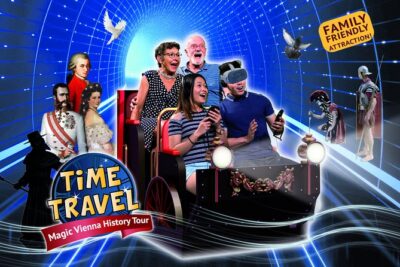
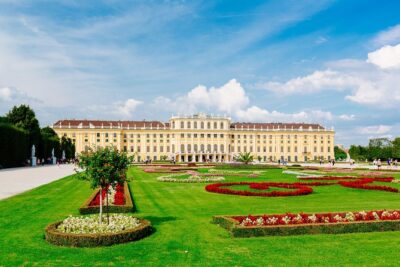
Skip-the-Line Schonbrunn Palace Guided Tour and Vienna Historical City Tour
Read our review →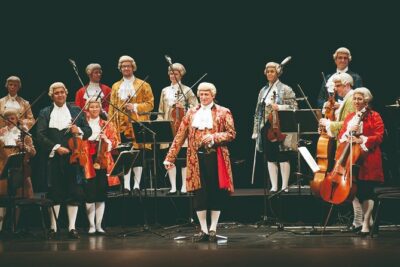
Vienna Mozart Concert in Historical Costumes at the Musikverein
Read our review →
Browse the lists this tour appears in