
Reviewed · ATTRACTION TICKETS IN VIENNA
Vienna House of Music Entrance Ticket
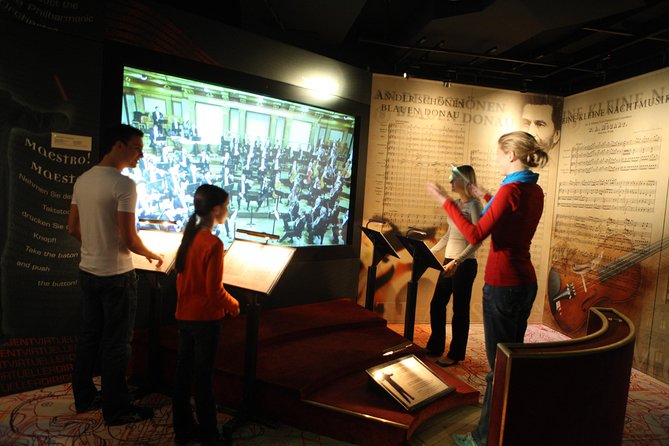
Music becomes a hands-on adventure here. Vienna’s House of Music combines interactive sound experiments with displays about Mozart, Beethoven, Schubert, Mahler, and the Strauss family. I especially like the chance to conduct the Vienna Philharmonic with a virtual baton, and I appreciate that you can explore at your own pace rather than follow a fixed tour.
The new Virtual Reality Sound Lab adds another playful layer, letting you create your own sound creature. The main drawback is timing: the museum can become crowded later in the day, and an hour and a half may feel short if you stop at every station.
In This Review
- Key Points Before You Go
- What Makes Vienna’s House of Music Different
- Start With the Science of Sound
- Sonotopia Universe and the Virtual Reality Sound Lab
- Vienna Philharmonic Archives and New Year’s Eve Music
- Composer Floors: Mozart, Beethoven, Schubert, Mahler, and Strauss
- Conduct the Vienna Philharmonic Yourself
- How Long Should You Spend Inside?
- Is the $22.93 Ticket Good Value?
- Who Will Enjoy This Museum Most?
- Booking, Cancellation, and Practical Details
- Should You Book the Vienna House of Music Ticket?
- FAQ
- Where is the House of Music located?
- How long does the visit take?
- What does the ticket include?
- Is a guide included?
- Is the museum suitable for children?
- Is the museum open every day?
- Can I cancel for a refund?
Key Points Before You Go
- Virtual conducting test: Wave a baton along with the Vienna Philharmonic and receive feedback on your performance.
- Composer floors: Explore the lives and music of Mozart, Beethoven, Schubert, Mahler, and the Strauss family.
- New sound experiments: Use the Virtual Reality Sound Lab to create a personal sound creature and test how sound works.
- Family-friendly format: Children can press, move, listen, and experiment, while adults get serious information about music.
- Self-guided visit: The ticket lets you wander independently, with a free smartphone guide available in eight languages.
- Good central-city stop: The museum is near public transportation and works well before or after a concert.
What Makes Vienna’s House of Music Different
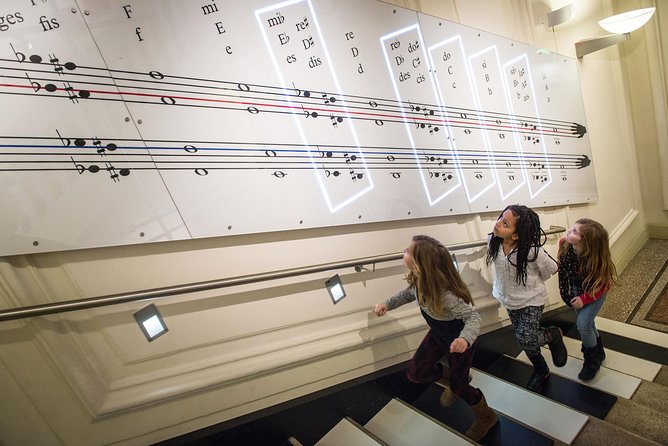
Vienna has no shortage of grand concert halls, composer apartments, and formal music displays. The House of Music takes another route. It treats music as both an art and a physical phenomenon, so you are not only reading about composers. You are also testing sound, rhythm, hearing, and performance.
That mix gives the museum a broad appeal. If you love classical music, you will find material about the musicians who shaped Vienna. If your knowledge of classical music begins and ends with recognizing a few famous tunes, the interactive stations give you an easy way in.
I would not think of this as a traditional museum where you quietly move from glass case to glass case. Much of the visit asks you to do something. You listen, wave, build, compare, and make choices. That makes the experience especially useful for families, but it also keeps adults involved.
The museum received a rating of 4.5 from 191 reviews, and the strongest praise centers on the same features: interactive exhibits, composer displays, and activities that work for several age groups. That is a good sign for anyone who worries that a music museum might feel dry.
More Attraction Tickets in Vienna
- Vienna: Classic Ensemble Vienna in St. Peter’s Church Ticket
★ 4.7 · 4,819 reviews - Vienna Kunsthistorisches Museum Day Admission Ticket
★ 4.6 · 3,690 reviews - Vienna: Tickets for Mozarthaus Vienna with Audio Guide
★ 4.2 · 2,344 reviews
Start With the Science of Sound
The lower sections introduce the basic idea behind the museum: sound is something you can investigate. You may find stations that explain how people and animals hear, how sound reaches the ear, and how music can be built from separate elements.
One particularly interesting area looks at how a fetus hears sound. Another helps you consider how animals respond to noise and music. These displays give younger visitors a reason to pay attention, while adults can connect the experiments to the larger questions of hearing and perception.
This part is valuable because it does not assume that you already know musical terms. You can approach the exhibits through curiosity instead of a background in music theory. I would give yourself time here, especially if you are visiting with children who want to try each activity more than once.
The museum guide for your smartphone can help you move through the exhibits. It is available in eight languages, with a family version in German and English. The guide is free to download, but it is not the same as having a personal guide. You remain responsible for choosing your route and deciding how much time to spend at each display.
Sonotopia Universe and the Virtual Reality Sound Lab
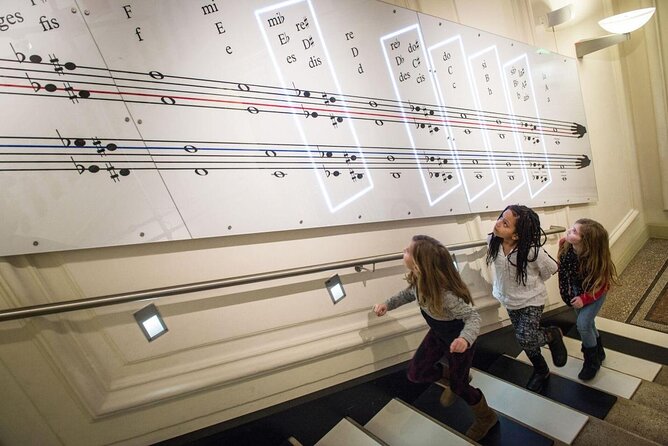
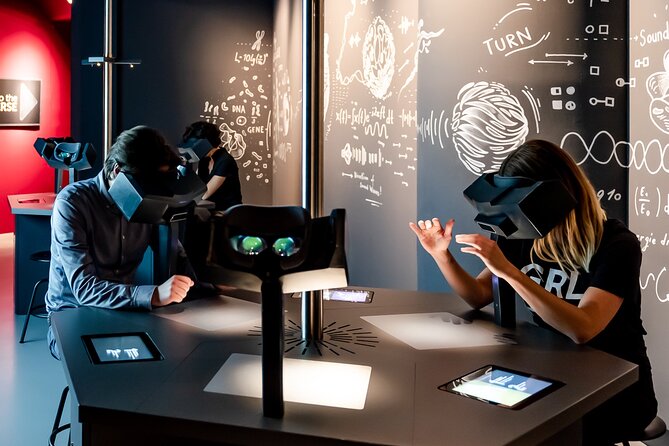
The Sonotopia Universe on the second floor is one of the newer parts of the museum. Its focus is sound creation and experimentation, with interactive stations that ask you to think about how sounds are formed and combined.
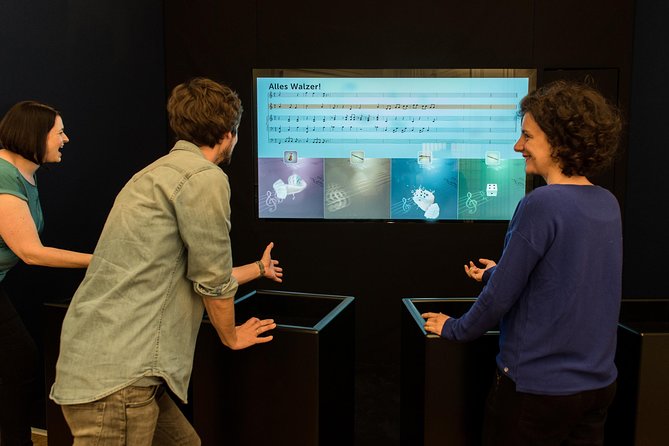
The Virtual Reality Sound Lab is the main attraction here. You can create your own sound creature, which turns an abstract idea into something visual and playful. This is a strong choice for families because it gives children a clear task, yet it also makes adults think about the link between sound, movement, and imagination.
The experience is not simply a button-pressing exercise. The appeal comes from seeing how your actions affect the result. I would allow extra time on this floor if you are interested in technology or if your children are eager to repeat the activities.
A practical point: the museum describes this as a visit of about 90 minutes to two hours. That is enough for a good overview, but not necessarily enough for every station at a relaxed pace. If you want to read every panel and revisit your favorite activities, plan on staying toward the longer end of that range.
Vienna Philharmonic Archives and New Year’s Eve Music
The House of Music also gives space to the Vienna Philharmonic. Its historical archives connect the museum’s playful technology with one of Vienna’s most respected musical institutions.
You can listen to the orchestra’s famous New Year’s Eve concert, an experience that helps explain why the ensemble has such a strong place in Vienna’s cultural life. This section should appeal to concertgoers, but it is not limited to experts. Hearing the orchestra in this setting adds a human and historic side to the technical exhibits.
I like the contrast between the archive material and the hands-on displays. One moment you may be testing how sound works. The next, you are listening to a major orchestra and considering its long musical tradition.
If you plan to attend a Vivaldi or Mozart concert during your time in Vienna, this museum makes a useful stop beforehand. It gives you context without requiring a full lecture or a separate guided program. The museum itself does not include a concert, food, drinks, or a personal guide, so treat it as an independent cultural visit rather than a concert package.
A few more trips of this kind worth comparing:
- Vienna: Vivaldi’s Four Seasons Concert in Karlskirche
★ 4.7 · 14,951 reviews - Vienna: Spanish Riding School Training
★ 3.9 · 9,281 reviews - Vienna: Skip-the-cashier-desk-line Giant Ferris Wheel Ride
★ 4.5 · 7,859 reviews - Vienna: Schönbrunn Palace & Gardens Skip-the-Line Tour
★ 4.7 · 7,739 reviews
Composer Floors: Mozart, Beethoven, Schubert, Mahler, and Strauss
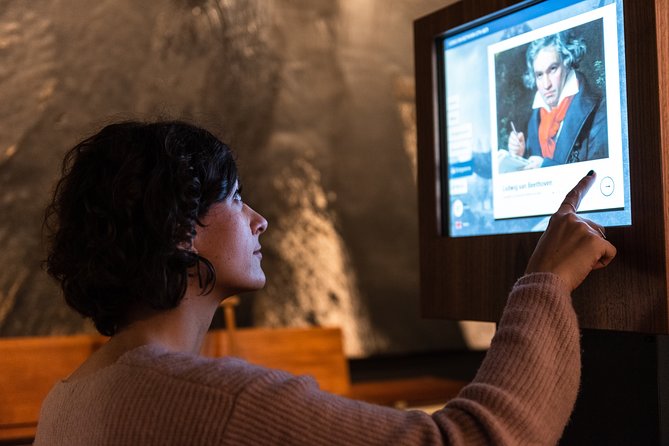
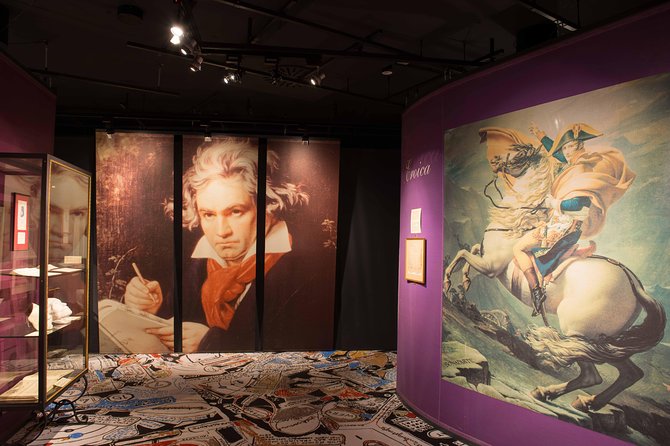
The third floor turns toward the composers linked with Vienna. Displays cover Mozart, Beethoven, Schubert, Mahler, and the Strauss family, with information about their lives in the city and the music they created.
This is where the visit becomes more personal. Instead of considering music only as sound waves and technology, you see the people behind the works. The composer exhibits were among the most praised parts of the experience, especially the Mozart area.
You should not expect a quiet, formal memorial for each composer. The material is presented in a themed, interactive setting. That approach makes the information easier to approach, particularly if you are visiting with children or with someone who does not normally choose museums.
At the same time, classical music fans should not dismiss the museum as only a children’s attraction. The displays include valuable information about major figures, and the different ways of presenting it can make familiar names feel fresh.
I would use this floor to choose one or two composers for deeper attention. If you try to read everything about everyone, you may run out of energy before reaching the virtual conductor on the fourth floor.
Conduct the Vienna Philharmonic Yourself
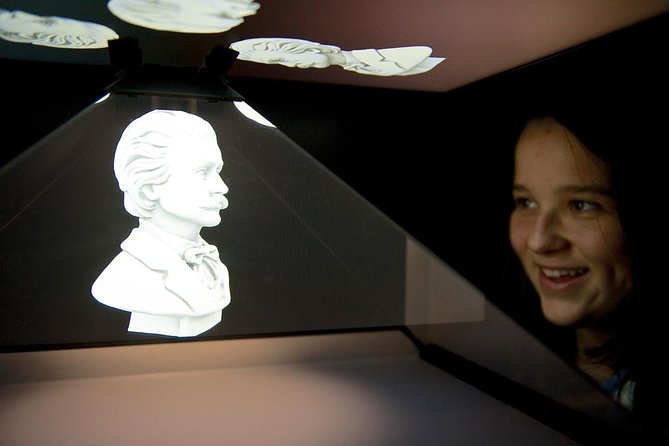
The virtual conductor exhibit is the museum’s natural finale. You stand in front of a screen and use a baton to conduct a video of the Vienna Philharmonic.
Your hand movements affect the performance, and you receive feedback after trying. That small piece of evaluation makes the activity more engaging than simply waving along with a recording. You have a clear goal: keep the orchestra with you and see how your technique works.
This is one of the best examples of the museum turning passive listening into active participation. You may arrive thinking you know how conducting works, then discover that keeping an orchestra together is harder than it looks.
The activity also creates a good shared moment. Adults and children can take turns, and the results may produce more laughter than polished conducting. It is a lighthearted end to a visit that still teaches you something about tempo, coordination, and musical leadership.
Expect this area to attract attention, particularly in the afternoon and later hours. If conducting is high on your list, consider visiting in the morning when the museum may be less crowded. You will have more room to focus and may spend less time waiting for an activity.
How Long Should You Spend Inside?
The official visit length is approximately one hour and 30 minutes to two hours. I think that is a sensible estimate for a steady visit, but your pace will depend on how many interactive exhibits you try.
For a quick visit, focus on these four areas:
- The sound science exhibits
- Sonotopia Universe and the Virtual Reality Sound Lab
- The composer displays
- The virtual conductor
If you have children, add time for repeated turns at the most popular stations. If you are a serious classical music fan, give yourself longer for the composer material and Vienna Philharmonic archives.
The museum is open daily from 10:00 a.m. to 10:00 p.m. during the listed regular dates. On December 24, the stated hours are 10:00 a.m. to 6:00 p.m. It is also listed as open from 10:00 a.m. to 10:00 p.m. from December 25 through December 31.
Morning is the safest choice if you want a calmer visit. One direct tip is to avoid the afternoon and later hours during busy periods, when popular interactive stations may have more people around them.
Is the $22.93 Ticket Good Value?
At $22.93 per person, this is not the cheapest short museum stop in Vienna. The value depends on how fully you use the building.
For a rushed hour, the price may feel high. You are paying for access to several floors, technology-based activities, composer displays, archive material, and the conducting exhibit. If you only glance at the rooms, you will miss much of what makes the ticket worthwhile.
For a two-hour visit, the cost is easier to justify. You get several different kinds of experience in one place: science, music history, technology, and performance. That variety also makes the ticket useful for mixed groups. One person can focus on Mozart, another can experiment with sound, and children can spend time at the hands-on stations.
I see the strongest value for families, couples with different interests, and music lovers who want more than a standard display of portraits and documents. It is also a good rainy-day choice because the experience is entirely indoors.
The free smartphone guide adds value, though you will need to download it yourself. It is available in eight languages, and the family version is offered in German and English. The ticket does not include a guide, transportation, hotel pickup, food, or drinks, so budget for those separately.
Who Will Enjoy This Museum Most?
I would recommend the House of Music to families with children of different ages. The activities give younger children something to do, while older children and adults can read about composers and listen to important performances.
It also suits anyone who likes learning through action. If you prefer to test an idea rather than read a long explanation, the sound stations and virtual reality exhibit should keep you interested.
Classical music fans will find plenty to enjoy, particularly in the Mozart section, the Vienna Philharmonic archives, and the conducting display. You do not need to be an expert, though. The museum’s strongest quality is that it gives beginners and enthusiasts different ways to use the same rooms.
I would be less enthusiastic if you want a quiet, scholarly museum with long periods of uninterrupted listening. The interactive format means movement, screens, and shared activities are part of the experience. That energy is the point, but it may not suit every mood.
The museum is near public transportation, and most people can participate. Service animals are allowed. Since no hotel pickup or drop-off is included, you should make your own way there and plan the visit around your other central Vienna activities.
Booking, Cancellation, and Practical Details
The experience is offered in English, and confirmation is provided when you book. It is commonly reserved about 21 days in advance, so booking ahead is sensible if your Vienna dates are fixed.
Free cancellation is available if you cancel at least 24 hours before the experience start time. Canceling or changing the booking less than 24 hours ahead does not qualify for a refund, and the cut-off uses Vienna local time.
The ticket is for the House of Music itself, not a guided tour. You can download the free museum guide to help with the visit, but you should not expect a guide to lead you from room to room.
I would book a morning entry if possible, especially during a busy travel period. That gives you a better chance to use the most popular interactive exhibits without feeling hurried.
Should You Book the Vienna House of Music Ticket?
Yes, if you want a flexible museum that combines famous Viennese composers with hands-on sound experiments. The virtual conductor, the Vienna Philharmonic archives, and the Virtual Reality Sound Lab give the visit enough variety to suit a mixed group.
Families should place it high on their list. Adults who enjoy Mozart, Beethoven, or Strauss will also find worthwhile material, especially if they take time with the composer floors. At $22.93, it offers fair value when you stay for the full 90 minutes to two hours.
Skip it only if you are seeking a formal concert, a guided lecture, or a very quiet museum. Otherwise, choose a morning visit, download the guide, and save time for the stations that let you make noise, test ideas, and conduct an orchestra that cannot actually fire you.
FAQ
Where is the House of Music located?
The House of Music is in central Vienna, Austria, and it is near public transportation.
How long does the visit take?
The visit takes approximately one hour and 30 minutes to two hours.
What does the ticket include?
The ticket includes admission to the House of Music and access to the museum’s exhibits. You may also download the free smartphone museum guide.
Is a guide included?
No. A personal guide is not included. The visit is self-guided, and the museum guide can be downloaded to your smartphone.
Is the museum suitable for children?
Yes. The museum has interactive activities designed to engage both children and adults, including sound experiments, the Virtual Reality Sound Lab, and the virtual conductor exhibit.
Is the museum open every day?
The listed regular hours are 10:00 a.m. to 10:00 p.m., Monday through Sunday. On December 24, the listed hours are 10:00 a.m. to 6:00 p.m.
Can I cancel for a refund?
Yes, if you cancel at least 24 hours before the experience start time. Cancellations or changes made less than 24 hours in advance are not refunded.
Just added around Vienna
- Mobile puzzle rally tour at the Vienna Central Cemetery★ 4.5 · 3 reviews
- 8 days European Highlights PRIVATE TOUR from Budapest including Budapest Vienna Prague and Bratislava★ 5.0 · 3 reviews
- RAXI (E-Rickschaw) big private Vienna tour★ 4.5 · 3 reviews
- Private Transfer from Vienna to Prague with 1 hour Stop in Kutna Hora★ 4.5 · 3 reviews
- Vienna: Designer Fashion Time Capsule Experience★ 5.0 · 3 reviews
- Palais Lobkowitz Audio Guide Tour★ 4.0 · 3 reviews
- Private Tour from Vienna to Melk and Dürnstein★ 4.5 · 3 reviews
- Vienna Sight & Gourmet Tour – individual private tour★ 4.5 · 3 reviews
Attraction Tickets in Vienna, compared.
Classic Ensemble Vienna in St. Peter’s Church Ticket
Read our review →
Vienna Kunsthistorisches Museum Day Admission Ticket
Read our review →
Tickets for Mozarthaus Vienna with Audio Guide
Read our review →
Skip-the-Line Entrance Ticket to the Danube Tower
Read our review →


St. Stephen’s Cathedral & Dom Museum Wien Tickets
Read our review →
Browse the lists this tour appears in