
Reviewed · ATTRACTION TICKETS IN VIENNA
Vienna: Johann Strauss – Immersive Audiovisual Experience Ticket
Vienna’s waltz king gets a modern stage. The Johann Strauss Museum turns music, biography, projections, and interactive technology into a 75-minute visit that feels more like a performance than a traditional museum. I like the location-based 3D audio because it lets you move freely while keeping the narration and music precisely in place. I also like the composing machine, which gives you a personal sheet of music to take home. The main drawback is that much of the experience runs through large headphones, and people prone to motion sickness may not enjoy the visual effects.
This is a good pick if ordinary museums lose your attention after ten minutes. The exhibition uses animation, sound, and hands-on features to explain Johann Strauss and his music. At $28 per person, it costs more than a basic museum admission, but the length, technology, and interactive elements give you plenty to do rather than simply look at display cases.
In This Review
- Key points to know before you go
- Why Johann Strauss still matters in Vienna
- Entering the Johann Strauss Museum
- The first rooms: Strauss through sound and image
- Moving freely through 3D audio scenes
- Interactive displays that make the story easier to follow
- The composing machine and your own waltz
- Become Johann Strauss for a photo
- How the $28 ticket earns its price
- Choosing your ticket and arrival time
- Who will enjoy this most
- How to fit it into a Vienna day
- Should you book the Johann Strauss experience?
- FAQ
- How long does the Johann Strauss Museum experience take?
- Where does the experience begin and end?
- What languages are available for the audio guide?
- Are headphones included?
- Is the museum wheelchair accessible?
- Can I create my own waltz?
- Can I take a photo as Johann Strauss?
- What are the opening hours?
Key points to know before you go
- A 75-minute musical journey: The visit follows Johann Strauss through audiovisual scenes, interactive displays, and historical storytelling.
- Freedom to move with 3D sound: Your headphones use precise location tracking, so music and narration follow your position in the room.
- You can compose a waltz: The composing machine lets you create a personal piece and take home printed sheet music.
- A memorable photo option: You can take a photo as Johann Strauss and have it printed at the museum.
- Good for restless museum-goers: The changing mix of music, animation, and interaction keeps you involved.
- Practical timing matters: Timed tickets require you to follow the chosen date and time, while flex tickets offer more freedom.
Why Johann Strauss still matters in Vienna
Johann Strauss is presented here as the first pop star in history, a useful way to understand his appeal. He was not simply a composer whose work survives in concert halls. His waltzes reached a broad public and helped define the musical image of Vienna.
The museum focuses on that public connection. You are not asked to approach Strauss as a specialist. Instead, the exhibition uses music and visual storytelling to show how his work became part of the city’s identity.
I appreciate this approach because it gives the music a human frame. You learn about important phases of Strauss’ life while hearing the melodies in settings designed to make them easier to feel and remember. If you already know the Blue Danube or other Viennese waltzes, the experience gives those pieces a new setting. If you know little about classical music, the presentation does not require much preparation.
The museum calls Strauss the Waltz King, and the title guides the whole visit. Expect an experience aimed at general audiences, families, music fans, and anyone curious about Vienna’s cultural past.
More Attraction Tickets in Vienna
- Vienna: Classic Ensemble Vienna in St. Peter’s Church Ticket
★ 4.7 · 4,819 reviews - Vienna Kunsthistorisches Museum Day Admission Ticket
★ 4.6 · 3,690 reviews - Vienna: Tickets for Mozarthaus Vienna with Audio Guide
★ 4.2 · 2,344 reviews
Entering the Johann Strauss Museum
The activity begins and ends at the Johann Strauss Museum, New Dimensions. Admission is included with your ticket, along with the headphones used as your audio guide.
The basic setup is simple. You receive the audio equipment and move through a series of spaces at your own pace within the timed experience. A host or greeter is available in German or English, while the audio guide offers Chinese, English, French, German, Italian, Japanese, Korean, and Spanish.
That language range is useful if you are visiting Vienna with an international group. You can share the same visual experience while choosing different audio languages.
The headphones are a central part of the visit, not a small extra. One useful detail is that the sound system tracks your location in real time. As you walk around, the audio responds with high precision, helping the music and narration remain tied to the space around you.
This gives you more freedom than a standard guided tour. You are not required to stand in one spot and wait for a guide to finish speaking. At the same time, the headphones are large, so you should be comfortable wearing them for much of the 75 minutes.
The first rooms: Strauss through sound and image
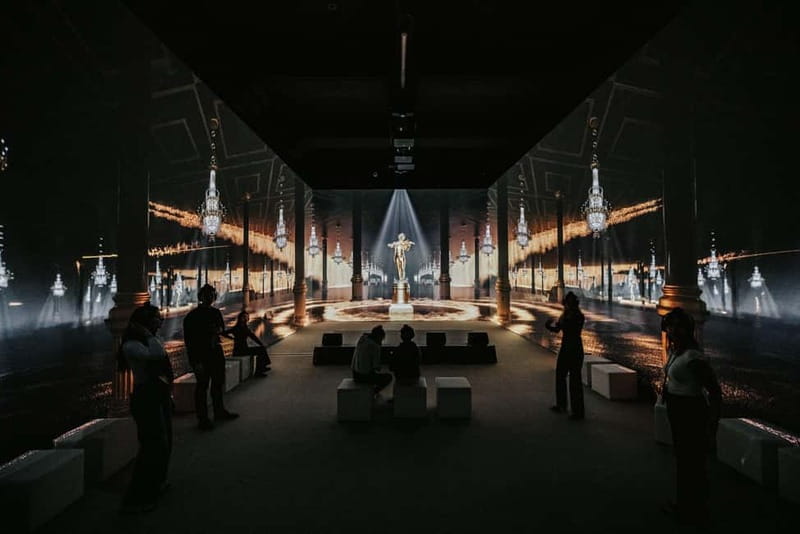
The opening portion introduces the world of Johann Strauss with multimedia stations, animations, and music. Rather than reading a long series of labels, you receive information through a mix of sound and visual material.
I find this format especially useful for visitors who want context without a lecture. The story moves through key parts of Strauss’ life and work, and the music helps connect each section.
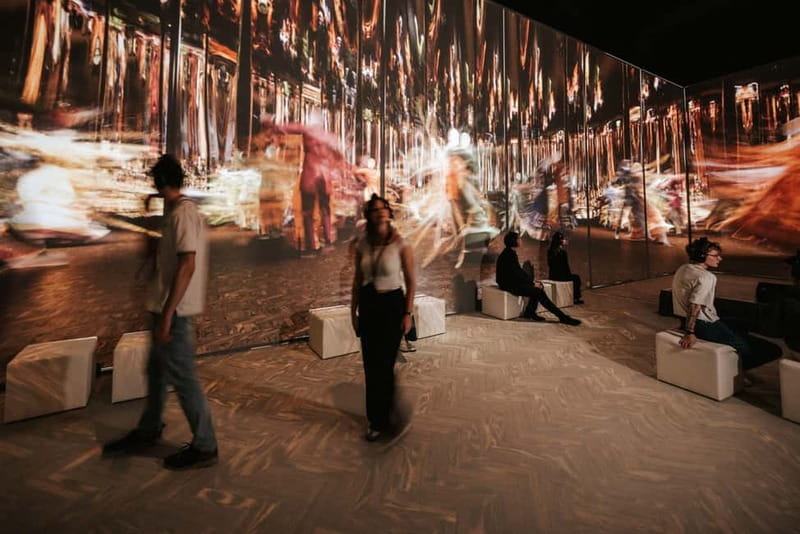
The audiovisual design is meant to bring melodies to life. Projections and changing scenes create a sense of movement around you, while the headphones add narration and musical detail. You might find this more engaging than a conventional display of portraits, instruments, and documents.
Still, this is not a quiet museum in the usual sense. The experience depends on sound and visual effects, so it may not suit you if you prefer a calm, text-heavy exhibition. The museum also notes that it is not suitable for people with motion sickness. Take that warning seriously if moving images or changing projections make you uncomfortable.
Moving freely through 3D audio scenes
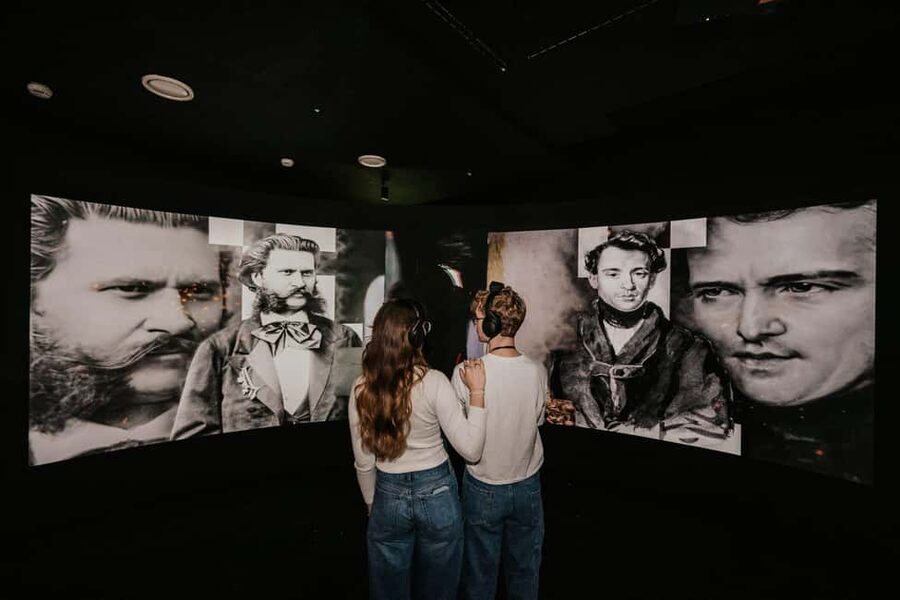
The most distinctive technical feature is the location-based 3D sound system. The headphones know where you are within the room, allowing the audio to create a more realistic sense of direction and space.
In practical terms, this means you can walk instead of staying fixed in front of one screen. Sound can appear to come from different areas as you move, and the audio guide remains synchronized with your position.
That freedom changes the rhythm of the visit. You are not just watching a film from a seat. You are moving through a designed environment, with the soundtrack and narration guiding your attention.
The system also helps explain why the experience takes 75 minutes. The museum is not a quick audio stop. You have time to move through the scenes, listen, look, and use the interactive features.
I would plan to give the visit your full attention. The audio guide contains the main information, so chatting with your companions may mean missing parts of the story. If your group wants to stay together, agree to move at a similar pace. If everyone prefers a different language, the location tracking makes that easier, since each person can follow an individual audio track.
A few more trips of this kind worth comparing:
- Vienna: Vivaldi’s Four Seasons Concert in Karlskirche
★ 4.7 · 14,951 reviews - Vienna: Spanish Riding School Training
★ 3.9 · 9,281 reviews - Vienna: Skip-the-cashier-desk-line Giant Ferris Wheel Ride
★ 4.5 · 7,859 reviews - Vienna: Schönbrunn Palace & Gardens Skip-the-Line Tour
★ 4.7 · 7,739 reviews
Interactive displays that make the story easier to follow
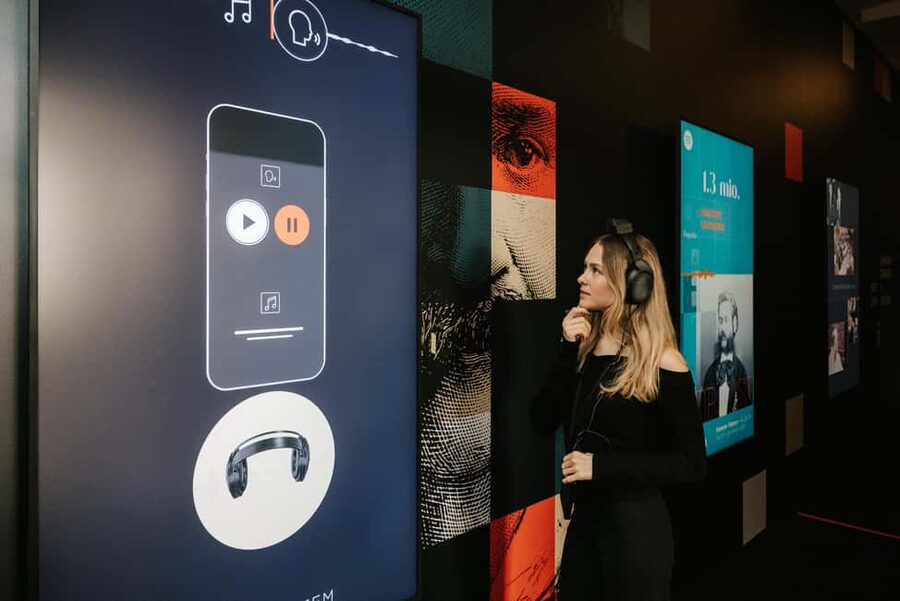
The interactive exhibitions cover important phases of Strauss’ life and present his music in new ways. Their value is not just entertainment. They give you several ways to absorb the material.
You can listen to melodies, watch animations, and interact with stations instead of relying only on written explanations. For children and adults with short attention spans, this variety can make a big difference.
One review described the format as particularly effective for an ADHD brain, with the changing environment keeping attention focused. That observation points to one of the museum’s strongest qualities. The visit offers something to do in nearly every stage, rather than asking you to stand quietly and read.
The experience can also work well for people who do not normally choose classical music attractions. You do not need to recognize every composition or understand musical terminology. The technology provides an accessible route into the subject.
The tradeoff is that the format may feel less substantial to someone seeking original artifacts or detailed academic interpretation. The available information emphasizes interactive exhibitions and audiovisual presentation, so choose this museum for its presentation of Strauss, not as a traditional archive.
The composing machine and your own waltz
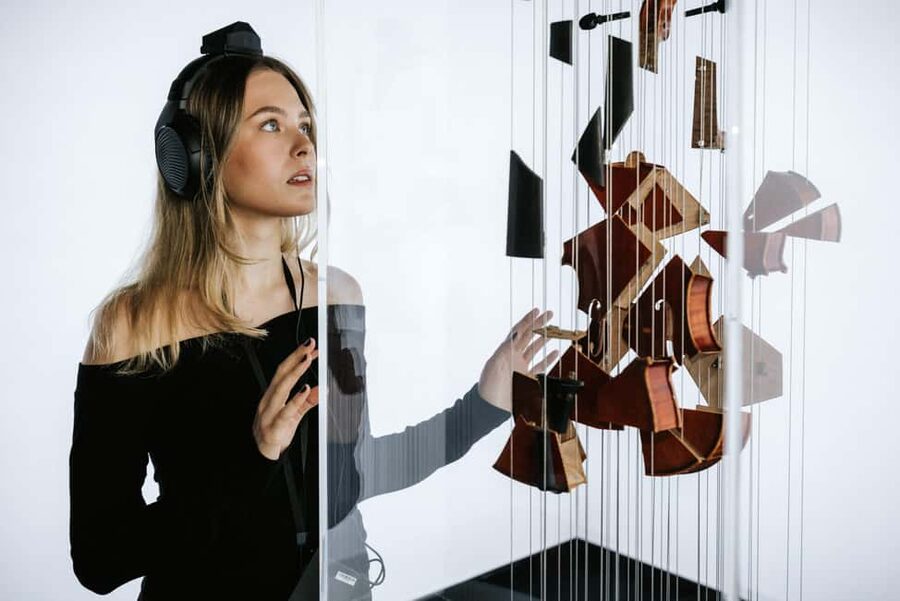
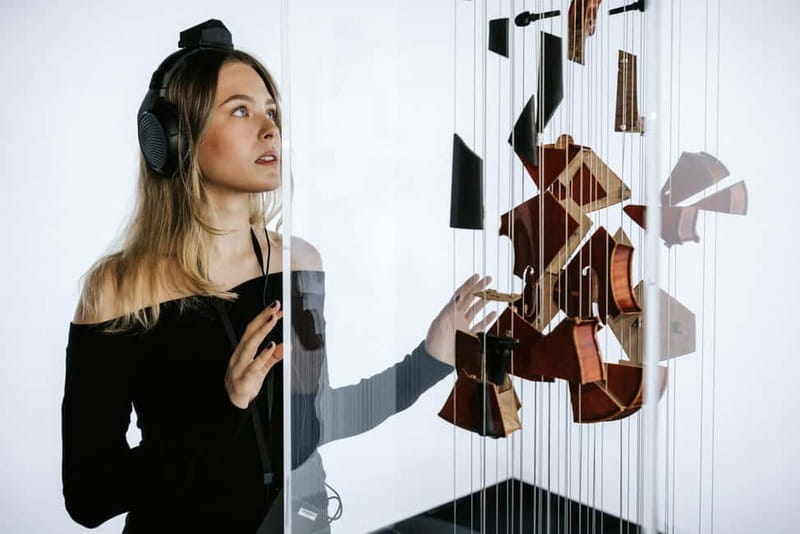
The composing machine is one of the clearest reasons to visit. It allows you to create your own waltz and take it home as personalized sheet music.
This turns a history lesson into a small creative activity. You are not only hearing Strauss’ music. You are making a piece inspired by the form that made him famous.
The machine is also a practical memory of the visit. A printed sheet of music is more distinctive than a standard museum shop purchase, especially if you are visiting with children or friends. You can keep it as a souvenir even if you do not read music.
The available information does not specify how many musical choices the machine offers or how long this part takes. I would treat it as a featured activity within the wider visit, not as a full music lesson.
Become Johann Strauss for a photo
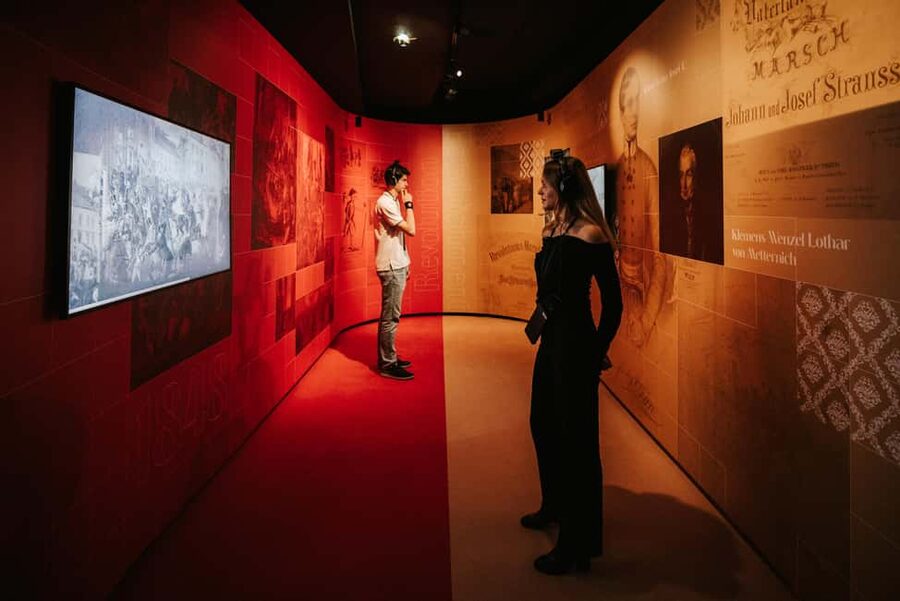
At the souvenir shop, a photo booth lets you take a picture of yourself as Johann Strauss. The museum can print the photo on the spot.
It is a playful feature, but it fits the subject. After hearing about Strauss as a public figure, you get a chance to step briefly into his role.
This option is included with admission to the souvenir shop and photo booth. The information does not state whether the printed photo costs extra, so check the terms at the museum if the photo is important to your plans.
The photo booth may appeal most to families, groups of friends, and visitors who enjoy a light ending to a cultural visit. If you prefer a serious museum experience, you can simply skip it and continue to the shop.
How the $28 ticket earns its price
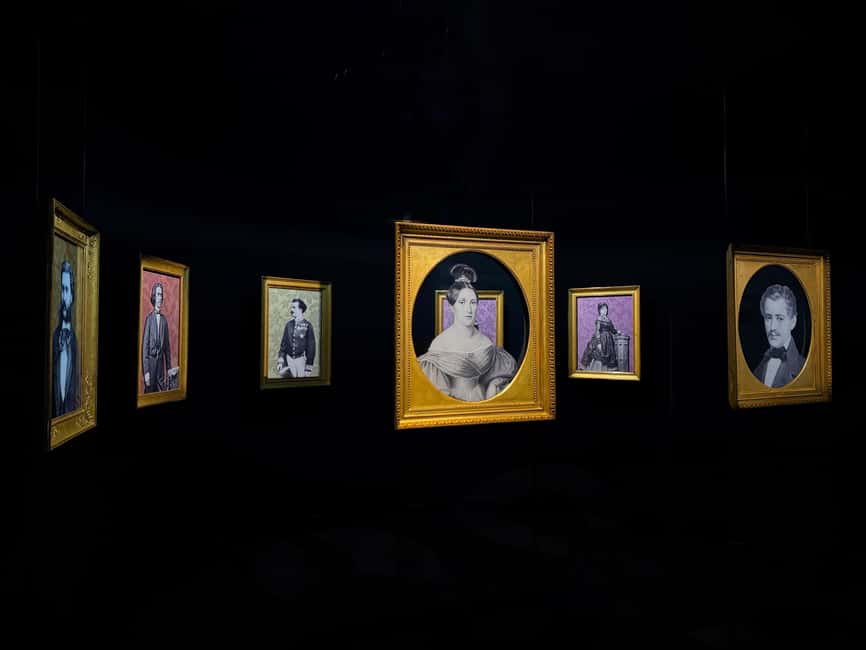
At $28 per person, this is not a bargain basement museum visit. The value depends on how much you enjoy audiovisual presentation and interactive technology.
You are paying for admission, a 75-minute program, the multilingual audio guide, use of the composing machine, and access to the souvenir shop with photo booth. The visit also offers a level of technical design that a simple self-guided museum cannot provide.
I think the ticket works best for visitors who want a planned cultural activity with a clear duration. Seventy-five minutes is long enough to feel worthwhile but short enough to fit into a busy Vienna day.
The price is harder to justify if you want to spend hours studying original objects or reading detailed biographies. This attraction presents Strauss through sound, movement, and visual effects. Its strength is the experience itself.
The high rating of 4.8 from 60 reviews supports the idea that the format delivers for many people. The strongest praise focuses on the audio guide, friendly and helpful entrance staff, good value, and the way the experience keeps attention. One practical criticism is also clear: the headphones are large and worn throughout much of the visit.
Choosing your ticket and arrival time
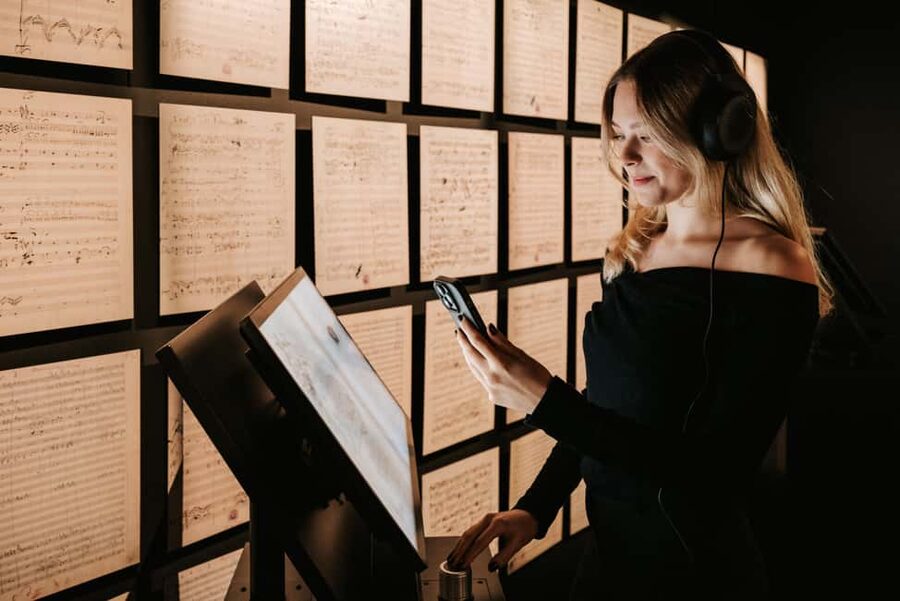
You can choose a timeslot ticket, a weekday flex ticket, or an everyday flex ticket, depending on the option available when you book.
A timeslot ticket requires you to follow the selected day and time. This is the safest choice if you already know your Vienna schedule and want a fixed appointment.
A weekday flex ticket can be used flexibly on weekdays. An everyday flex ticket can be used flexibly every day. Flexibility is valuable if your plans depend on weather, meals, or other timed attractions.
The museum is open Sunday through Thursday from 10:00 a.m. to 6:00 p.m. On Friday and Saturday, it stays open until 7:00 p.m. Check the available starting times before you book, since the 75-minute duration and chosen ticket type both affect your plans.
You can cancel up to 24 hours in advance for a full refund. Reserve now and pay later is also available, which can help if you are still arranging your Vienna itinerary.
Who will enjoy this most
I would recommend the experience to:
- Classical music fans who want a fresh presentation of Strauss
- First-time Vienna visitors looking for cultural context
- Families who prefer interactive displays to long reading sections
- People who find traditional museums slow or difficult to follow
- Visitors who enjoy sound, projections, and creative technology
- Groups with different audio language needs
It may be less suitable if you dislike wearing headphones, suffer from motion sickness, or want a traditional collection of physical objects.
The experience is wheelchair accessible, which makes it a practical option for many visitors. The supplied information does not give detailed information about every room or facility, so contact the museum directly if you need specific access details.
How to fit it into a Vienna day
The museum takes about 75 minutes, but allow a little extra time around the visit if you want to use the composing machine, take a photo, or browse the souvenir shop.
Because the end point is the same as the starting point, you do not need to arrange transport from another location. You can plan the visit as a contained stop in your day.
I would place it before or after another central Vienna activity, depending on your schedule. The fixed duration makes it easier to plan than a large museum where you may spend two or four hours without noticing.
Try not to rush through the audio scenes. The technology is the reason to come, and skipping sections would reduce the value of the ticket. At the same time, you do not need to treat it like a formal concert. Move, look around, and use the interactive stations at a comfortable pace.
Should you book the Johann Strauss experience?
Book it if you want to understand Vienna’s waltz tradition through music, projections, and participation rather than display cases alone. The 3D audio, composing machine, and photo booth give the visit several memorable hooks, while the 75-minute length keeps it manageable.
I would especially choose it for families, curious first-time visitors, and anyone who usually finds museums too passive. At $28, it is a fair buy when you will use the interactive features and stay for the full program.
Skip it if you strongly dislike large headphones, moving visuals, or technology-led exhibitions. For everyone else, this is a lively and accessible way to meet Johann Strauss, with enough substance to feel cultural and enough playfulness to keep the waltz from becoming a history lecture.
FAQ
How long does the Johann Strauss Museum experience take?
The experience lasts approximately 75 minutes.
Where does the experience begin and end?
It begins at Johann Strauss Museum, New Dimensions, and ends back at the same meeting point.
What languages are available for the audio guide?
The audio guide is available in Chinese, English, French, German, Italian, Japanese, Korean, and Spanish.
Are headphones included?
Yes. Headphones are included and are used as the audio guide throughout the experience.
Is the museum wheelchair accessible?
Yes, the activity is wheelchair accessible.
Can I create my own waltz?
Yes. The composing machine lets you compose your own waltz and take it home as personalized sheet music.
Can I take a photo as Johann Strauss?
Yes. The museum has a photo booth where you can take a photo as Johann Strauss and have it printed on the spot.
What are the opening hours?
The museum is open from 10:00 a.m. to 6:00 p.m. Sunday through Thursday, and from 10:00 a.m. to 7:00 p.m. Friday and Saturday.
Just added around Vienna
- Mobile puzzle rally tour at the Vienna Central Cemetery★ 4.5 · 3 reviews
- RAXI (E-Rickschaw) big private Vienna tour★ 4.5 · 3 reviews
- 8 days European Highlights PRIVATE TOUR from Budapest including Budapest Vienna Prague and Bratislava★ 5.0 · 3 reviews
- Private Transfer from Vienna to Prague with 1 hour Stop in Kutna Hora★ 4.5 · 3 reviews
- Palais Lobkowitz Audio Guide Tour★ 4.0 · 3 reviews
- Private Tour from Vienna to Melk and Dürnstein★ 4.5 · 3 reviews
- Vienna: Designer Fashion Time Capsule Experience★ 5.0 · 3 reviews
- Vienna Sight & Gourmet Tour – individual private tour★ 4.5 · 3 reviews
Attraction Tickets in Vienna, compared.
Classic Ensemble Vienna in St. Peter’s Church Ticket
Read our review →
Vienna Kunsthistorisches Museum Day Admission Ticket
Read our review →
Tickets for Mozarthaus Vienna with Audio Guide
Read our review →
Skip-the-Line Entrance Ticket to the Danube Tower
Read our review →


St. Stephen’s Cathedral & Dom Museum Wien Tickets
Read our review →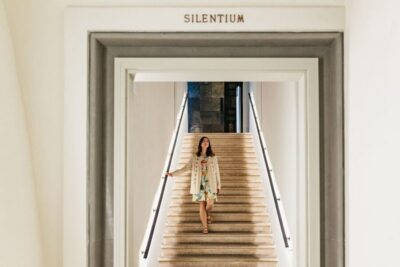
Browse the lists this tour appears in