
Reviewed · ATTRACTION TICKETS IN VIENNA
Vienna: Ticket to the Weltmuseum
Come for the feathers, stay for the stories. Vienna’s Weltmuseum gives you an absorbing look at cultures from around the globe, with two especially memorable draws: the Mexican Penacho and objects collected during James Cook’s voyages. I also like that your ticket places you inside the grand Neue Burg, where the listed Pillar Hall is part of the experience rather than a backdrop you simply pass through.
The main consideration is time. This is not a quick museum stop if you want to read labels and study the displays. The collection is so large that you could spend days examining every room. At $18 per person, the ticket feels fair for a serious museum visit, but casual sightseers may find the price high if they only have an hour.
In This Review
- Key points to know before you go
- Arriving at the Neue Burg on Heldenplatz
- Five centuries of Habsburg collecting
- The Penacho and the museum’s most famous object
- James Cook’s collection and the age of collecting
- Rudolf II’s Kunstkammer treasures
- The Pillar Hall is more than a grand entrance
- How much time should you allow?
- Is the $18 ticket good value?
- Who will enjoy the Weltmuseum most?
- Simple ways to get more from your visit
- Should you book the Weltmuseum ticket?
- FAQ
- Where is the Weltmuseum in Vienna?
- How much does admission cost?
- How long is the ticket valid?
- What is included with the ticket?
- Can I cancel the booking?
- Is the museum wheelchair accessible?
Key points to know before you go
- The Penacho is the headline object: See the famous Mexican feather decoration, a major reason many people choose this museum.
- James Cook’s collection adds a travel connection: Objects linked with the well-known sailor bring a strong sense of exploration and collecting.
- The Pillar Hall is part of the visit: This listed hall is the museum’s central architectural feature and also hosts events.
- Five hundred years of collecting shape the displays: Habsburg collections, Rudolf II’s Kunstkammer objects, photographs, books, and ethnographic material all contribute to the museum’s scope.
- Plan for a large visit: You can make a short cultural stop, but a careful visit takes much longer.
- The museum is wheelchair accessible: The entrance is at Heldenplatz in the Neue Burg, in Vienna’s first district.
Arriving at the Neue Burg on Heldenplatz
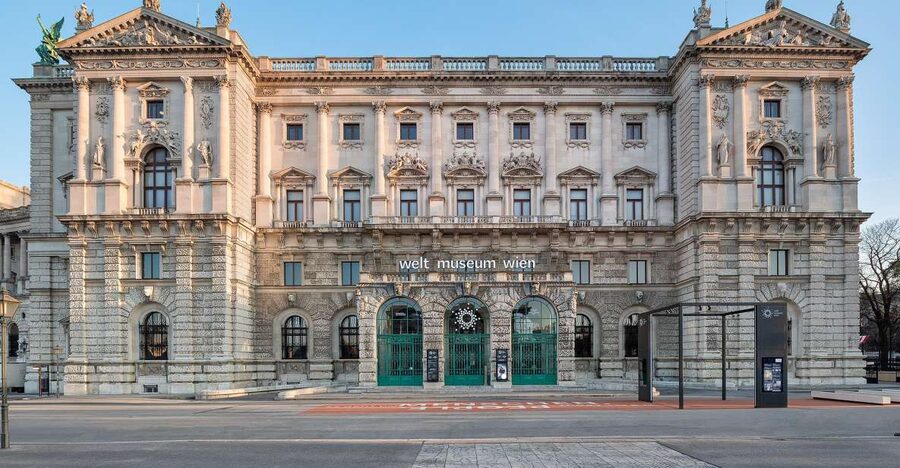
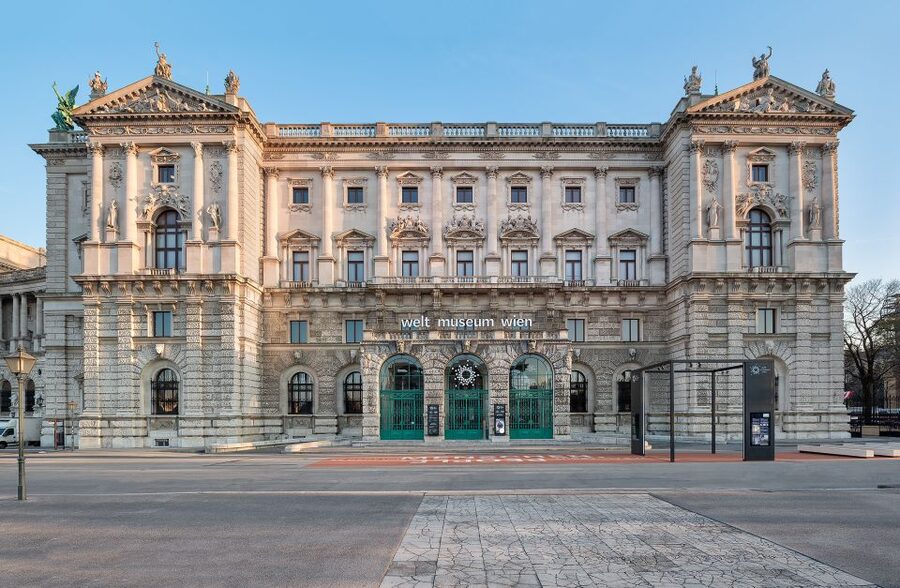
The Weltmuseum is at Heldenplatz, Neue Burg, 1010 Vienna. That address puts you in one of the city’s most important ceremonial spaces, and the building itself helps set the tone before you reach the galleries.
You enter a former Habsburg setting rather than a plain modern exhibition box. This matters because the museum’s objects are tied to centuries of imperial collecting. The surroundings give you an immediate sense of how European rulers assembled objects from distant parts of the world, often as symbols of power, curiosity, scholarship, and status.
The first practical tip is simple: allow a little time to get your bearings. The museum is large, and the displays cover several subjects. If you arrive expecting one small room centered on the Penacho, you may underestimate the visit.
The ticket is valid for one day, so you are not being pushed through a short timed experience. You can give the museum the kind of attention it deserves, then take a break if needed. The new museum café offers a small coffee pause, with a particularly good view into the Pillar Hall.
More Attraction Tickets in Vienna
- Vienna: Classic Ensemble Vienna in St. Peter’s Church Ticket
★ 4.7 · 4,819 reviews - Vienna Kunsthistorisches Museum Day Admission Ticket
★ 4.6 · 3,690 reviews - Vienna: Tickets for Mozarthaus Vienna with Audio Guide
★ 4.2 · 2,344 reviews
Five centuries of Habsburg collecting
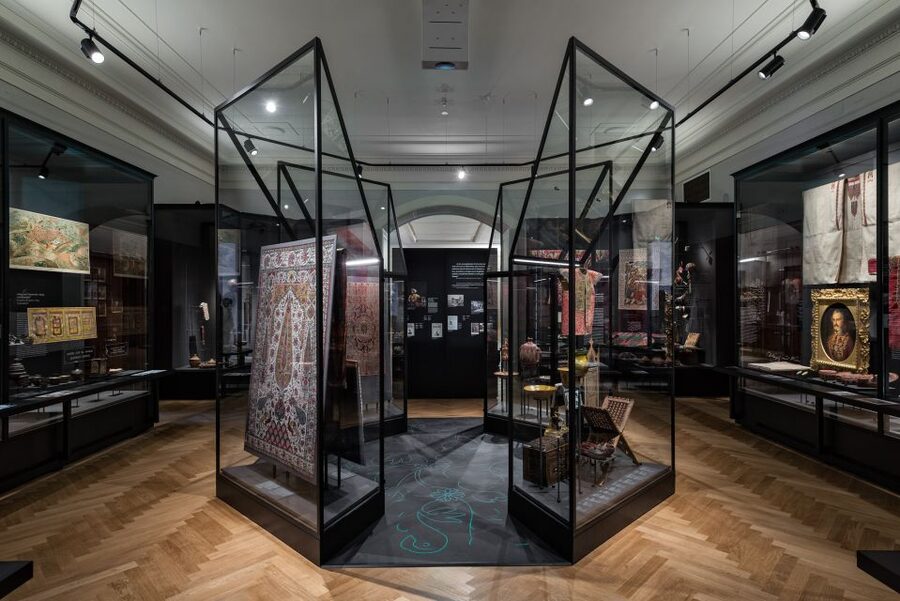
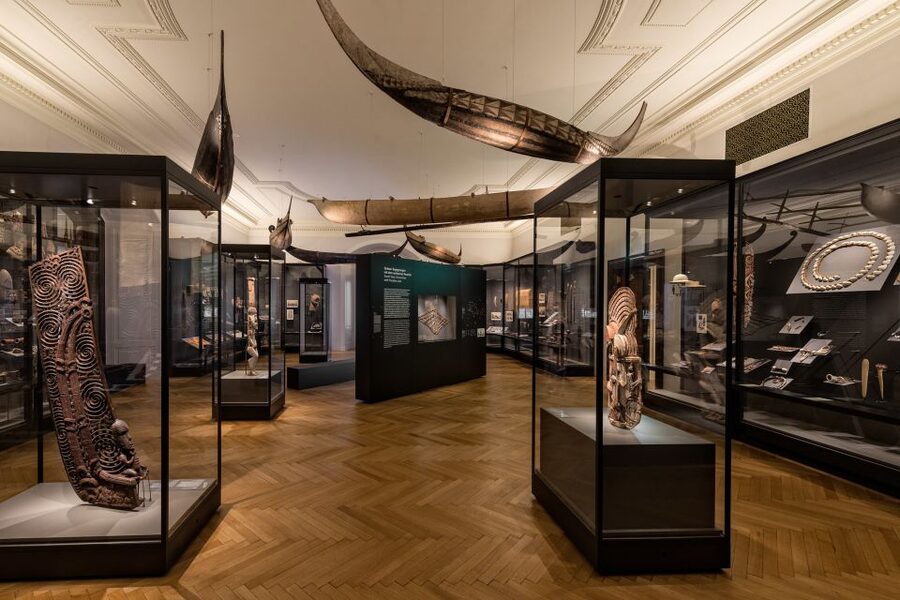
The museum’s main strength is its range. Its holdings include ethnographic objects, historical photographs, and books focused on cultures outside Europe. The story begins with roughly 500 years of collecting by the Habsburgs, so you are not looking at a single expedition or a narrow regional display.
That long collecting tradition can be fascinating, but it also calls for thought. Objects gathered by imperial courts do not arrive in a vacuum. Their presence in Vienna raises questions about who collected them, how they were interpreted, and how cultures outside Europe were presented to European audiences.
I like museums that give you more than a parade of beautiful objects, and this setting offers plenty to think about. You may find that one gallery catches your eye because of an object’s design, while another becomes interesting because of the way it explains a cultural practice or collecting tradition.
The scale is both a strength and a weakness. If you want a broad introduction to non-European cultures, the museum gives you plenty to explore. If you prefer a small, tightly focused exhibition, the number of rooms and themes can feel demanding.
The Penacho and the museum’s most famous object
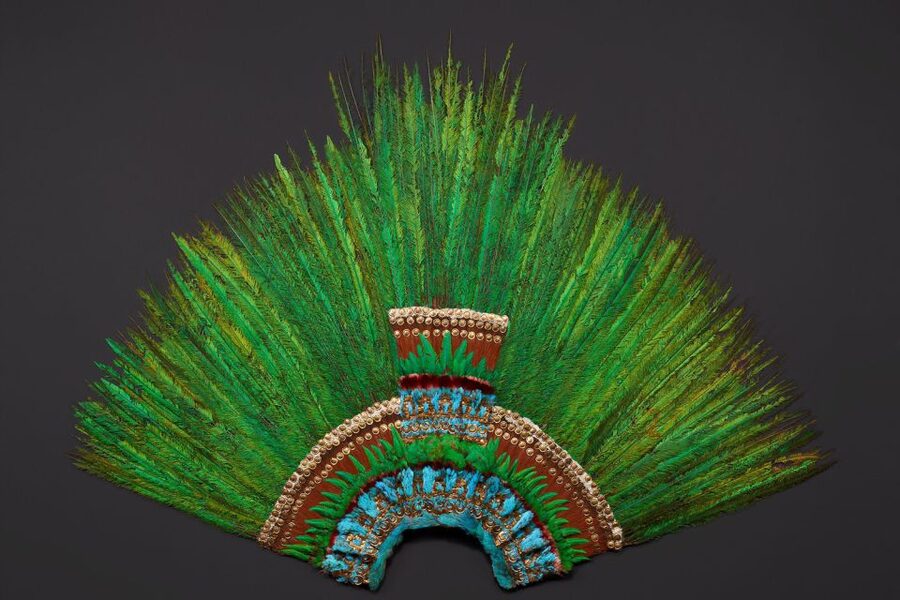
For many people, the Mexican feather decoration known as the Penacho is the emotional center of the visit. It is an antique Mexican featherwork piece, often associated with Moctezuma, and its unusual materials make it immediately memorable.
You do not need to be a specialist to understand why it attracts attention. Feathers create a light, delicate appearance, yet the object carries major cultural and historical weight. Its survival, journey to Europe, and place in a Viennese imperial collection all invite questions that go well beyond its visual appeal.
The Penacho is also a good example of why you should resist rushing through the museum. A quick photograph cannot tell you much about the object’s meaning or the debates surrounding its ownership and interpretation. Read the information available in the gallery and give yourself time to look closely.
If this is your primary reason for buying the ticket, check the museum’s current presentation before your visit. The supplied information identifies the Penacho as a central attraction, but museum displays can change. Even so, the broader collection gives you plenty of reason to continue if you find the object displayed differently than expected.
James Cook’s collection and the age of collecting
The collection associated with James Cook gives the museum another strong point of entry. Cook is widely known as a sailor and explorer, and objects connected with his voyages bring the wider world into a personal frame.
Instead of encountering only an abstract story about European exploration, you can connect the collection with the practical business of voyages: recording places, gathering objects, and presenting unfamiliar cultures to audiences back home. That makes this section useful for anyone interested in navigation, maritime travel, scientific inquiry, or the history of museums.
It also gives you a chance to compare collecting styles. The Cook material belongs to a different setting than the Habsburg court objects and Rudolf II’s Kunstkammer pieces. Looking at these areas side by side shows how objects can shift meaning depending on who owns them and why they were gathered.
I would not treat the Cook collection as a reason to skip the rest of the museum. It is one important thread in a larger visit. You will get more from it if you place it alongside the photographs, books, and objects from other regions.
A few more trips of this kind worth comparing:
- Vienna: Vivaldi’s Four Seasons Concert in Karlskirche
★ 4.7 · 14,951 reviews - Vienna: Spanish Riding School Training
★ 3.9 · 9,281 reviews - Vienna: Skip-the-cashier-desk-line Giant Ferris Wheel Ride
★ 4.5 · 7,859 reviews - Vienna: Schönbrunn Palace & Gardens Skip-the-Line Tour
★ 4.7 · 7,739 reviews
Rudolf II’s Kunstkammer treasures
The museum also includes fascinating Kunstkammerstücke associated with Emperor Rudolf II. A Kunstkammer was a cabinet of curiosities, a place where rulers collected unusual, rare, artistic, and scientifically interesting objects.
These pieces help explain the mindset behind early European collecting. The point was not always to arrange objects according to the modern categories you see in a museum today. Instead, the collection could bring together works of art, natural curiosities, technical objects, and items from distant lands.
That approach can feel strange at first, but it is one of the museum’s most useful historical lessons. You begin to see how a ruler’s collection could function as both a private display and a statement about the world under his control.
The Rudolf II material should appeal to you if you enjoy the odd corners of museum culture. It is less about one famous object and more about the habit of collecting itself. I found this part of the story especially valuable because it helps tie the museum’s older holdings to its later role as a public institution.
The Pillar Hall is more than a grand entrance
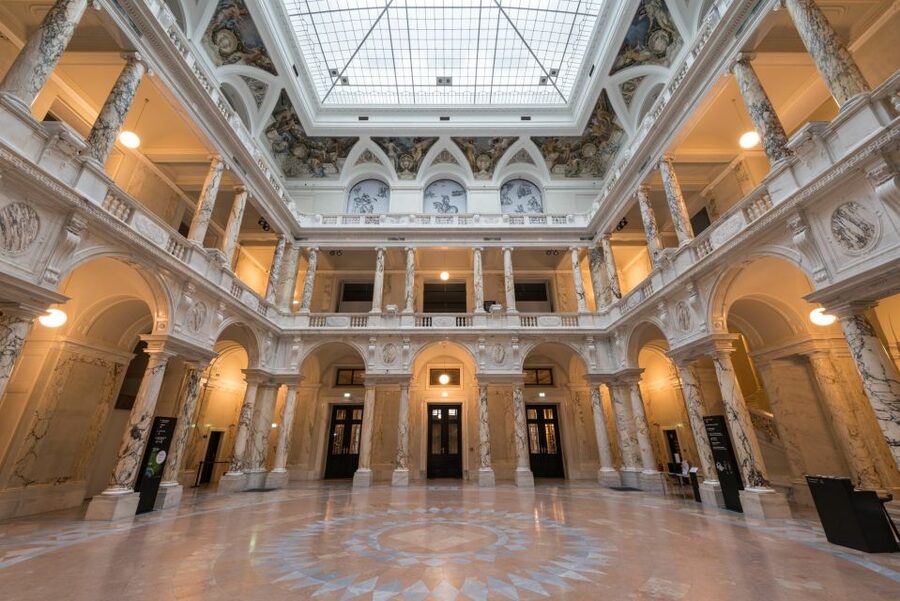
The listed Pillar Hall is the architectural heart of the Weltmuseum. Its scale and formal design provide a sharp contrast to the individual objects in the galleries.
Do not treat the hall as something to cross on your way to the exhibits. Pause and look up, take in the columns, and notice how the space shapes your sense of the museum. The building gives the collections a ceremonial setting, which is fitting for objects that once belonged to imperial collections.
The hall is also open to public events and museum programs. That means it functions as a living part of the institution, not merely a preserved architectural relic. Its use for customer events and museum activities adds energy to the space, though an event could change how quiet or open the hall feels during your visit.
The café offers a small coffee break with a view into the Pillar Hall. This is a practical feature for such a large museum. You can rest without fully leaving the building, and the view lets you appreciate the architecture while your attention recovers from the galleries.
How much time should you allow?
The ticket is valid for one day, but the experience is not structured as a fixed one-day tour with a set route. You choose your pace.
A short visit can work if you focus on the Penacho, the Pillar Hall, and a few major sections. That approach suits you if the Weltmuseum is one stop among several in central Vienna.
A longer visit is better if you enjoy labels, photographs, books, and comparisons across regions. One detailed assessment described the museum as large enough to occupy days if you wanted to inspect every room carefully. That is useful advice, even if you do not have days available.
I would plan at least enough time for the main highlights plus a break. The museum’s size means that fatigue becomes a real factor. You will get more from the objects if you avoid trying to read everything.
The broad subject matter also means your visit may feel uneven. One room may hold your attention for a long time, while another may seem less compelling. That is normal in a museum with such a wide scope. Make your own route rather than feeling obligated to give every display equal time.
Is the $18 ticket good value?
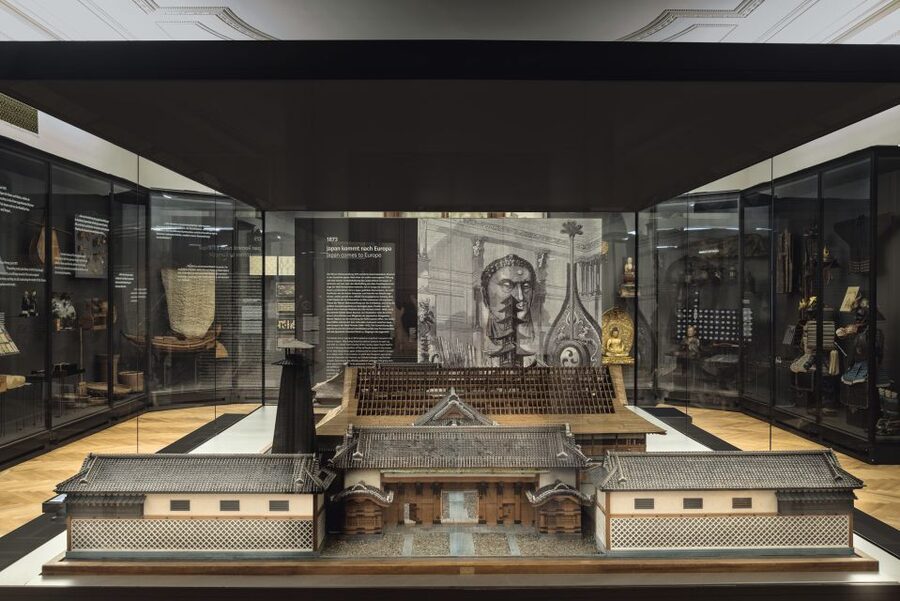
At $18, the ticket is best value for someone who enjoys museums and wants more than a quick look at a famous object. You are paying for access to a large collection, the Neue Burg setting, the Pillar Hall, and several centuries of material connected with Habsburg collecting.
The value improves if you plan to stay for a substantial part of the day. The ticket gives you one full day of validity, so you have room to set your own pace. A brief visit focused only on the Penacho may make the cost feel less attractive.
One German-language assessment referred to a price of €16 and felt the museum was expensive on its own, while also noting that the Neue Burg ticket effectively provides access to three museums in that complex. Since the listed price here is $18, check the current price and exactly what your ticket covers when booking. Prices and ticket arrangements can change.
I would compare the cost with your wider Vienna museum plans. If you already intend to see several collections in the Neue Burg, the value may be stronger. If your schedule is crowded and you are not especially interested in ethnographic museums, you may prefer to spend the money elsewhere.
Who will enjoy the Weltmuseum most?
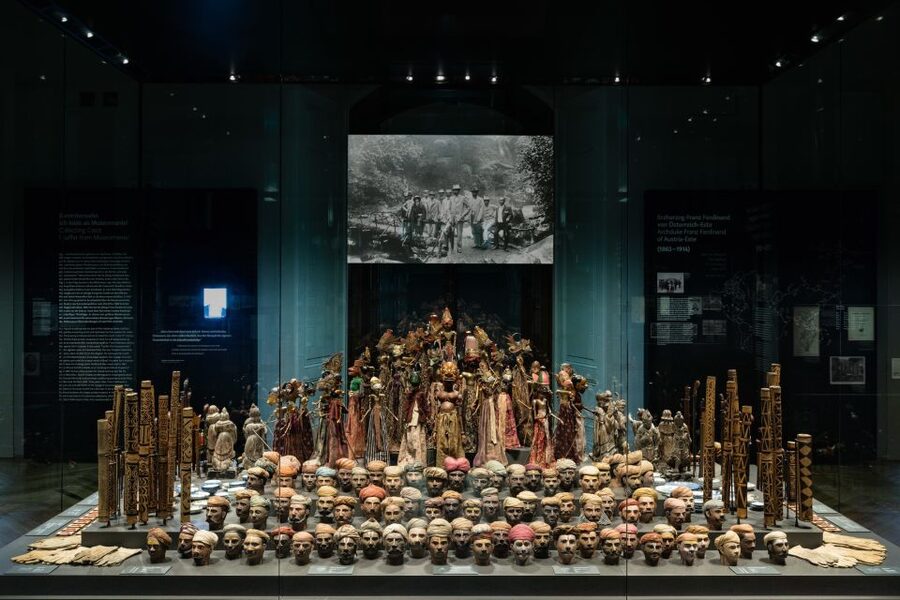
I recommend this experience to you if you like museums that connect art, travel, empire, collecting, and cultural exchange. It also suits anyone with a particular interest in Mexico, James Cook, Habsburg history, or unusual court collections.
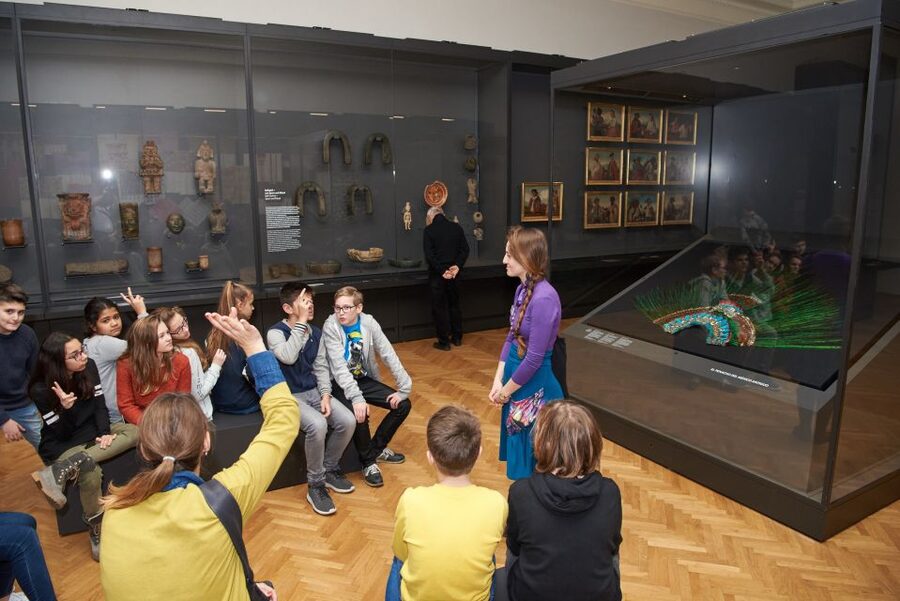
Families with older children may find plenty to discuss, especially around the Penacho and the idea of a cabinet of curiosities. The museum’s broad subject matter can also make it a useful rainy-day stop in Vienna, although young children may not have the patience for a long visit.
The museum is a good match for architecture lovers, too. The Pillar Hall gives you a strong visual reward even if you do not spend hours in every gallery.
You may want to skip it if you prefer a small museum with one clear theme and a quick route. The collection is broad, and its imperial setting may feel formal. You should also avoid packing it into a rushed schedule, since the museum’s main pleasure comes from taking time with selected objects.
The site is wheelchair accessible, which makes it a practical choice for visitors who need an accessible museum setting. The supplied information does not specify every route or facility, so you may wish to confirm current access details before arrival if you have particular mobility requirements.
Simple ways to get more from your visit
Start with the building. The Neue Burg and Pillar Hall give you useful context before you begin examining individual objects.
Then choose two or three anchors, such as the Penacho, the James Cook collection, and the Rudolf II material. These highlights give your visit a clear shape without forcing you to race through every room.
Use the remaining time for the displays that genuinely hold your attention. You do not need to treat the museum like a test. A careful look at a few objects is more rewarding than a fast march past hundreds.
Take the café break before you feel exhausted. The view into the Pillar Hall makes it part of the museum experience rather than a simple snack stop.
Finally, remember that this museum presents cultures outside Europe through collections formed largely by European institutions. That is part of its value, but also part of the subject. You can appreciate the craftsmanship and stories while thinking about the power structures behind the objects’ arrival in Vienna.
Should you book the Weltmuseum ticket?
Book it if you want a serious cultural stop in central Vienna, especially if the Penacho, James Cook, Habsburg collecting, or the Pillar Hall appeals to you. The $18 price is reasonable when you give the museum plenty of time, and the one-day validity lets you set a comfortable pace.
Think twice if you only have a spare hour or prefer compact museums. The Weltmuseum is large, and its range can feel like too much when rushed.
My practical call: choose this ticket for curiosity, patience, and a genuine interest in how European museums gathered and presented the wider world. Go for the Penacho, but stay for the connections among the objects, the imperial building, and the long story of collecting.
FAQ
Where is the Weltmuseum in Vienna?
The museum is at Heldenplatz, Neue Burg, 1010 Vienna.
How much does admission cost?
The listed price is $18 per person. Check the current amount and currency when booking, as one supplied price reference gives a different figure.
How long is the ticket valid?
The ticket is valid for one day.
What is included with the ticket?
Admission to the Weltmuseum in Vienna is included.
Can I cancel the booking?
Yes. You can cancel up to 24 hours in advance for a full refund.
Is the museum wheelchair accessible?
Yes, the activity information states that the Weltmuseum is wheelchair accessible.
Just added around Vienna
- Mobile puzzle rally tour at the Vienna Central Cemetery★ 4.5 · 3 reviews
- RAXI (E-Rickschaw) big private Vienna tour★ 4.5 · 3 reviews
- 8 days European Highlights PRIVATE TOUR from Budapest including Budapest Vienna Prague and Bratislava★ 5.0 · 3 reviews
- Private Transfer from Vienna to Prague with 1 hour Stop in Kutna Hora★ 4.5 · 3 reviews
- Palais Lobkowitz Audio Guide Tour★ 4.0 · 3 reviews
- Private Tour from Vienna to Melk and Dürnstein★ 4.5 · 3 reviews
- Vienna: Designer Fashion Time Capsule Experience★ 5.0 · 3 reviews
- Private day trip from Munich to Eagle’s Nest & Hallstatt★ 4.7 · 3 reviews
Attraction Tickets in Vienna, compared.
Classic Ensemble Vienna in St. Peter’s Church Ticket
Read our review →
Vienna Kunsthistorisches Museum Day Admission Ticket
Read our review →
Tickets for Mozarthaus Vienna with Audio Guide
Read our review →
Skip-the-Line Entrance Ticket to the Danube Tower
Read our review →


St. Stephen’s Cathedral & Dom Museum Wien Tickets
Read our review →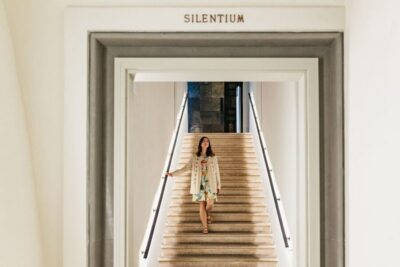
Browse the lists this tour appears in