
Reviewed · ATTRACTION TICKETS IN VIENNA
Vienna: Tickets to Haus der Musik
Music gets playful in Vienna.
Haus der Musik turns the city’s musical legacy into a hands-on visit, from Haydn and Mozart to Mahler and Schönberg. I especially like the virtual Vienna Philharmonic conducting challenge and the clever sound experiments, which give children and adults something to do instead of simply reading labels. The museum’s four floors also connect music with science, history, and technology in a way that feels lively rather than solemn.
I also like the practical value. At $22 per person, you can spend several hours here, and the ticket remains valid for one day after first use. The main drawback is that the museum offers so much information and so many interactive stations that a short visit can feel rushed, especially if you stop to read every composer display.
In This Review
- Key things to know before you go
- Why Haus der Musik works for more than classical-music fans
- A historic home for the Vienna Philharmonic
- The composer galleries: Haydn through Schönberg
- The Vienna Philharmonic conducting challenge
- Sound science across the interactive floors
- Namadeus and the roll-of-the-dice waltz
- Watching the Vienna New Year’s Concert
- Temporary exhibitions in the inner courtyard
- How long to stay and how to plan your visit
- Family appeal, adult appeal, and accessibility
- Is $22 a fair price?
- Who should book Haus der Musik?
- FAQ
- Where is Haus der Musik located?
- How long is the ticket valid?
- Is Haus der Musik wheelchair accessible?
- Are children under three admitted free?
- Is a smartphone guide included?
- Is the Namadeus certificate included?
- Should you book it?
Key things to know before you go
- Conduct the Vienna Philharmonic: Use the interactive podium to test your timing and control in front of a virtual orchestra.
- Hear Mozart write your name: The Namadeus Game transforms your name into a Mozart-style musical phrase. A printed certificate costs extra.
- Explore four floors of music: The museum covers famous composers, sound science, instruments, hearing, and Vienna’s musical culture.
- Bring headphones: You can download a free smartphone guide in eight languages, plus a children’s app in two languages.
- Allow two to four hours: Families may move quickly through some displays, while music enthusiasts can spend much longer with the documents and recordings.
- Reach it easily in central Vienna: Haus der Musik is at Seilerstätte 30 in the 1010 district, close to the city center.
Why Haus der Musik works for more than classical-music fans
Vienna has no shortage of grand concert halls, composer apartments, and historic music sites. Haus der Musik offers something different. It asks you to touch, listen, experiment, compose, and play.
That makes it a useful change of pace during a city break. If you have spent the morning looking at palaces and churches, this museum gives you buttons to press and sounds to manipulate. If you already love classical music, the displays provide context about the people and institutions that shaped Vienna. If your children think a composer museum sounds dull, the conducting game and sound installations may change their minds.
I would not treat this as a quick 45-minute stop. The building is large, and the exhibits move from serious historical material to playful experiments. One family could focus on the interactive stations and leave after a couple of hours. A music enthusiast could spend four hours and still find more to read.
More Attraction Tickets in Vienna
- Vienna: Classic Ensemble Vienna in St. Peter’s Church Ticket
★ 4.7 · 4,819 reviews - Vienna Kunsthistorisches Museum Day Admission Ticket
★ 4.6 · 3,690 reviews - Vienna: Tickets for Mozarthaus Vienna with Audio Guide
★ 4.2 · 2,344 reviews
A historic home for the Vienna Philharmonic
The museum occupies the former Palais of Archduke Charles. This is not just a convenient old building chosen for a modern attraction. Otto Nicolai lived here when he founded the Vienna Philharmonic Orchestra in 1842.
The Museum of the Vienna Philharmonic presents documents and personal items connected with the orchestra’s past. This section gives the museum a firm connection to Vienna’s concert tradition. You are not simply looking at a general collection of instruments and sound effects. You are also entering a place linked to one of the world’s best-known orchestras.
The display is likely to appeal most to serious music fans. It is less playful than the science exhibits, and you may need to spend time reading to get the most from it. Still, it supplies useful background before you try the virtual orchestra later in the visit.
That sequence matters. You first see the institution’s real story, then get a chance to take the conductor’s podium yourself. The museum gives you a taste of the responsibility without handing you a baton and a room full of actual musicians.
The composer galleries: Haydn through Schönberg
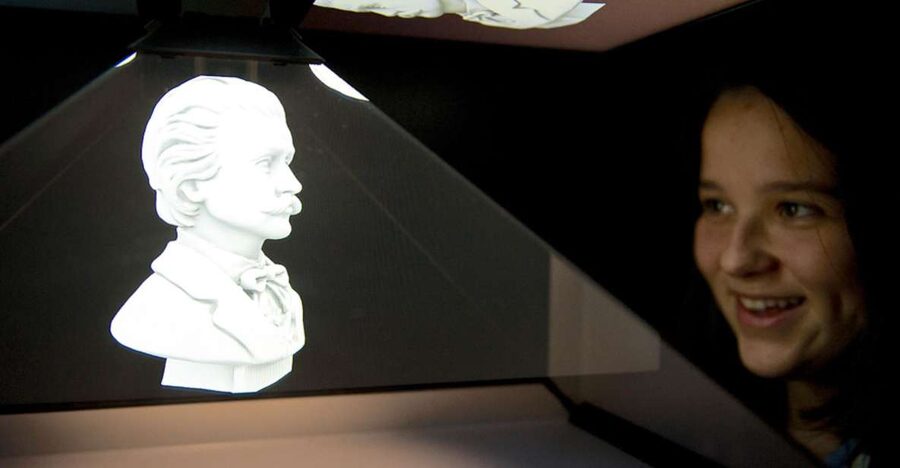
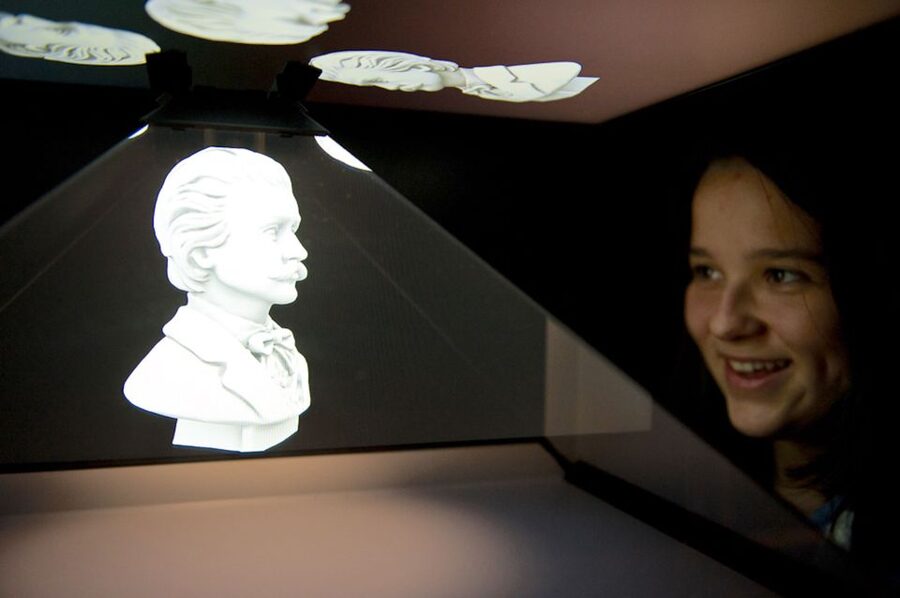
A major section follows the great masters of Viennese music: Haydn, Mozart, Beethoven, Schubert, Strauss, Mahler, and Schönberg.
The presentation mixes historic documents, personal belongings, costumes, models, and modern installations. You get more than a list of birth dates and famous works. The displays place the composers in their own surroundings and show how music developed across different periods of Vienna’s history.
Mozart’s section receives particular praise for its presentation. It is a good place to slow down, especially if your knowledge of Mozart begins and ends with a few famous melodies. His room offers a closer look at his life and work, while the Namadeus Game gives the visit a lighter finish.
The later composers also help widen the story. Strauss connects to Vienna’s waltz tradition, Mahler points toward the grand scale of late Romantic music, and Schönberg introduces a more modern musical language. You do not need formal musical training to follow the broad progression.
I like that the museum does not reserve this material for specialists. The combination of objects and interactive elements gives you several ways into the subject. You can read, listen, watch, or simply follow the visual story.
The possible weakness is density. There is more information here than most people can absorb in one afternoon. Pick a few composers who interest you, then skim the rest rather than trying to memorize the entire history of Viennese music.
The Vienna Philharmonic conducting challenge
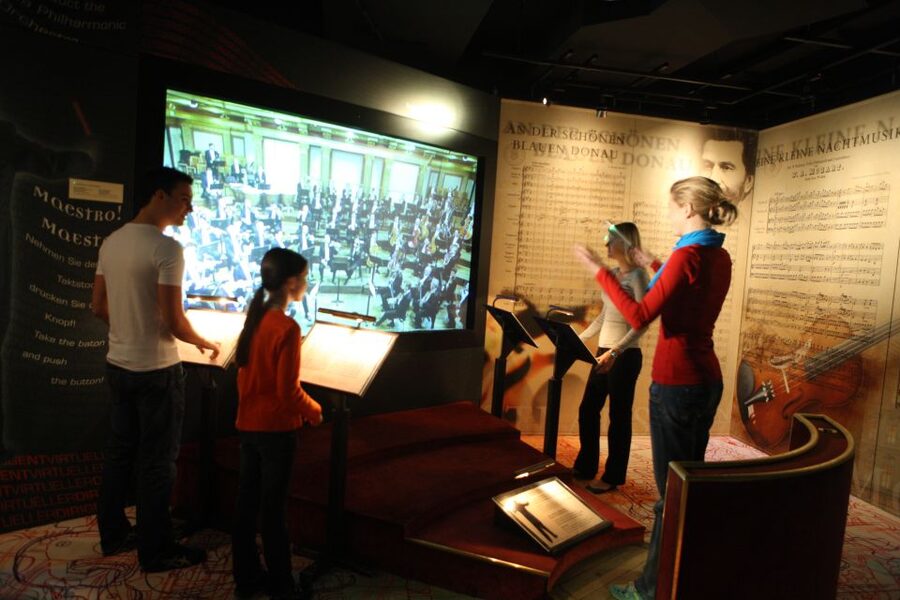
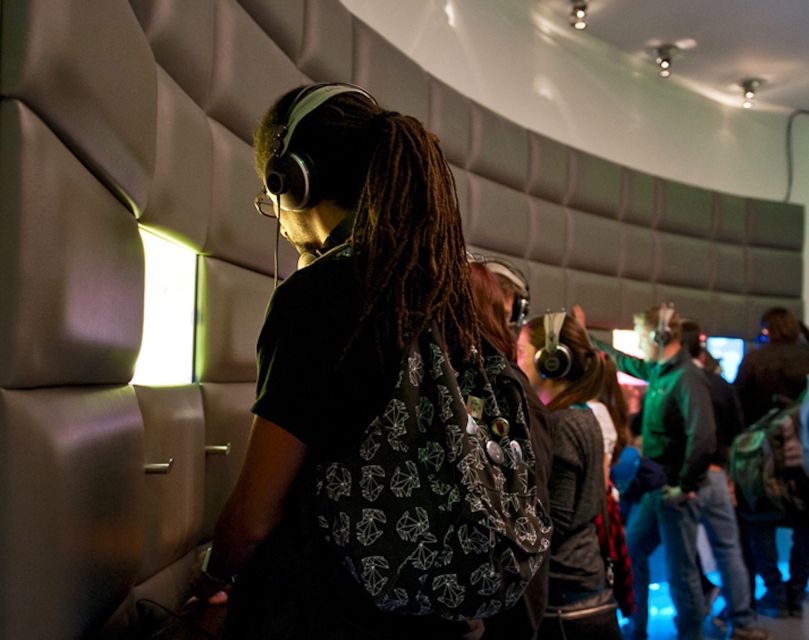
For many people, the conducting station will be the museum’s most memorable stop.
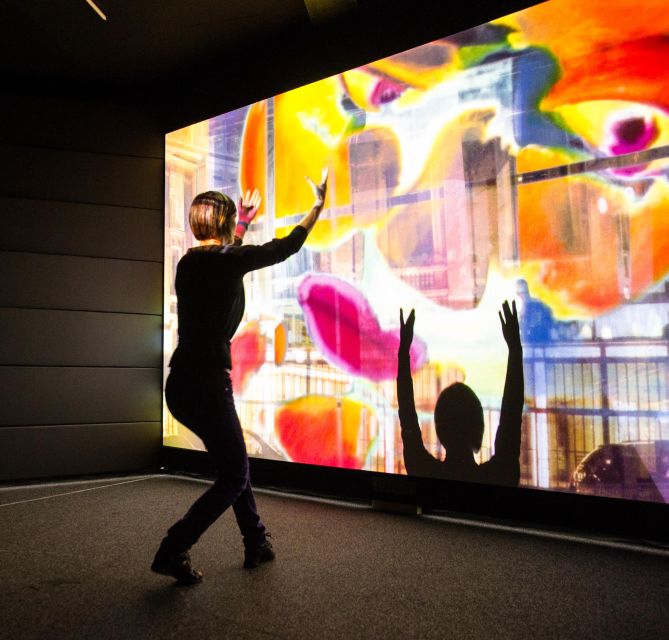
You face a virtual Vienna Philharmonic Orchestra and try to guide the performance. The experience tests your timing and gestures, giving you a playful sense of what it takes to keep an orchestra together.
It is not a replacement for hearing the orchestra in a concert hall. That is not the point. The appeal is the chance to participate in a musical role that usually looks mysterious from the audience. You may begin with confidence and quickly discover that keeping an orchestra under control is harder than waving your arms.
This station works well for couples, families, and groups of friends because it creates an immediate challenge. Someone who knows little about classical music can enjoy the game just as much as someone who has studied it.
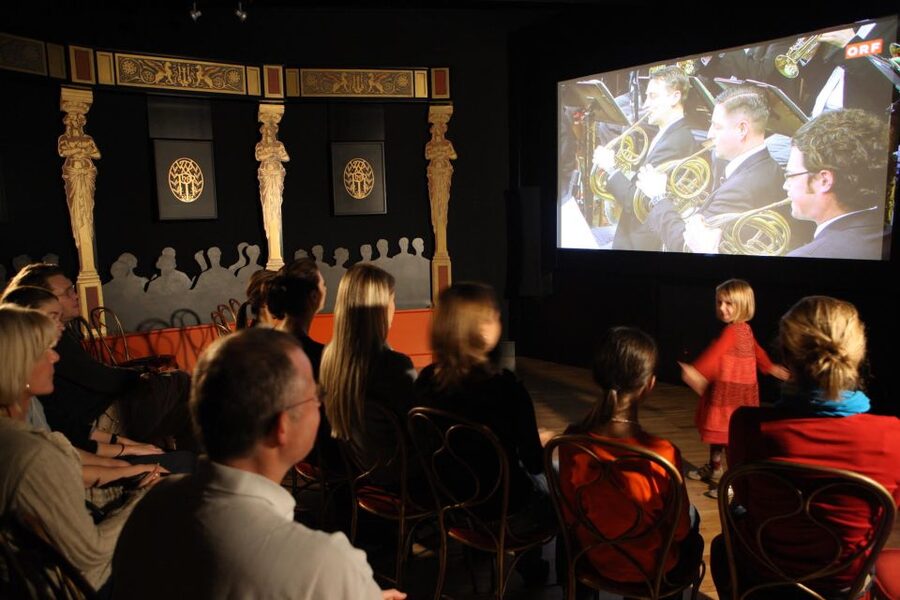
The museum also lets you watch the Vienna Philharmonic’s New Year’s Concert in HD quality. That gives you a different kind of musical experience: instead of controlling the performance, you can sit back and enjoy one of Vienna’s most famous traditions.
The conducting station can attract attention, so you may need patience if several people want a turn. It is worth waiting for, particularly if you are visiting with children or anyone who prefers doing to reading.
A few more trips of this kind worth comparing:
- Vienna: Vivaldi’s Four Seasons Concert in Karlskirche
★ 4.7 · 14,951 reviews - Vienna: Spanish Riding School Training
★ 3.9 · 9,281 reviews - Vienna: Skip-the-cashier-desk-line Giant Ferris Wheel Ride
★ 4.5 · 7,859 reviews - Vienna: Schönbrunn Palace & Gardens Skip-the-Line Tour
★ 4.7 · 7,739 reviews
Sound science across the interactive floors
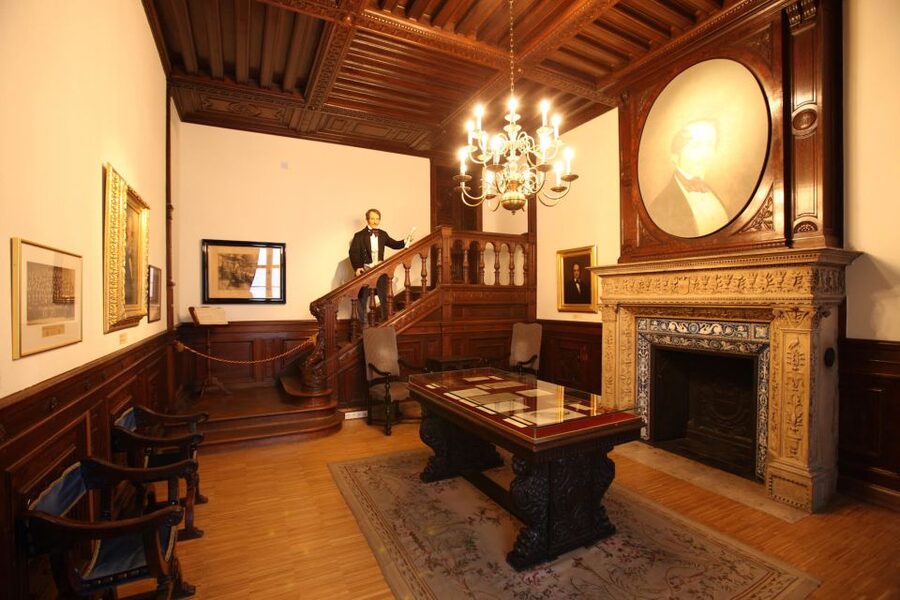
The museum’s science exhibits explain how sound works, how we hear, and how instruments create music. This is where Haus der Musik becomes more than a composer museum.
You can experiment with sounds, noises, and instruments through hands-on displays. The goal is not to give you a university lecture. Instead, the exhibits let you hear or manipulate the principles being explained.
That approach suits mixed-age groups. A child can enjoy the action without understanding every scientific detail, while an adult can stop and think about the physics and physiology behind what is happening. The museum links those two levels instead of forcing everyone through the same style of exhibit.
I would make time for this section even if your main interest is Vienna’s composers. It explains why music feels the way it does, and it gives the historical galleries a useful foundation.
The main consideration is sound. An interactive museum can become lively, especially when many people are testing displays at once. If you are sensitive to noise, bring headphones for the smartphone guide and take breaks between floors.
Namadeus and the roll-of-the-dice waltz
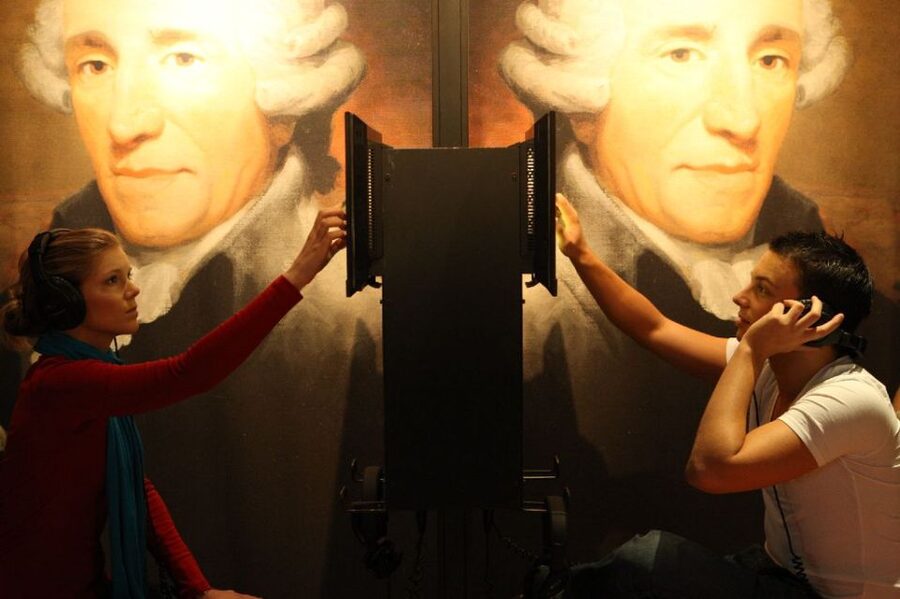
Haus der Musik has several activities that are designed to make music personal.
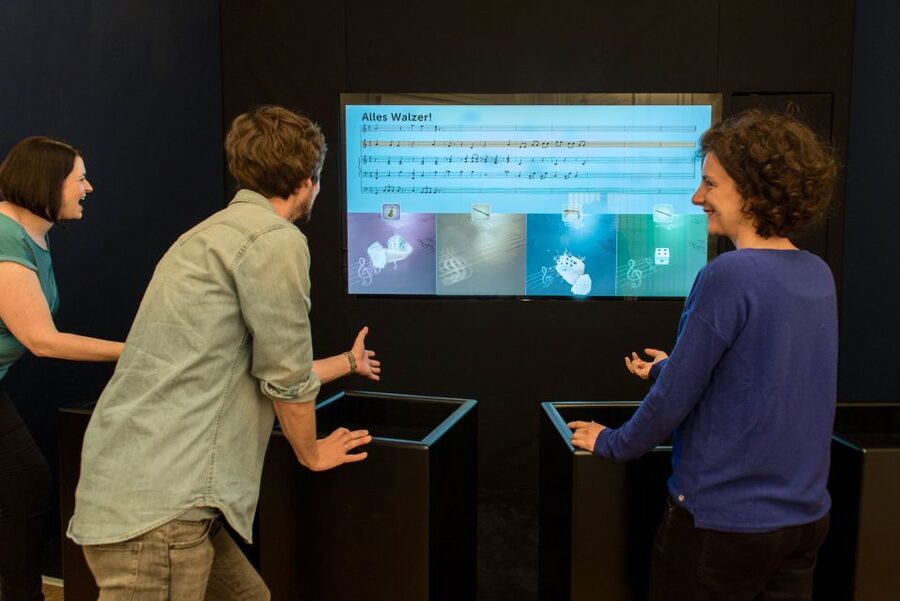
With the Namadeus Game, you enter your name and hear it transformed into an original Mozart-style composition. It is a neat way to connect a famous composer with your own visit. You can purchase a Namadeus certificate separately, but the certificate is not included in admission.
Another activity lets you compose your own waltz with a throw of the dice. This is a charming nod to Vienna’s dance-music tradition. You do not need to understand harmony or orchestration. The game makes composition feel like a series of accessible choices rather than an intimidating technical task.
These attractions are not meant to replace the more serious exhibits. They work as bridges between the information and the fun. After reading about Mozart or Strauss, you get to create something of your own, even if chance does much of the work.
For families, these games can help prevent the familiar museum problem: one person wants to read every panel while another is ready to leave. The playful stations give everyone a reason to keep moving through the building.
Watching the Vienna New Year’s Concert
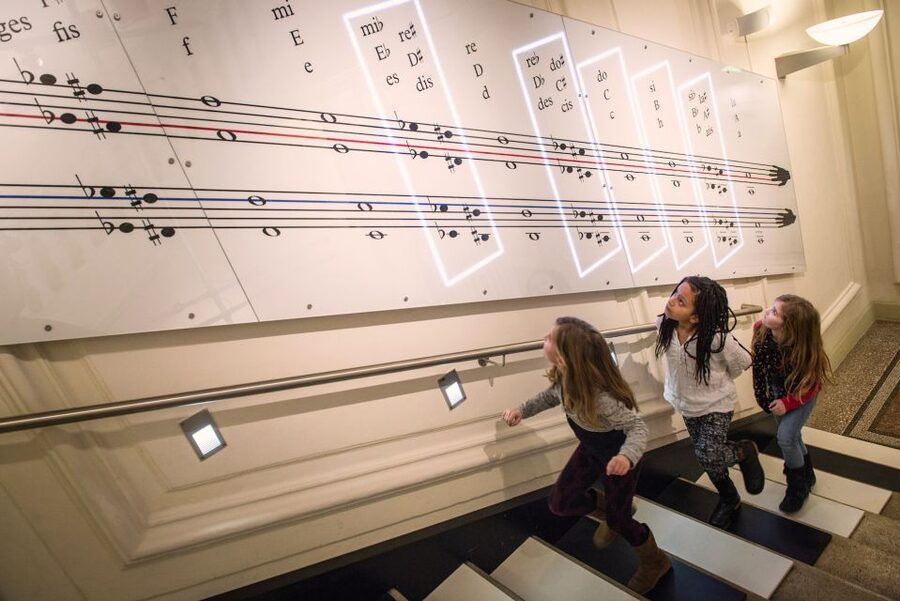
The New Year’s Concert presentation is a strong addition for anyone who has never been able to attend the famous event in person.
You can watch the Vienna Philharmonic’s concert in HD quality, bringing one of the city’s most recognizable musical traditions into the museum. It offers a chance to appreciate the orchestra’s sound and style without needing a concert ticket or a formal evening out.
This is a viewing experience, so it has a slower rhythm than the conducting station. I would use it as a pause between the more active displays. It also gives you a better sense of why the orchestra featured throughout the museum matters so much to Vienna’s identity.
Do not expect the museum to recreate the full atmosphere of New Year’s Day in Vienna. You are seeing a high-quality presentation within a museum. The value lies in the access and context, not in pretending you are sitting in the concert hall.
Temporary exhibitions in the inner courtyard
In addition to the permanent displays, Haus der Musik presents temporary exhibitions in the inner courtyard.
These exhibitions can focus on individual musicians or special themes, including the period of Viennese Modernism. Because the subjects change, the temporary section is best treated as an extra rather than the reason to buy your ticket.
It can also make a return visit worthwhile if you have already seen the permanent floors. Check the current subject when planning your day, since the temporary content is not fixed.
The courtyard location gives the visit a change of pace. After the sound experiments and composer rooms, you get a different exhibition format that may be more focused on a person or period.
How long to stay and how to plan your visit
The ticket is valid for one day from first activation, which gives you flexibility. You can visit in one continuous stretch or use the museum as part of a central Vienna walking day, depending on your plans.
I would allow at least two hours for a meaningful visit. That gives you time for the main composer displays, several sound experiments, and the conducting challenge. Plan three to four hours if you are visiting with children, want to watch the New Year’s Concert, or enjoy reading historical material.
The museum provides a map at the ticket office. Use it to get your bearings before heading upstairs. The free smartphone guide is available in eight languages, and a children’s app is available in two languages. Download the guide on your own phone and bring headphones.
Food and drinks are not included, so plan to eat before or after your visit. Its central location makes that easy to combine with other sightseeing, but the museum itself is not a café stop.
A coat check is included. That is useful in Vienna’s colder months, when heavy coats can get in the way of hands-on exhibits.
Family appeal, adult appeal, and accessibility
Haus der Musik is particularly strong for families. The exhibits are not limited to quiet reading, and children can take part in the sound experiments, games, and orchestra challenge. A four-year-old may enjoy the buttons and noises, while an older child can start to understand the science and history behind them.
Adults without musical training should feel comfortable here. The interactive displays explain ideas through action, so you do not need to read music or recognize every composer’s work.
Music teachers and arts educators may find especially useful material in the sound and instrument sections. The museum connects creative activity with scientific ideas, making it suitable for anyone interested in how people hear and make music.
The museum is wheelchair accessible. There is step-free access through the main and side entrances, automatic sliding doors, and wheelchair-accessible elevators. Wheelchair-accessible toilets are in the inner courtyard and on the top floor. A person accompanying a visitor with a visual impairment or someone using a wheelchair receives free admission, and guide dogs are permitted.
Children under three enter free. These details make the museum easier to plan for a mixed-age family group.
Is $22 a fair price?
At $22 per person, Haus der Musik is not the cheapest small museum in Vienna. The value improves if you use it as a two-to-four-hour visit rather than a quick stop.
You are paying for several different experiences in one building: orchestra history, composer biographies, sound science, interactive instruments, the conducting challenge, Mozart’s Namadeus game, and the New Year’s Concert presentation. That range is the main reason the admission feels reasonable.
The ticket is especially good value for families because adults and children can follow different interests without splitting up. A parent can read about Mahler while a child works through a sound experiment nearby.
It may be less useful if you only want a quiet collection of original musical manuscripts. Haus der Musik is active and modern, with displays built for participation. If you prefer traditional galleries, you may find parts of the visit too playful.
Who should book Haus der Musik?
I would book this museum if you want a flexible indoor attraction in central Vienna, especially on a day when your group has different interests.
It suits:
- Families with children
- Classical-music fans
- People curious about sound and hearing
- Adults who prefer interactive museums
- Visitors looking for a break from palaces and art collections
- Couples who enjoy playful challenges and shared activities
I would be more cautious if your schedule allows only a short visit. With four floors and plenty to read, you may feel you are skimming rather than enjoying the exhibits.
The museum also works well for repeat visitors. The permanent collection offers enough variety for another look, and changing courtyard exhibitions can give you a new reason to return.
FAQ
Where is Haus der Musik located?
Haus der Musik is at Seilerstätte 30 in Vienna’s 1010 district.
How long is the ticket valid?
The ticket is valid for one day from the time you first activate it.
Is Haus der Musik wheelchair accessible?
Yes. The main and side entrances have step-free access, automatic sliding doors, and wheelchair-accessible elevators. Accessible toilets are located in the inner courtyard and on the top floor.
Are children under three admitted free?
Yes. Children under the age of three receive free admission.
Is a smartphone guide included?
Yes. You can download a free guide to your own smartphone in eight languages. A children’s app is available in two languages. Headphones are recommended.
Is the Namadeus certificate included?
No. You can hear your name as a Mozart-style composition through the Namadeus Game, but the certificate costs extra.
Should you book it?
Yes, if you want a museum that lets you participate instead of simply look. The conducting challenge, sound experiments, Mozart name game, and waltz activity give Haus der Musik a broad appeal, while the composer galleries and Vienna Philharmonic material provide substance.
Book it when you can spare at least two hours, and bring headphones for the app guide. At $22, it is a sensible choice for families, curious adults, and anyone who wants to connect Vienna’s musical past with the science of sound. If you prefer a silent, traditional museum, choose a smaller composer collection instead.
Just added around Vienna
- Mobile puzzle rally tour at the Vienna Central Cemetery★ 4.5 · 3 reviews
- 8 days European Highlights PRIVATE TOUR from Budapest including Budapest Vienna Prague and Bratislava★ 5.0 · 3 reviews
- RAXI (E-Rickschaw) big private Vienna tour★ 4.5 · 3 reviews
- Private Transfer from Vienna to Prague with 1 hour Stop in Kutna Hora★ 4.5 · 3 reviews
- Palais Lobkowitz Audio Guide Tour★ 4.0 · 3 reviews
- Private Tour from Vienna to Melk and Dürnstein★ 4.5 · 3 reviews
- Vienna: Designer Fashion Time Capsule Experience★ 5.0 · 3 reviews
- Private day trip from Munich to Eagle’s Nest & Hallstatt★ 4.7 · 3 reviews
Attraction Tickets in Vienna, compared.
Classic Ensemble Vienna in St. Peter’s Church Ticket
Read our review →
Vienna Kunsthistorisches Museum Day Admission Ticket
Read our review →
Tickets for Mozarthaus Vienna with Audio Guide
Read our review →
Skip-the-Line Entrance Ticket to the Danube Tower
Read our review →


St. Stephen’s Cathedral & Dom Museum Wien Tickets
Read our review →
Browse the lists this tour appears in