
Reviewed · HISTORICAL TOURS
Vienna: Walking Tour of the Historic Ringstrasse
Grand Vienna begins with a wall coming down. This two-hour private walk follows the Ringstrasse through grand palaces, gardens, museums, churches, and political buildings created after Emperor Francis Josef ordered the old city walls demolished. I like the compact route, which packs a remarkable amount of architecture into one morning or afternoon, and I like the human stories behind the façades, from wealthy bankers to workers who arrived seeking jobs. The main caution is that the experience depends heavily on the guide: one assessment found the content too thin, so this is not the safest choice if you want a very academic architectural lecture.
The tour costs $353 for a private group of up to eight people. That is a steep price for one or two people, but a fairer deal when shared by a full group. At eight people, the cost works out to about $44 per person. You finish beside the Opera House, making this a useful introduction to central Vienna rather than a walk that leaves you stranded at an awkward edge of town.
In This Review
- Key points at a glance
- Why Vienna built the Ringstrasse
- Meeting Liebenberg and entering the Ringstrasse story
- Palais Ephrusi and the people behind the façades
- Votive Church and the University of Vienna
- City Hall, Burgtheater, and Parliament
- Volksgarten, flower displays, and statues
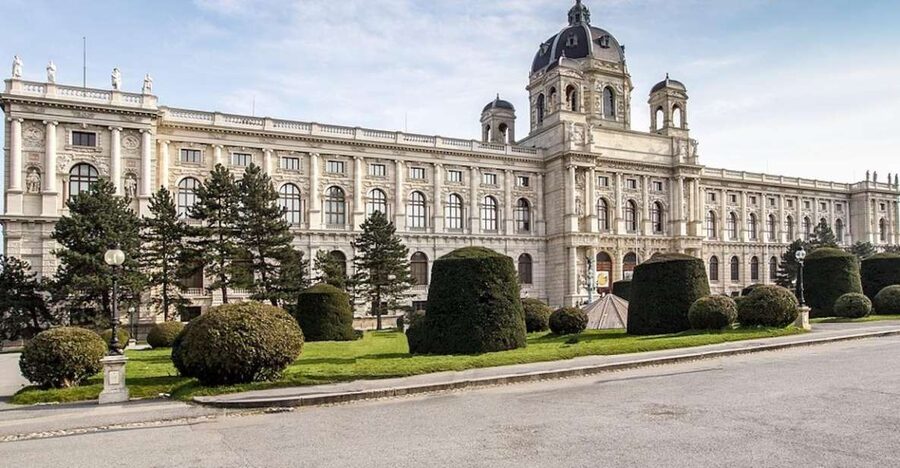
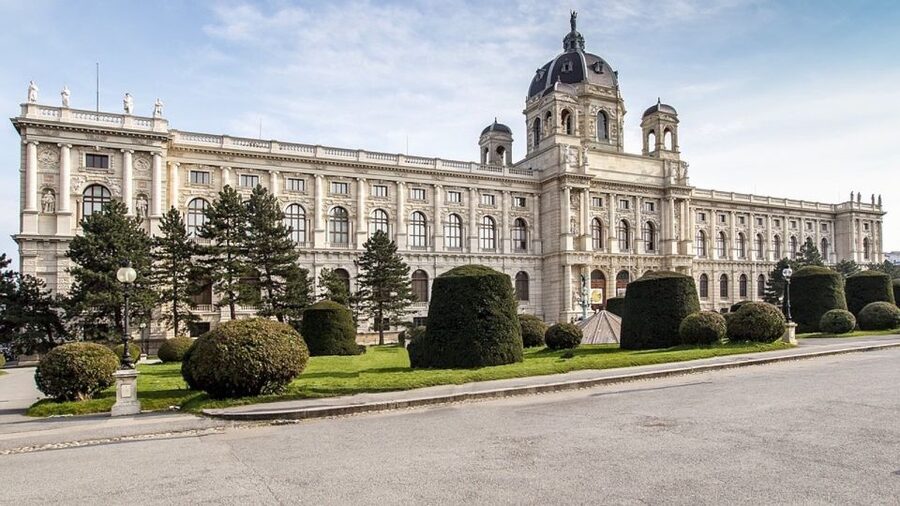
- Heldenplatz, museums, and the imperial setting
- Ending beside the Opera House
- Price, group size, and practical value
- Who will get the most from this walk
- Should you book the Vienna Ringstrasse walk?
- FAQ
- Where does the Vienna Ringstrasse walking tour begin?
- Where does the tour end?
- How long is the experience?
- How much does the private tour cost?
- Is the price per person?
- Which languages are available?
- Is this a private group experience?
- Is the tour wheelchair accessible?
- Do I need to bring a public transport ticket?
- What happens if I need to cancel?
Key points at a glance
- The Ringstrasse tells a political story: Emperor Francis Josef replaced Vienna’s defensive walls with a grand public boulevard and civic showcase.
- Palais Ephrusi adds a personal angle: The banker family behind the palace is connected with the story told in The Hare with the Amber Eyes.
- You see Vienna’s major civic buildings: City Hall, Parliament, the Burgtheater, the University, museums, the Votive Church, and the Opera House all feature in the route.
- Gardens break up the architecture: Volksgarten and other open spaces give you time to rest, look at flower displays, and study statues.
- The walk is private and multilingual: Your group can be served in English, German, or Polish, with a live guide.
- Bring a public transport ticket: A tram ticket is not included, and the meeting point is at Liebenberg Monument near Mölker Bastei.
Why Vienna built the Ringstrasse
To understand this walk, you first need to picture Vienna before the Ringstrasse. The old city was enclosed by walls, a practical defense in earlier centuries but an obstacle to growth by the 19th century. Emperor Francis Josef ordered the walls demolished about 150 years ago, opening space for a broad boulevard and a new public face for the imperial capital.
The plan was not simply to create a road. It was a grand civic project. The new route would hold the opera, theater, museums, university buildings, Parliament, City Hall, and the Academy of Fine Arts. Vienna wanted a public stage for culture, education, government, and imperial power.
I find this background useful because it helps you read the buildings as a group. The Ringstrasse was planned as an ensemble, not as a random collection of impressive façades. Each institution had a role, and each building used decoration to announce its importance.
The project also drew people from across Europe. Architects, artists, planners, industrialists, bankers, craftspeople, and laborers came to Vienna. Some hoped to shape the new capital. Others came because construction offered work, often under harsh conditions.
That contrast is one of the most valuable parts of the tour. You are not only looking at columns and statues. You are also considering who paid for this beauty, who designed it, who built it, and who benefited from it.
More Walking Tours in Vienna
- Vienna: Guided Walking Tour of City Center Highlights
★ 4.7 · 4,989 reviews - Vienna: Vienna Central Cemetery Guided Walking Tour
★ 4.8 · 3,307 reviews - Vienna: Guided Walking Tour of City Highlights & Hidden Gems
★ 4.9 · 2,180 reviews
Meeting Liebenberg and entering the Ringstrasse story
The tour begins at the Liebenberg Monument, at Mölker Bastei 8 in Vienna’s first district. You should arrive about 10 minutes early. The location near the former fortifications makes sense as a starting point, since the entire Ringstrasse story begins with the transformation of the old defensive edge.
Liebenberg was a mayor of Vienna, and his statue gives the guide a chance to connect the city’s political past with its later imperial makeover. You may also hear about the way public monuments were used to honor civic leaders and shape how people remembered the city.
The meeting point is central, but you still want to check your route before setting out. The activity is a walking tour, yet the practical information asks you to bring a public transport ticket, and tram travel is not included. That may matter if you use public transport to reach the starting point or need it after the walk.
Because the group is private, you do not have to fit into the pace of a large mixed crowd. You can ask about a façade, pause for a photograph, or request more detail about a particular building. That flexibility is a real advantage for families and small groups with different interests.
Palais Ephrusi and the people behind the façades
One of the most distinctive stops is Palais Ephrusi, commissioned by a wealthy Jewish banking family. It gives the tour a sharper human focus than a simple procession of public buildings.
The palace represents the way Vienna’s industrialists and bankers used the Ringstrasse to display their money and social position. Building an oversized residence could bring visibility, prestige, and, in some cases, a title. The façade was part home, part advertisement, and part claim to a place in imperial society.
The Ephrusi family’s later fate is connected with The Hare with the Amber Eyes. If you know the book, this stop adds a physical setting to its account. If you do not, the guide can still use the palace to explain the lives of wealthy Jewish families in Vienna and the uncertainty that later affected them.
This is where the tour’s small stories can make a difference. A building can be grand without being memorable. Details about an owner’s ambitions, family, fortunes, or troubles give the palace a reason to stay in your mind.
The main limitation is that the supplied tour information does not name the guide assigned to your date. One highly positive assessment praised the guide for pointing out details that were easy to miss and explaining the lives of palace owners. That is exactly the kind of guiding you want here: not just dates, but the social story hidden behind the stone.
Votive Church and the University of Vienna
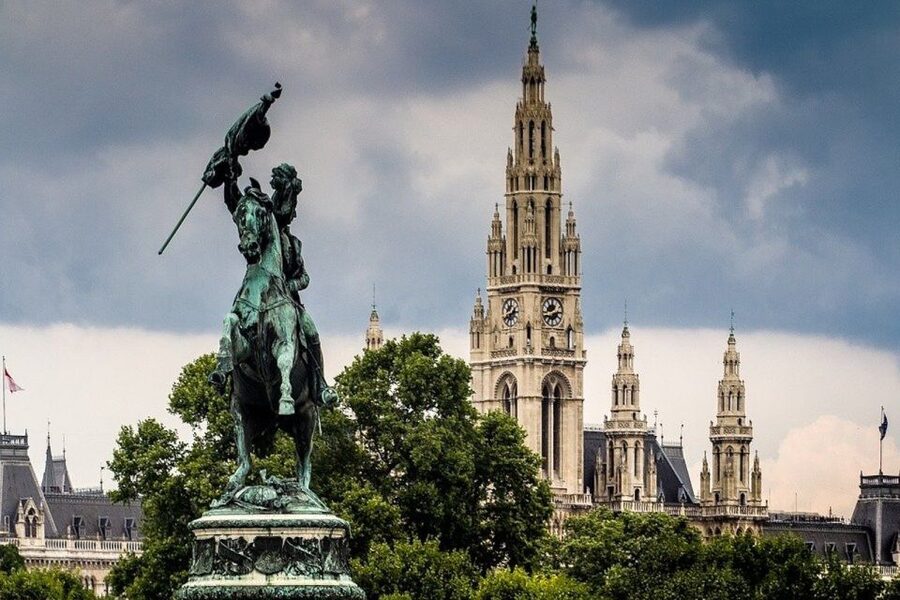
The Votive Church brings a different mood to the route. Its scale and decoration show the 19th century’s taste for grand historical styles, while its place near the University connects religion, education, and imperial identity.
You will also see the main building of the University of Vienna. Together, these stops help show that the Ringstrasse was meant to represent more than royal power. It also presented Vienna as a center of learning, religion, culture, and public life.
The tour highlights the combination of styles used throughout the boulevard. You may see classical references beside Gothic forms or other historical influences. The point is not that every building matches. The appeal lies in the way the planners created a unified avenue from buildings that each speak in a different architectural voice.
This is a good place to ask questions. If you want only a quick orientation, the guide can keep moving. If you care about architecture, you can ask why a particular style was chosen and what that choice was meant to communicate.
Do not expect a long interior visit at every stop. The experience is a guided walk, and the supplied details focus on exterior buildings, public spaces, statues, and stories. If your priority is seeing Vienna’s interiors, you will need separate visits to places such as the museums, Parliament, or the Opera House.
More historical tours:
- Vienna: Time Travel and Magic Vienna History Tour
★ 4.6 · 3,879 reviews - Vienna: World War II Historical Walking Tour
★ 4.8 · 1,772 reviews - Vienna Historic Center Small Group Walking Tour
★ 5.0 · 1,746 reviews - Time Travel-Magic Vienna History Tour Ticket
★ 4.5 · 1,099 reviews
City Hall, Burgtheater, and Parliament
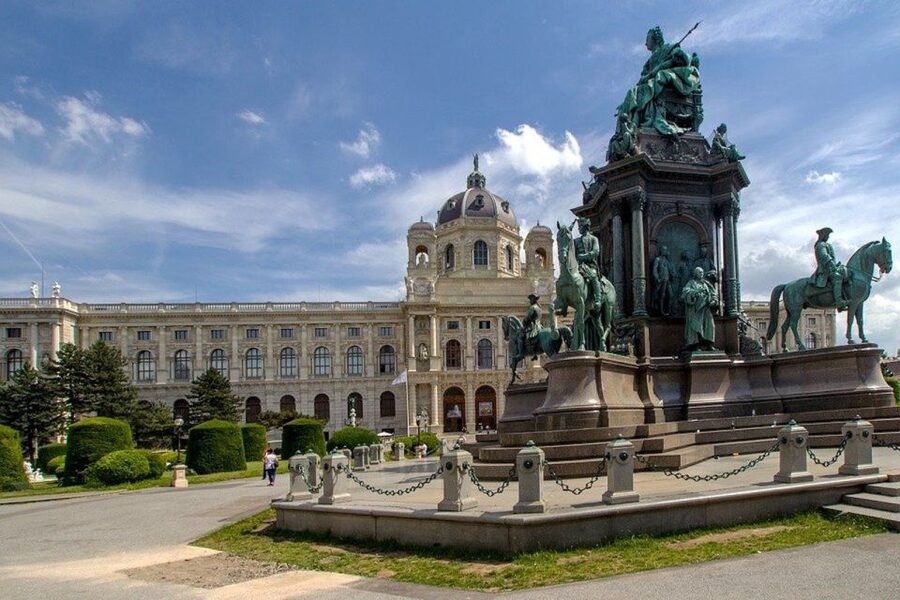
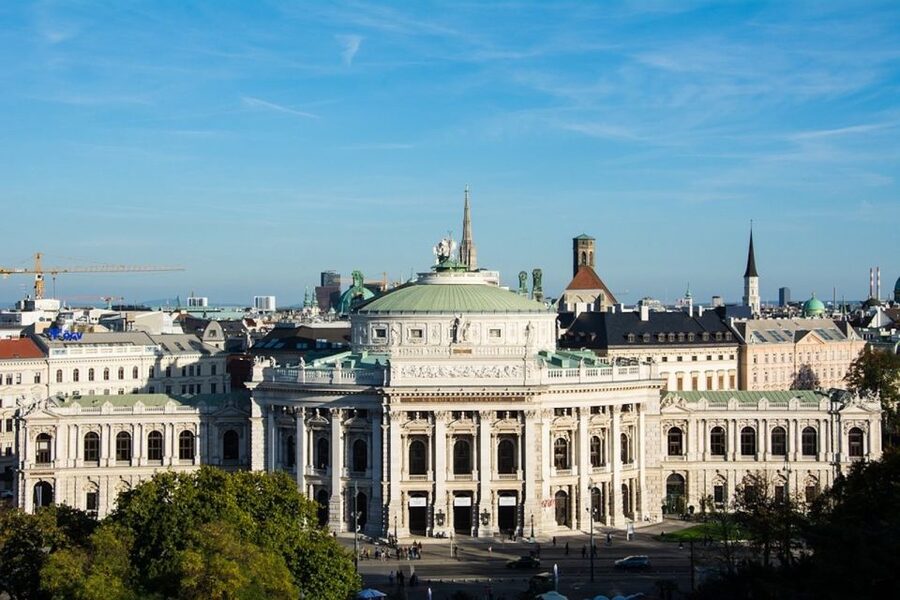
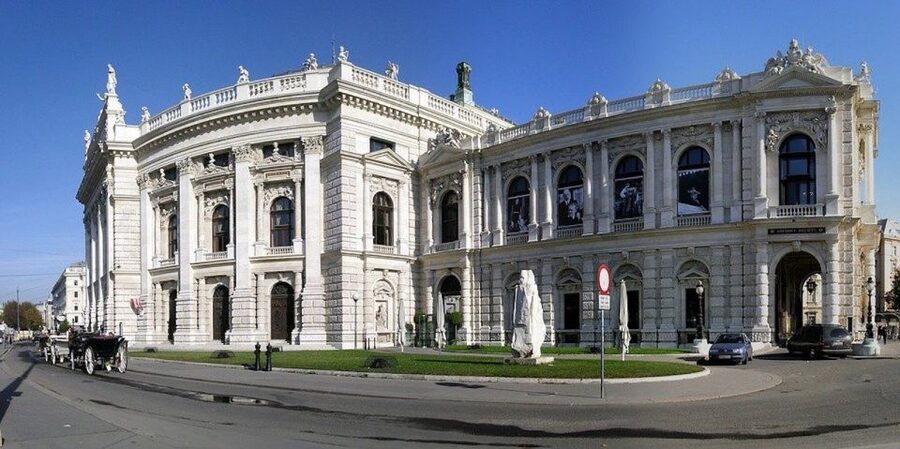
The central Ringstrasse puts Vienna’s civic ambitions on full display. City Hall, the Burgtheater, and Parliament are among the most representative buildings on the route.
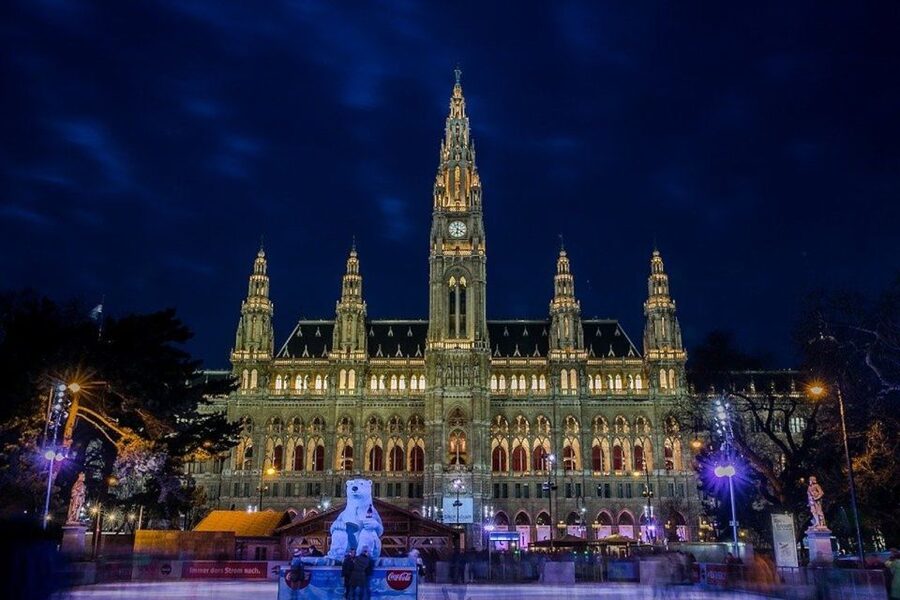
City Hall presents the city’s administrative power in a highly decorated form. The Burgtheater represents imperial Vienna’s love of theater and performance. Parliament adds a political note, showing how public government became part of the boulevard’s grand display.
I like this section because it lets you compare different kinds of authority. City Hall speaks for local government. Parliament speaks for the state. The theater speaks for culture and public entertainment. All sit within the same carefully designed urban project.
The buildings can feel overwhelming, especially if you are trying to photograph them while listening to a guide. Short pauses help. Rather than rushing to record every façade, I would choose one detail at each stop: a statue, a roofline, a columned entrance, or a decorative figure.
The tour is only two hours, so the guide must balance breadth with depth. You will see many major sites, but you should not expect a full architectural course on every building. This explains the mixed assessment of the content. One person found the presentation too thin, while other feedback praised the amount of information and the guide’s ability to answer questions.
Volksgarten, flower displays, and statues
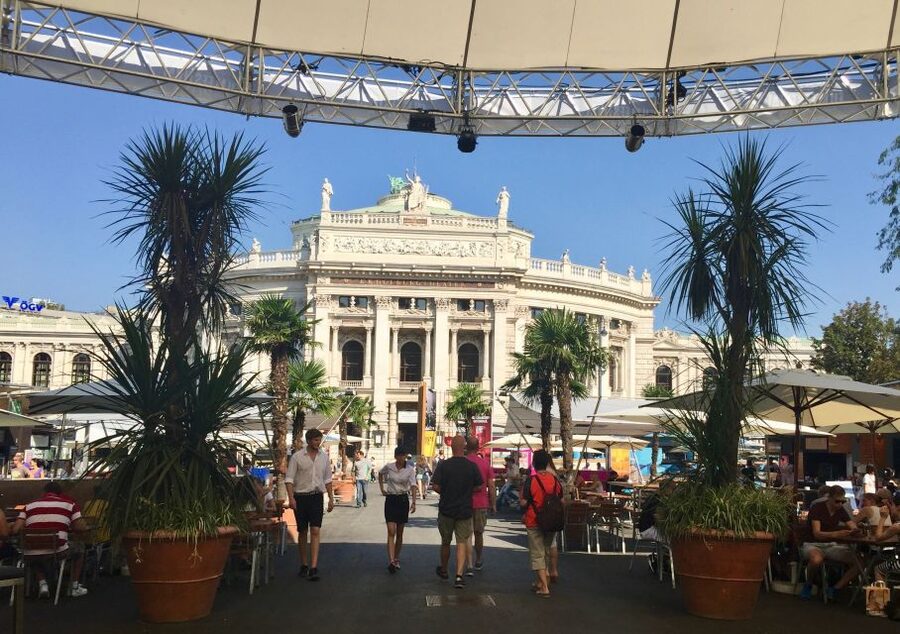
The Ringstrasse is not only a line of stone buildings. Its gardens give the route breathing room. Volksgarten is especially useful as a pause from the dense architecture, with flower arrangements and statues adding color and scale.
These breaks matter more than they may sound. Two hours of looking upward at monumental façades can tire your eyes and legs. A garden stop gives you a chance to rest, take photographs, and notice how planners used open space to soften the boulevard.
The statues also add a civic layer. The Liebenberg monument and the statue of Pallas Athene are specifically part of the experience. They show how Vienna used public art to express ideals such as wisdom, civic leadership, and political strength.
You may find that the gardens are among the most pleasant parts of the walk because they provide contrast. The buildings are formal and imposing. The flowers and greenery make the route easier to absorb.
The exact appearance of the plantings will vary by season. The tour information specifically highlights flower arrangements, but it does not promise a particular display on your date. Think of the gardens as a scenic pause, not as a separate botanical tour.
Heldenplatz, museums, and the imperial setting
Heldenplatz and the museum area bring the route into Vienna’s imperial center. Here, the scale grows again, and the open spaces help you understand how the city presented its power to the public.
The museums show the cultural side of the Ringstrasse project. Their presence was part of the original vision for a capital with serious institutions, not merely a royal residence. You can use the guide’s explanation to decide which museums deserve your return visit.
Heldenplatz also makes the political setting clear. It belongs to the monumental zone around the Hofburg, where architecture, ceremony, and imperial authority were closely linked. The walk does not replace a dedicated Hofburg visit, but it gives you a useful outside view and historical frame.
The guide is likely to move between broad context and smaller details. That mix is important. A wide view explains why the buildings were commissioned. A story about a palace owner or architect makes the setting feel less abstract.
The tour also touches on the fates of famous architects, artists, wealthy residents, and poor workers. That wider social range keeps the walk from becoming a parade of famous names alone.
Ending beside the Opera House
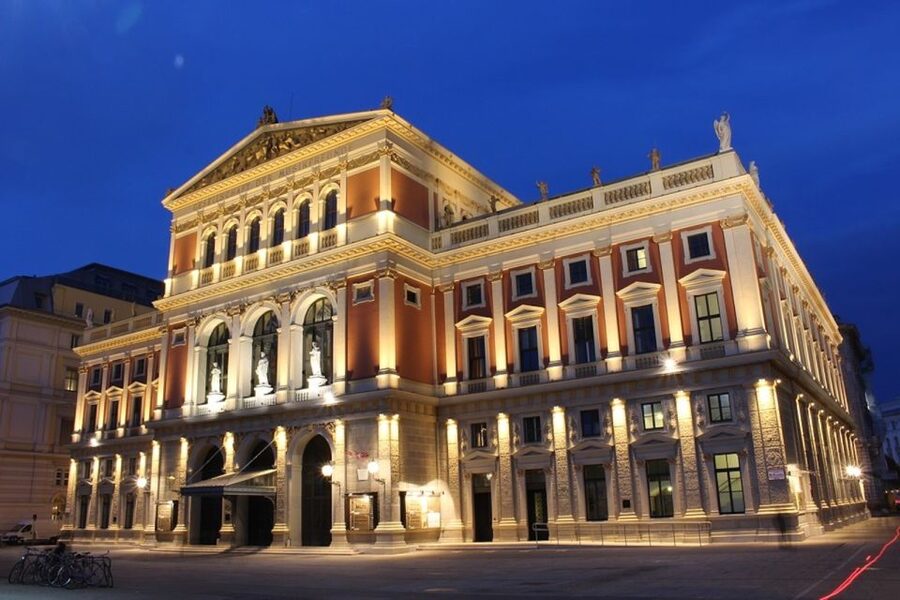
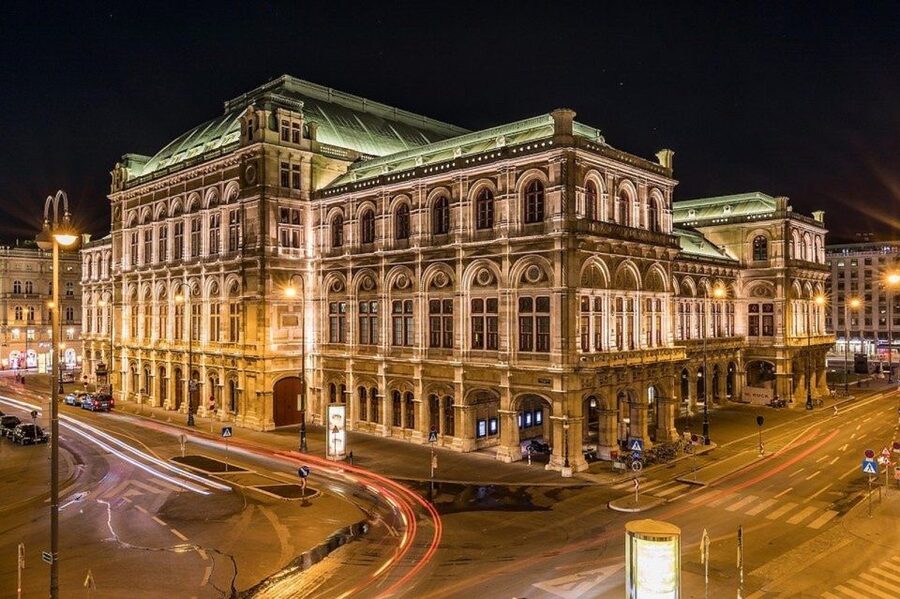
The route ends next to the Opera House, a practical finish in one of Vienna’s most recognizable areas. You can continue sightseeing from there, arrange a meal nearby, or visit another central attraction.
Ending at the Opera House also brings the original plan full circle. The Ringstrasse was designed to house cultural institutions, and the opera remains one of its clearest symbols.
You should allow a little time after the official two hours if you want photographs or plan to ask final questions. The tour itself is fixed at two hours, so extra time for lingering is not part of the stated duration.
This finishing point is also helpful for first-time visitors. After the walk, you will have seen the route’s major public buildings and can decide which ones deserve a longer visit. A good city walk should leave you with choices, not just a pile of facts.
Price, group size, and practical value
At $353 per group of up to eight, this is a private experience rather than a budget walking tour. For one person or a couple, the price is hard to justify unless having a private guide matters greatly to you.
For a full group of eight, the math changes. At about $44 per person, you are paying for a live guide, a private group, and a focused introduction to some of Vienna’s most important public architecture. A group of four pays about $88 per person, so the value depends on how much you care about privacy and personal attention.
The two-hour length is sensible. The Ringstrasse can swallow half a day if you stop at every museum and photograph every façade. This experience gives you a structured overview without taking your entire sightseeing day.
You do not receive hotel pickup or drop-off. You also need to handle any tram fare yourself and bring a public transport ticket. Those are small costs beside the tour price, but you should account for them.
The activity is wheelchair accessible, which makes the private format especially useful if you need a more comfortable pace. Still, the supplied information does not describe the condition of every pavement or garden path, so it is sensible to confirm any specific mobility needs before booking.
Who will get the most from this walk
I would choose this tour if you want to understand why Vienna looks the way it does. It suits first-time visitors who want a clear orientation before choosing museums and interiors.
It is also a good match for:
- Families or friends who want a private guide rather than a large group
- People interested in architecture, urban planning, and public art
- Readers who know The Hare with the Amber Eyes and want to see Palais Ephrusi
- Visitors who prefer stories about people and society, not only construction dates
- Groups that can share the cost among several people
- English, German, or Polish speakers who want a live tour in one of those languages
I would be more cautious if you want extensive interior access or a highly technical architectural lecture. The tour covers many major sites in two hours, so the treatment of each stop will necessarily be selective.
Weather is not a deal breaker, but it can affect comfort. One positive assessment specifically praised the guide for keeping the walk interesting during rain. Even so, bring suitable clothing and shoes. Gardens and open squares are part of the route, so this is not an indoor museum experience.
Should you book the Vienna Ringstrasse walk?
Book it if you are traveling with a private group, want a strong first look at Vienna’s grand boulevard, and value stories about the people who built and occupied its palaces. The combination of Palais Ephrusi, public institutions, gardens, statues, and the Opera House gives you a useful two-hour framework for the city.
Think twice if you are traveling alone or as a couple on a tight budget. The price is much easier to defend when split among six to eight people. Also, ask yourself how much detail you need. The best outcome depends on a guide who can add the small observations and personal stories praised by the strongest feedback, not simply point out the buildings.
If you do book, arrive 10 minutes early, bring your public transport ticket, and prepare a few questions. The private format gives you a better chance to shape the walk around your interests.
FAQ
Where does the Vienna Ringstrasse walking tour begin?
It begins at the Liebenberg Monument, Mölker Bastei 8, 1010 Vienna.
Where does the tour end?
The walk ends next to the Vienna Opera House.
How long is the experience?
The walking tour lasts two hours.
How much does the private tour cost?
The price is $353 for a private group of up to eight people.
Is the price per person?
The listed price covers the group, up to eight people. The per-person cost depends on the number in your party.
Which languages are available?
The live tour is available in English, German, and Polish.
Is this a private group experience?
Yes. The activity is offered as a private group tour.
Is the tour wheelchair accessible?
Yes, the activity is listed as wheelchair accessible.
Do I need to bring a public transport ticket?
Yes. You should bring a public transport ticket. Tram fare is not included in the tour price.
What happens if I need to cancel?
You can cancel up to 24 hours before the activity for a full refund. You can also reserve now and pay later.
More Walking Tours
- Vienna: Viennese Underworld Guided Walking Tour
★ 4.7 · 1,865 reviews - Vienna: Private Walking Tour with a Local Guide
★ 4.6 · 1,420 reviews - Vienna: 1.5-Hour Underground Walking Tour
★ 4.9 · 1,146 reviews - Vienna: Ghosts and Legends Guided Nighttime Walking Tour
★ 4.4 · 1,088 reviews
Just added around Vienna
- Mobile puzzle rally tour at the Vienna Central Cemetery★ 4.5 · 3 reviews
- 8 days European Highlights PRIVATE TOUR from Budapest including Budapest Vienna Prague and Bratislava★ 5.0 · 3 reviews
- RAXI (E-Rickschaw) big private Vienna tour★ 4.5 · 3 reviews
- Private Transfer from Vienna to Prague with 1 hour Stop in Kutna Hora★ 4.5 · 3 reviews
- Palais Lobkowitz Audio Guide Tour★ 4.0 · 3 reviews
- Private Tour from Vienna to Melk and Dürnstein★ 4.5 · 3 reviews
- Vienna: Designer Fashion Time Capsule Experience★ 5.0 · 3 reviews
- Vienna Sight & Gourmet Tour – individual private tour★ 4.5 · 3 reviews
Historical Tours, compared.



Vienna Historic Center Small Group Walking Tour
Read our review →
Skip-the-Line Schonbrunn Palace Guided Tour and Vienna Historical City Tour
Read our review →
Vienna Mozart Concert in Historical Costumes at the Musikverein
Read our review →
Browse the lists this tour appears in