
Reviewed · MUSEUMS
Vienna: King of Waltz – immersive Johann Strauss Museum
Vienna’s Waltz King gets a high-tech encore. I like the location-based 3D sound and the chance to create a personal waltz on the composing machine. The printed sheet music and on-the-spot Strauss photo give you something tangible to take home. One caution: this is a multimedia museum experience, not a live concert or traditional guided tour.
The 75-minute visit moves through seven acts inside the Kleines Haus der Kunst, using motion-sensitive headphones, audiovisual displays, animations, and a GPS-controlled audio guide. I also like the relaxed pace and the many places to sit. At $28.94 per person, the price feels fair if you enjoy music, technology, or Vienna’s cultural story, but it may feel high if you only want a quick look at Strauss memorabilia.
In This Review
- Key details before you book
- Meeting the Waltz King at the Kleines Haus der Kunst
- How the seven-act journey works
- Motion-sensitive headphones and location-based 3D sound
- Trying your hand at composition and dance
- The printed Strauss portrait
- Why the 75-minute length works
- What the ticket includes for $28.94
- Who will get the most from this museum
- Timing, access, and cancellation
- My practical verdict
- FAQ
- Where is the Johann Strauss Museum experience located?
- How long does the experience last?
- What is included in the ticket?
- Is the ticket available on a mobile device?
- Does the museum provide an audio guide?
- Can I create my own waltz?
- Can I have a photo printed at the museum?
- Can I cancel for a refund?
Key details before you book
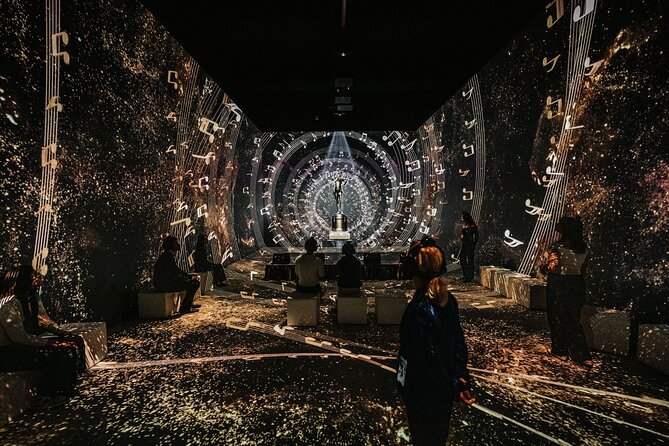
- Seven acts in 800 square meters: The exhibition follows important phases of Johann Strauss’ life through themed rooms and audiovisual scenes.
- 3D sound follows your position: Motion-sensitive headphones and location-based audio help connect the music to each part of the visit.
- Compose your own waltz: An interactive composing machine creates personalized sheet music you can take home.
- Become Johann Strauss for a moment: You can take a photo as the Waltz King and have it printed on the spot.
- Plan on 75 minutes: The compact format fits neatly into a day of sightseeing without taking over your schedule.
- Mobile ticket and free cancellation: Your ticket arrives electronically, and you can cancel for a full refund up to 24 hours before the start time.
Meeting the Waltz King at the Kleines Haus der Kunst
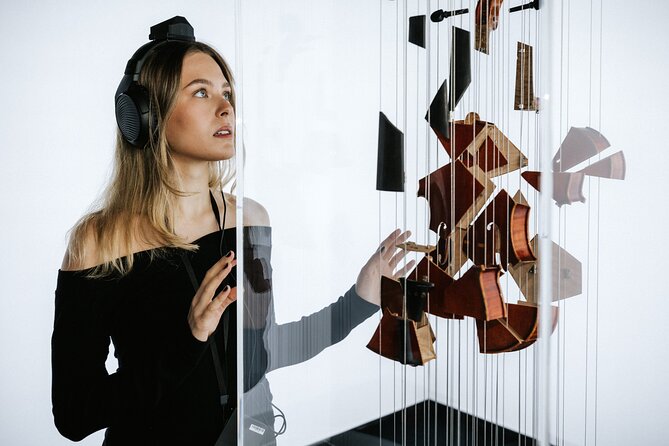
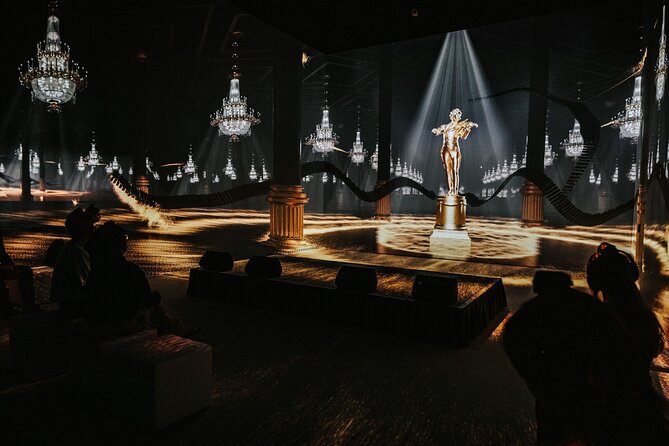
The experience takes place at the Kleines Haus der Kunst in Vienna, where about 800 square meters are given over to the Johann Strauss: New Dimensions ART & TECH Museum Experience.
That name tells you what kind of visit this is. You are not walking through a quiet collection of framed documents and glass cases. Instead, you move through a sequence of rooms built around sound, images, animation, and participation.
The exhibition is arranged in seven acts. This theatrical structure gives the visit a clear rhythm and helps break Strauss’ life into manageable chapters. You are not expected to absorb a long lecture all at once. Each act offers a different setting or activity, then leads you onward.
I find that format useful for a composer whose name many people know better than his story. Johann Strauss is strongly linked with the Viennese waltz, but a multimedia presentation can make the person and his working life easier to grasp than a standard display of dates and portraits.
The museum’s size also matters. Since the exhibition occupies 800 square meters and lasts about 75 minutes, you can expect a focused visit rather than an all-day museum commitment. You can pair it with other sights in central Vienna without needing to build your entire day around it.
More museums:
- Vienna: Skip-the-Line Sisi Museum, Hofburg and Gardens Tour
★ 4.8 · 5,918 reviews - Vienna Kunsthistorisches Museum Day Admission Ticket
★ 4.6 · 3,690 reviews - Tickets for the Albertina Exhibitions
★ 4.7 · 2,126 reviews
How the seven-act journey works
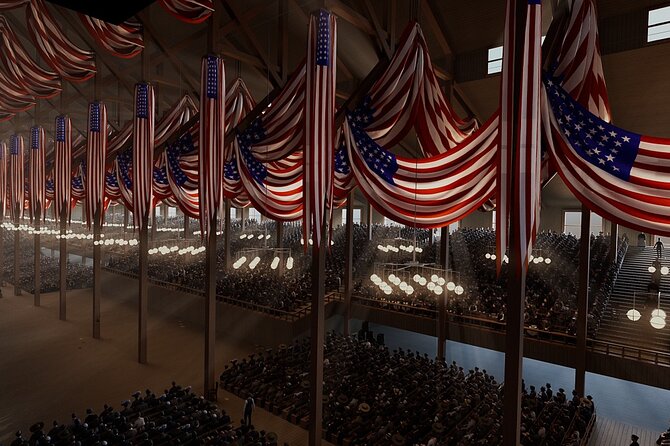
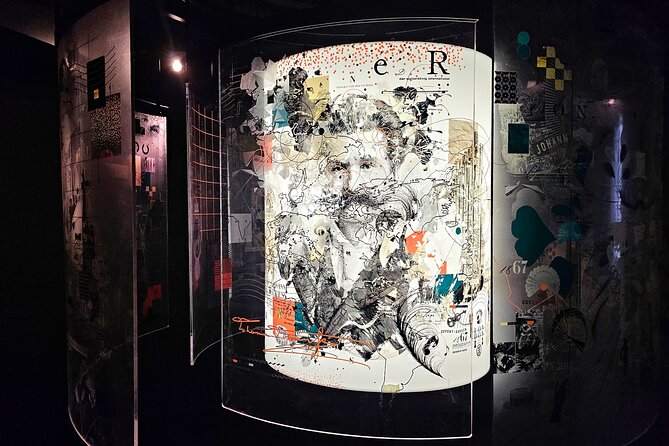
The exact content of each act is not broken out in detail, but the experience is designed to show important stages of Strauss’ life through interactive scenes and audiovisual installations.
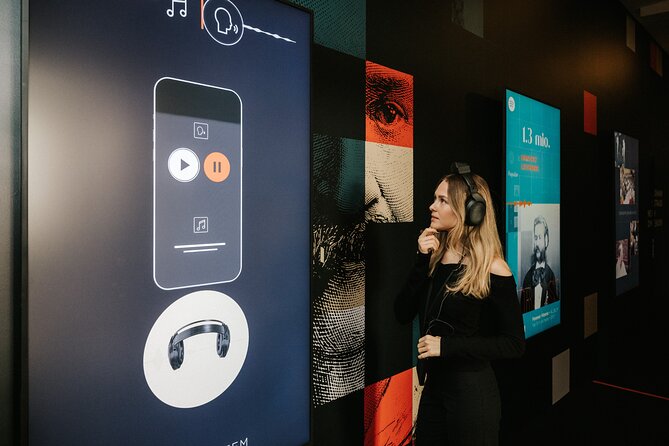
You move through the exhibition with headphones connected to a GPS-controlled audio guide. The system is designed to recognize your location, so the narration and music can relate to the section you are viewing. Motion-sensitive headphones add another layer, helping the sound respond to your position rather than behaving like a simple recording played from beginning to end.
That setup is one of the more interesting parts of the visit. A regular audio guide asks you to press buttons and keep track of numbers. Here, the technology is meant to guide you as you walk. You still control your pace, but the audio should feel more connected to the rooms around you.
The presentation also includes authentic soundscapes. For a composer, that is an important choice. You are not only reading about Strauss’ music. You are hearing it as part of the exhibition environment, with the sound designed to fill the space around you.
You should keep your expectations in check. The museum is not presenting a full biography with every historical detail, and the supplied information does not promise live performers or a concert. Think of it as a visual and musical portrait, shaped for a modern museum visit.
Motion-sensitive headphones and location-based 3D sound
The audio equipment is central to the experience, not a minor extra. Your admission includes headphones and an audio guide, and the exhibition uses motion-sensitive technology to create a more active listening experience.
The location-based 3D sound system is meant to bring Strauss’ melodies into the space around you. That can make a familiar waltz feel newly placed within the room, rather than simply coming from a speaker in the ceiling.
I like this approach because music is the subject here, so sound deserves more attention than it would in an ordinary historical exhibition. The technology gives you a reason to listen closely and notice how the music works with the visual displays.
There is also a practical benefit. The audio guide lets you explore without needing to stay beside a live guide or match the pace of a large group. You can concentrate on the screens, installations, and activities in front of you.
Still, the headphones may not suit everyone. Some people prefer a quiet gallery, and others may find audio equipment distracting. Since the visit depends heavily on sound and motion-based technology, your enjoyment will be greatest if you are happy to wear the provided headphones for much of the 75 minutes.
Trying your hand at composition and dance
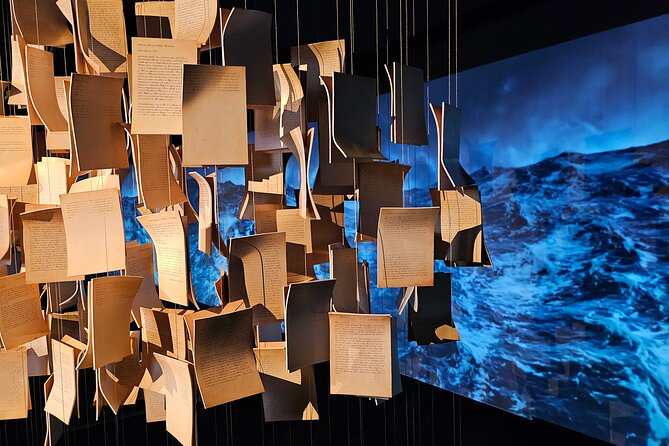
The exhibition invites you to take part, rather than simply watch. At interactive stations, you can try being a composer, musician, or dancer.
The most distinctive activity is the composing machine. You use it to create your own waltz, then receive personalized sheet music to take home. That small souvenir gives the visit a personal finish. You are not just hearing about Strauss’ craft. You are making a modest piece of music yourself.
I would give this activity extra weight when deciding if the ticket is right for you. A museum souvenir bought in a shop is easy to forget. A printed score connected to your own visit is more unusual, even if you are not trained in music.
The activity should also work well for families and curious first-time visitors because it turns a difficult subject into something hands-on. You do not need to know musical notation to appreciate the idea of composing a waltz. The supplied information does not specify how much musical control the machine gives you, so do not expect a full composition studio. The value is in the playful connection between you and Strauss’ musical form.
Other stations let you act as a musician or dancer. These activities help explain that the waltz was not only something to hear. It was also something people performed and experienced with their bodies.
The exhibition’s interactive design makes it a stronger choice for visitors who tire quickly in traditional museums. You have several ways to engage, from listening and watching to making and posing.
A few more trips of this kind worth comparing:
- Vienna: Vivaldi’s Four Seasons Concert in Karlskirche
★ 4.7 · 14,951 reviews - Vienna: Spanish Riding School Training
★ 3.9 · 9,281 reviews - Vienna: Skip-the-cashier-desk-line Giant Ferris Wheel Ride
★ 4.5 · 7,859 reviews - Vienna: Schönbrunn Palace & Gardens Skip-the-Line Tour
★ 4.7 · 7,739 reviews
The printed Strauss portrait
Another unusual stop lets you take a photo of yourself as Johann Strauss. The museum prints the image right away.
That sounds lighthearted, and it is. But it also gives the exhibition a useful bit of humor. Strauss becomes more than a distant figure from a portrait. For a moment, you get to step into his public image and take a physical reminder home.
This is especially appealing if you enjoy playful cultural attractions rather than strictly formal museums. It can also give children and younger visitors a reason to stay engaged through the final acts.
The supplied details do not explain the exact photo setup, costume elements, or whether additional prints cost extra. You should treat the printed image as an included feature described by the experience, but confirm any fine points at the venue if they matter to your plans.
Why the 75-minute length works
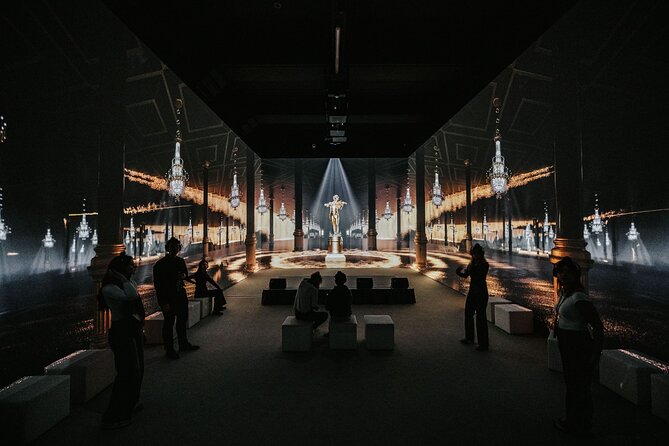
The visit lasts approximately one hour and 15 minutes. That is long enough to give the subject room, but short enough to fit between major Vienna sights.
I like this length for a city break. You can spend part of the day with Strauss, then move on to another museum, a café, or one of Vienna’s historic streets. The fixed duration also helps families and visitors with tight schedules.
The pace should feel more relaxed than rushed. One direct assessment praised the creative audiovisual material, the useful seating, and the fact that the tour was the right length. Those details matter. Standing through a technology-heavy exhibition can become tiring, so having plenty of places to sit makes the experience easier on your feet.
You may want to allow a little extra time around the official 75 minutes if you like to linger at the interactive stations or wait for the composing machine and photo activity. The stated duration is approximate, not a promise that every person will finish at the same moment.
What the ticket includes for $28.94
The price is $28.94 per person. Admission, headphones, and the audio guide are included. You receive a mobile ticket, which keeps the booking simple and avoids the need to manage a paper voucher.
To judge the value, I would ask what you want from a museum visit. If you want a traditional collection with many original objects, this may not be the best use of your money. The experience focuses on technology, sound, and participation rather than a long list of physical artifacts.
If you are interested in Johann Strauss and want more than a quick biography, the price is easier to justify. You receive a 75-minute presentation, a guided audio experience, interactive activities, personalized sheet music, and a printed photo opportunity.
The experience also has a clear advantage for mixed-interest groups. One person can focus on Strauss and the music, while another enjoys the screens, sound effects, or composing station. That flexibility can make the ticket worthwhile when not everyone in your group wants a conventional museum.
Parking fees are not included. Since the venue is near public transportation, public transit is the more practical choice for most visitors. The information provided does not specify the nearest station or tram stop, so check your route before setting out.
Who will get the most from this museum
I would recommend this experience most strongly to:
- Johann Strauss fans who want a presentation built around his music
- First-time Vienna visitors looking for a manageable cultural stop
- Families and groups who prefer hands-on activities
- Visitors who enjoy audiovisual art and new museum technology
- People who want a souvenir they make or appear in themselves
- Anyone with a spare 75 minutes near the venue
It may be less satisfying for you if you want a scholarly lecture, a live orchestra, or a collection centered on original Strauss objects. The experience presents history through sound and visual design, so it is best approached as a modern interpretation of the composer’s life.
The museum is also a good fit for visitors who like structure. The seven-act format gives you a clear route, and the location-based guide helps keep the presentation moving.
Timing, access, and cancellation
Confirmation is provided at the time of booking, and the mobile ticket makes entry straightforward. The experience is near public transportation, which is useful in Vienna, where driving and parking can add cost and hassle.
Most people can participate. The provided information does not give detailed accessibility specifications, so contact the provider directly if you need information about mobility equipment, hearing support, or other access needs.
You can cancel for a full refund up to 24 hours before the experience begins. Cancellations or changes made within 24 hours are not refunded or accepted, and the cut-off uses Vienna local time. If your schedule is uncertain, book only after checking your daily plans carefully.
The experience is booked an average of 28 days ahead. That suggests it is sensible to reserve in advance, especially if your Vienna dates are fixed, though the available information does not give a required booking window.
My practical verdict
The Johann Strauss Museum offers a smart way to meet Vienna’s Waltz King without committing to a long museum visit. Its strongest features are the carefully designed sound system, the seven-act structure, the composing machine, and the chance to leave with personalized sheet music and a printed Strauss portrait.
I would book it if you want music history presented with energy and technology, or if your group needs a cultural activity that is easy to understand and not too long. I would skip it if you are looking for a classical concert, extensive original artifacts, or a detailed academic treatment of Strauss.
At $28.94, the value depends on your interest in the format. For a 75-minute visit with admission, audio equipment, interactive stations, and personal take-home items included, the price is reasonable. Go in expecting an audiovisual museum experience rather than a traditional gallery, and you are more likely to enjoy the waltz.
FAQ
Where is the Johann Strauss Museum experience located?
It takes place at the Kleines Haus der Kunst in Vienna, Austria.
How long does the experience last?
The visit lasts approximately 75 minutes, or one hour and 15 minutes.
What is included in the ticket?
The ticket includes admission, an audio guide, and headphones.
Is the ticket available on a mobile device?
Yes. The experience offers a mobile ticket.
Does the museum provide an audio guide?
Yes. A GPS-controlled audio guide is used with motion-sensitive headphones during the visit.
Can I create my own waltz?
Yes. An interactive composing machine lets you create a personal waltz, and you can take home personalized sheet music.
Can I have a photo printed at the museum?
Yes. You can take a photo of yourself as Johann Strauss and have it printed on the spot.
Can I cancel for a refund?
Yes. You can receive a full refund if you cancel at least 24 hours before the experience start time. Cancellations or changes made less than 24 hours before the start time are not accepted or refunded.
Just added around Vienna
- Mobile puzzle rally tour at the Vienna Central Cemetery★ 4.5 · 3 reviews
- 8 days European Highlights PRIVATE TOUR from Budapest including Budapest Vienna Prague and Bratislava★ 5.0 · 3 reviews
- RAXI (E-Rickschaw) big private Vienna tour★ 4.5 · 3 reviews
- Private Transfer from Vienna to Prague with 1 hour Stop in Kutna Hora★ 4.5 · 3 reviews
- Vienna: Designer Fashion Time Capsule Experience★ 5.0 · 3 reviews
- Palais Lobkowitz Audio Guide Tour★ 4.0 · 3 reviews
- Private Tour from Vienna to Melk and Dürnstein★ 4.5 · 3 reviews
- Vienna Sight & Gourmet Tour – individual private tour★ 4.5 · 3 reviews
Museums, compared.

Skip-the-Line Sisi Museum, Hofburg and Gardens Tour
Read our review →
Vienna Kunsthistorisches Museum Day Admission Ticket
Read our review →

Chocolate Workshop in Chocolate Museum w/ Tasting
Read our review →

St. Stephen’s Cathedral & Dom Museum Wien Tickets
Read our review →
Browse the lists this tour appears in