
Reviewed · HISTORICAL TOURS
Wilhering Abbey: Discover 875 years of history!
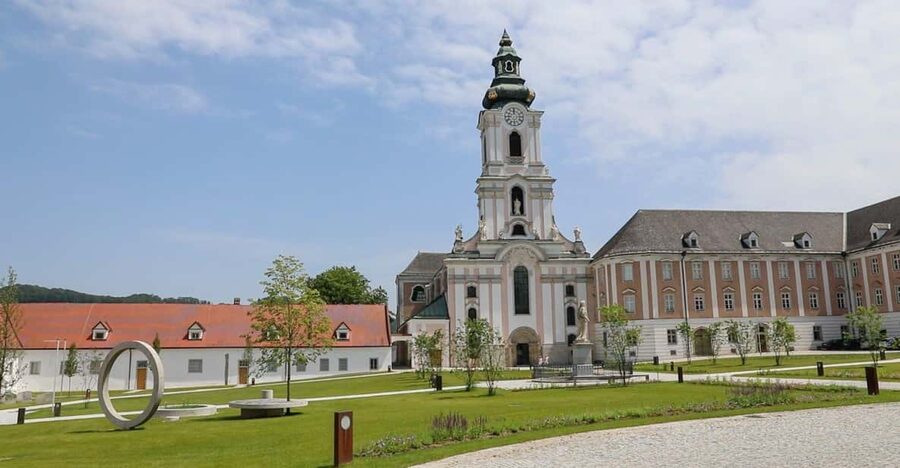
Pause where centuries still breathe. Wilhering Abbey gives you a compact way to explore 875 years of Cistercian history, admire one of Europe’s finest rococo church interiors, and enjoy a quiet courtyard café. I especially like the museum’s seven-room plan and the fact that the church, cloister, courtyard, and park are freely accessible. The main consideration is time: 30 minutes is enough for a focused visit, but not for a slow look at every room and corner.
I also like the abbey’s gentle pace. This is not a packed sightseeing stop with a long queue of attractions. It is a place to rest, reflect, and linger, with regional cakes, coffee, drinks, and abbey snacks available on site. At $7 per person, the museum is good value, though the ticket covers only the museum admission. The church and outdoor areas are already free to enter.
In This Review
- Key points to know before you go
- Why Wilhering Abbey makes a good short stop
- Start at the monastery gate and café
- Seven rooms that connect abbey life and belief
- Allow time for the rococo collegiate church
- Walk the cloister, courtyard, and park
- What the $7 ticket really buys you
- Who will enjoy this experience most
- Practical timing and access
- A balanced verdict on the abbey visit
- Should you book Wilhering Abbey?
- FAQ
- Where is Wilhering Abbey located?
- How much does the museum visit cost?
- How long is the museum ticket valid?
- What does the admission include?
- Can I visit the church without buying the museum ticket?
- Are the cloister and abbey park included?
- Where do I enter the museum?
- Is Wilhering Abbey wheelchair accessible?
- Can I cancel for a refund?
Key points to know before you go
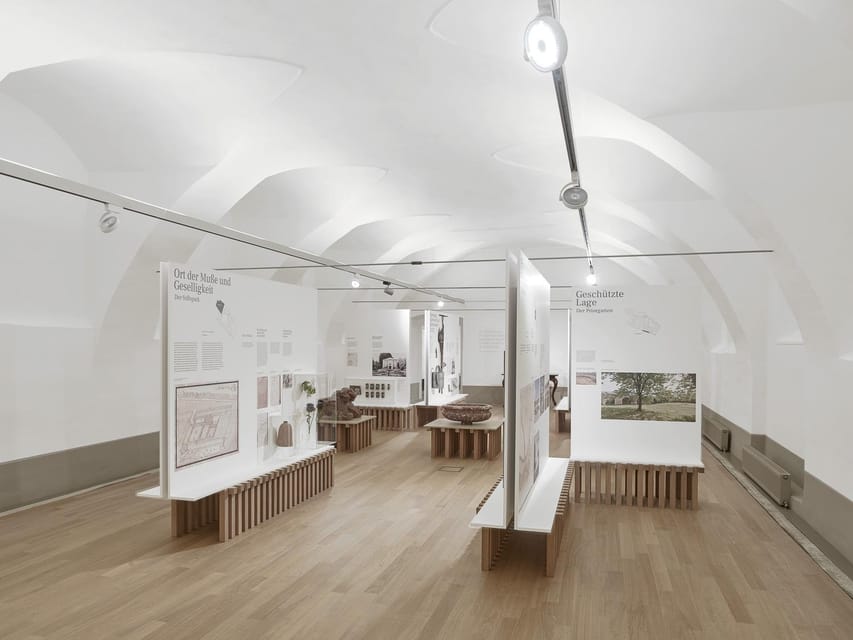
- Seven exhibition rooms: Each room presents a separate theme, while the full visit connects Wilhering Abbey, Cistercian spirituality, ora et labora, and important abbey personalities.
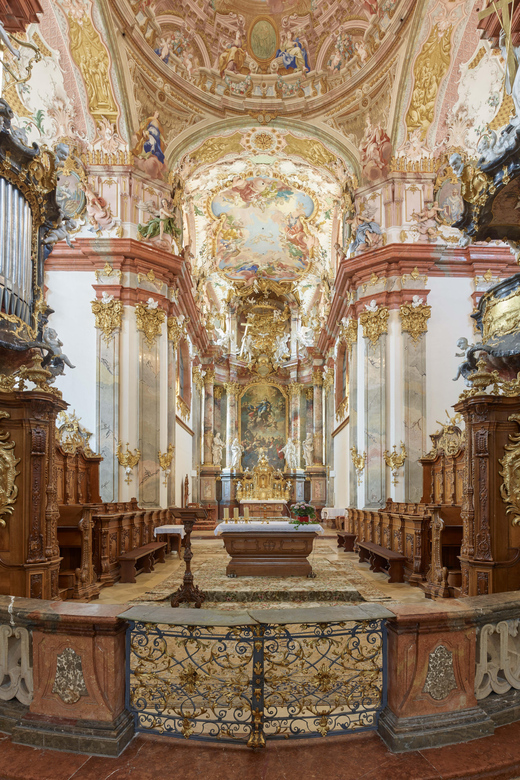
- Fine rococo church interior: The collegiate church is one of the main reasons to stop, and you can enter it freely.
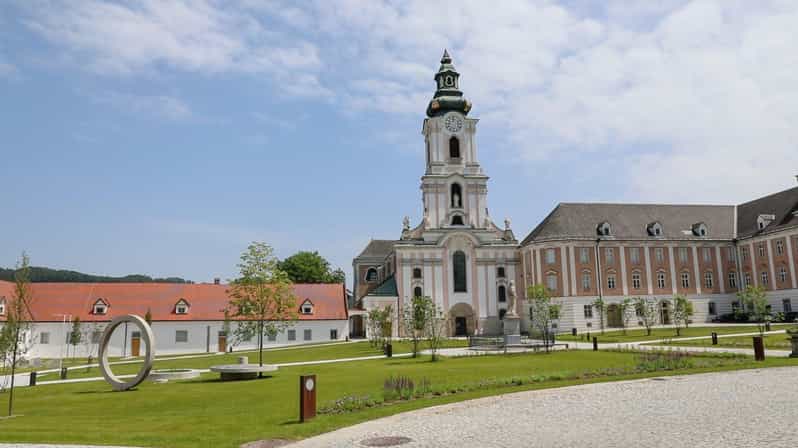
- A quiet courtyard pause: The Stiftshof courtyard and Abbey Café add a useful break after the museum.
- A short but flexible visit: The museum ticket is valid for 30 minutes from first activation, while the church, cloister, courtyard, and park remain freely accessible.
- Regional products on site: The café favors regional suppliers, and the monastery shop sells goods such as wine from leased vineyards near Krems.
- Friendly service: The staff receive warm praise, making the monastery café a practical place to ask for directions or help.
Why Wilhering Abbey makes a good short stop
Wilhering Abbey works best when you want culture without a full-day commitment. The visit combines a museum, a grand church, a cloister, open courtyard space, and a park. You can spend your paid 30 minutes on the museum, then continue at your own pace in the free areas.
I find that mix useful. Many historic religious sites give you a church and little else. Here, the museum gives context, while the church and grounds let you experience the setting without rushing from one display to the next.
The abbey’s purpose is not only to show old objects or impressive architecture. The museum also explains the Cistercian way of life, including the familiar principle of ora et labora, prayer and work. That gives the visit a human focus. You are not simply looking at a building. You are learning how the abbey developed, what its religious community valued, and which personalities shaped its story.
The setting also encourages a slower mood. The description of Wilhering as a place to rest, reflect, and linger is not just decorative language. The free cloister, courtyard, and park give you space to pause after the more concentrated museum visit.
More historical tours:
- Vienna: Time Travel and Magic Vienna History Tour
★ 4.6 · 3,879 reviews - Vienna: World War II Historical Walking Tour
★ 4.8 · 1,772 reviews - Vienna Historic Center Small Group Walking Tour
★ 5.0 · 1,746 reviews
Start at the monastery gate and café
The practical entry point is the monastery gate, also called the Abbey Gate. The museum entrance is located there or in the monastery café, and café staff can direct you if you are unsure where to begin.
That arrangement is convenient because the gate is more than a ticket point. It serves as the abbey’s place of arrival, hospitality, and encounter. You can orient yourself, ask staff for help, and then decide how to divide your time between the museum and the rest of the complex.
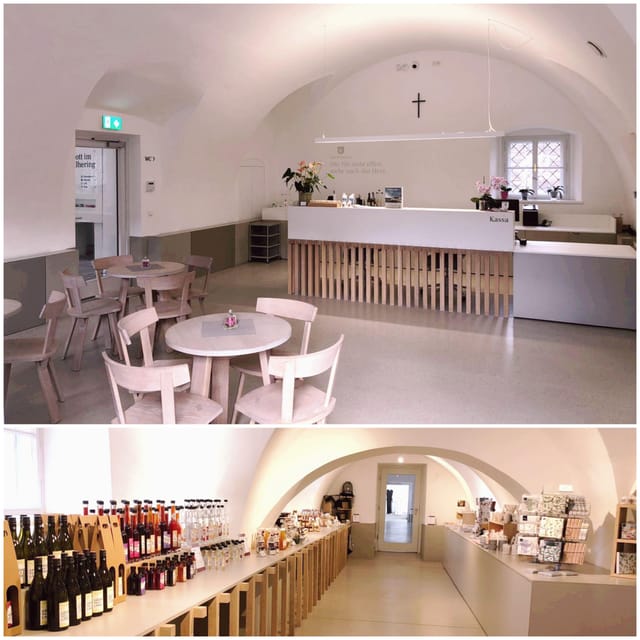
The café offers self-service cakes, coffee, drinks, and abbey snacks. The food selection is not presented as a full restaurant meal, so plan on a light stop rather than a long lunch. I like the emphasis on regional suppliers, especially when you want a local break that does not feel detached from the place you are visiting.
You can also browse the Monastery Store in this part of the abbey. Products include wine from the monastery’s leased vineyards near Krems. That detail gives the shop a stronger local connection than a shelf of generic souvenirs.
Seven rooms that connect abbey life and belief
The museum contains seven exhibition rooms built around seven themes. Each room can be understood on its own, but the subjects connect as you move through the museum.
The main focus is Wilhering Abbey and its long story. You also learn about Cistercian spirituality, the daily balance suggested by ora et labora, and notable figures connected with the abbey. This structure should suit different types of visitors. You can read the basic information in each room and keep moving, or stop at subjects that catch your attention.
The two-level approach to information is particularly practical. Each room offers an overview, then allows you to explore selected topics in greater detail. You do not need to read everything to understand the main idea, and you are not forced into a single pace.
That matters during a 30-minute museum visit. If you read every panel carefully, the time can pass quickly. I would first get the broad outline of all seven rooms, then return to the subjects that interest you most if time allows.
Younger visitors also have interactive elements to keep the tour from becoming a long sequence of display cases and written panels. The available information does not specify the exact activities, so you should not expect a particular game or technology. Still, the museum has made a clear effort to offer more than passive viewing.
The museum’s strongest quality is its sense of connection. The church shows the abbey’s artistic side. The exhibits explain its religious and institutional life. The café and courtyard bring you back to the present day. Together, these parts make a short stop feel more complete.
Allow time for the rococo collegiate church
The collegiate church is freely accessible, so you do not need to spend part of your museum time inside it. That is important. You can focus the paid 30 minutes on the exhibition rooms, then give the church the attention it deserves afterward.
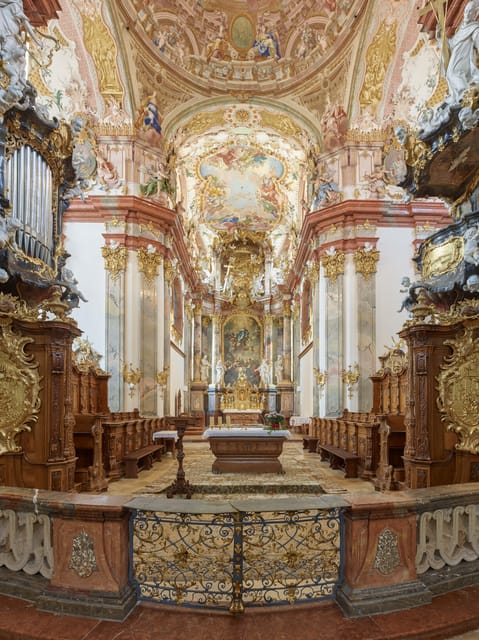
The church interior is described as one of Europe’s finest examples of rococo church design. Even if you are not an architecture specialist, this is likely to be the visual high point of your visit. Rococo interiors are known for ornate decoration and theatrical detail, and the church offers a strong contrast to the museum’s explanatory displays.
I would not treat the church as a quick walk-through. Look up, take in the overall design, then notice smaller details at your own pace. Since entry is free, you can return to a favorite section or sit quietly without worrying about using up your museum ticket.
The available details do not name individual artworks, artists, or decorative features, so I would avoid arriving with a checklist. Come for the overall effect of the interior and the way it expresses the abbey’s religious setting.
A completely different kind of day out in Austria:
- Vienna: Vivaldi’s Four Seasons Concert in Karlskirche
★ 4.7 · 14,951 reviews - Vienna: Spanish Riding School Training
★ 3.9 · 9,281 reviews - Vienna: Skip-the-cashier-desk-line Giant Ferris Wheel Ride
★ 4.5 · 7,859 reviews - Vienna: Schönbrunn Palace & Gardens Skip-the-Line Tour
★ 4.7 · 7,739 reviews
Walk the cloister, courtyard, and park
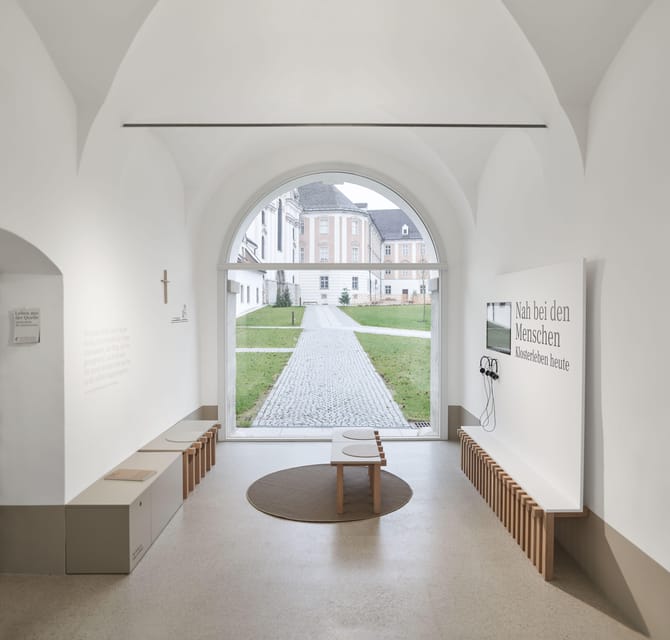
The cloister, abbey courtyard, and park are also freely accessible. These spaces help balance the more formal museum and church visits.
A cloister offers a different experience from a gallery. Its value comes from proportion, quiet, and the sense of movement around a central space. At Wilhering, you can use it as a transition between the museum and the church, or as a place to slow down after reading the exhibitions.
The Stiftshof courtyard is especially useful because the Abbey Café is located there. You can have coffee or cake in a historic setting rather than leaving the complex to find a break. The courtyard also gives you a natural place to gather your thoughts before continuing.
The park adds another option for visitors who do not want every minute filled with information. You may find it most useful after the museum, especially if you are visiting with children or simply need a quiet pause.
Because these outdoor areas are free, you can make the overall stop longer than the museum’s 30-minute validity. That improves the value of the visit. The paid portion supplies context, while the free spaces let you enjoy the atmosphere without watching the clock.
What the $7 ticket really buys you
At $7 per person, the museum admission is modest for a historic abbey visit. The price includes entry to the Wilhering Abbey Museum, with its seven exhibition rooms and interactive elements for younger visitors.
The church, cloister, courtyard, and park are freely accessible, so the ticket is not required simply to enter the wider abbey complex. That distinction matters when you are deciding how much time to spend here. If you only want to see the church or walk through the grounds, you may not need the museum ticket. If you want the story behind the buildings and the Cistercian community, the admission adds useful context at a reasonable cost.
The ticket is valid for 30 minutes from first activation. That is enough for a brisk overview, especially if you read the introductory material and choose only a few deeper topics. It may feel tight if you are a careful reader, an architecture enthusiast, or someone who likes to examine every interactive feature.
My best value advice is simple: enter the museum with a plan. See all seven rooms at overview level first. Then spend extra time on the themes that matter most to you. Afterward, use the free church, cloister, courtyard, and park to extend the visit.
Who will enjoy this experience most
I would recommend Wilhering Abbey to several kinds of visitors:
- Architecture lovers will appreciate the rococo collegiate church.
- History-minded visitors will find the museum’s seven connected themes useful.
- Cultural sightseers can learn about Cistercian spirituality without committing to a long guided tour.
- Families may appreciate the interactive features designed for younger visitors.
- Slow-paced visitors will enjoy the courtyard, cloister, park, and café.
- Budget-conscious visitors get a low-cost museum ticket plus several free parts of the complex.
It may be less suitable if you want a long guided experience with extensive commentary from a named expert. The supplied information does not describe a guide-led tour, and the museum is designed around self-directed viewing.
It may also disappoint if you expect a full meal on site. The café offers cakes, coffee, drinks, and abbey snacks, not a detailed menu of restaurant dishes.
Practical timing and access
Plan around the museum’s opening hours. The museum can only be visited when it is open, so check the official Wilhering Abbey website before setting out. This is especially important if you are building your day around the 30-minute ticket.
The museum entrance is at the monastery gate or in the monastery café. If you arrive at the café first, staff can help you locate the entrance and explain where to begin.
The activity is wheelchair accessible. The free church, cloister, courtyard, and park are included in the wider visit, but the available information does not provide detailed access notes for each individual area. If you need specific information about surfaces, routes, or facilities, ask the abbey staff before starting.
Free cancellation is available up to 24 hours in advance for a full refund, and you can reserve now while paying later. Those options are useful if your Upper Austria plans depend on weather or changing transport arrangements.
A balanced verdict on the abbey visit
Wilhering Abbey earns its strong reputation through a pleasing combination of beauty, context, and ease. The rococo church supplies the visual drama. The seven-room museum explains the abbey’s past and Cistercian values. The café, courtyard, cloister, and park keep the experience from feeling like a quick museum transaction.
The biggest weakness is the short museum window. Thirty minutes can work, but you need to manage it. Read selectively, and remember that the free parts of the abbey remain available after your museum time ends.
Friendly staff are another plus. A German-language booking comment praised the impressive complex, excellent story, and very pleasant personnel. That matches the practical role of the monastery café, where staff can help you get oriented.
Should you book Wilhering Abbey?
Yes, if you want an affordable cultural stop with a remarkable church, a focused museum, and room to pause afterward. The $7 price is fair because the museum adds meaning to a complex that you can otherwise partly explore for free.
Book it if you enjoy religious art, Cistercian history, rococo interiors, or quiet historic settings. Skip the museum ticket if you only have a few minutes and want a quick look at the church and courtyard. For most visitors with at least an hour to spare around the wider site, I would choose the museum, then finish with coffee or cake in the Stiftshof courtyard.
FAQ
Where is Wilhering Abbey located?
Wilhering Abbey is in Upper Austria, Austria.
How much does the museum visit cost?
Admission costs $7 per person.
How long is the museum ticket valid?
The museum admission is valid for 30 minutes from first activation.
What does the admission include?
The ticket includes admission to the Museum of Wilhering Abbey.
Can I visit the church without buying the museum ticket?
Yes. The collegiate church is freely accessible.
Are the cloister and abbey park included?
Yes. The cloister, abbey courtyard, and abbey park are freely accessible.
Where do I enter the museum?
The museum entrance is in the monastery gate or in the monastery café. Staff in the café can help you.
Is Wilhering Abbey wheelchair accessible?
Yes, the activity is wheelchair accessible.
Can I cancel for a refund?
Yes. You can cancel up to 24 hours in advance for a full refund.
Just added around Austria
- Mobile puzzle rally tour at the Vienna Central Cemetery★ 4.5 · 3 reviews
- Power of Trees Private Tasting Tour★ 5.0 · 3 reviews
- 8 days European Highlights PRIVATE TOUR from Budapest including Budapest Vienna Prague and Bratislava★ 5.0 · 3 reviews
- RAXI (E-Rickschaw) big private Vienna tour★ 4.5 · 3 reviews
- Salzburg & “The Sound of Music” Full Day Driver-Guided Tour★ 5.0 · 3 reviews
- Private Transfer from Vienna to Prague with 1 hour Stop in Kutna Hora★ 4.5 · 3 reviews
- Palais Lobkowitz Audio Guide Tour★ 4.0 · 3 reviews
- Private Tour from Vienna to Melk and Dürnstein★ 4.5 · 3 reviews
Historical Tours, compared.



Vienna Historic Center Small Group Walking Tour
Read our review →
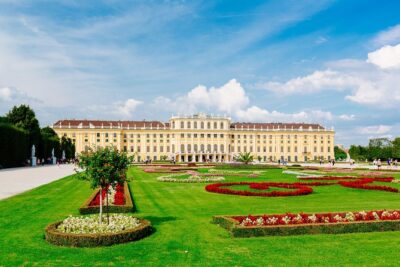
Skip-the-Line Schonbrunn Palace Guided Tour and Vienna Historical City Tour
Read our review →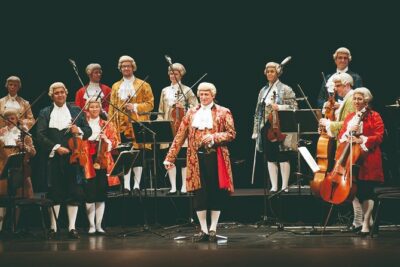
Vienna Mozart Concert in Historical Costumes at the Musikverein
Read our review →
Browse the lists this tour appears in